TECH Signal 321
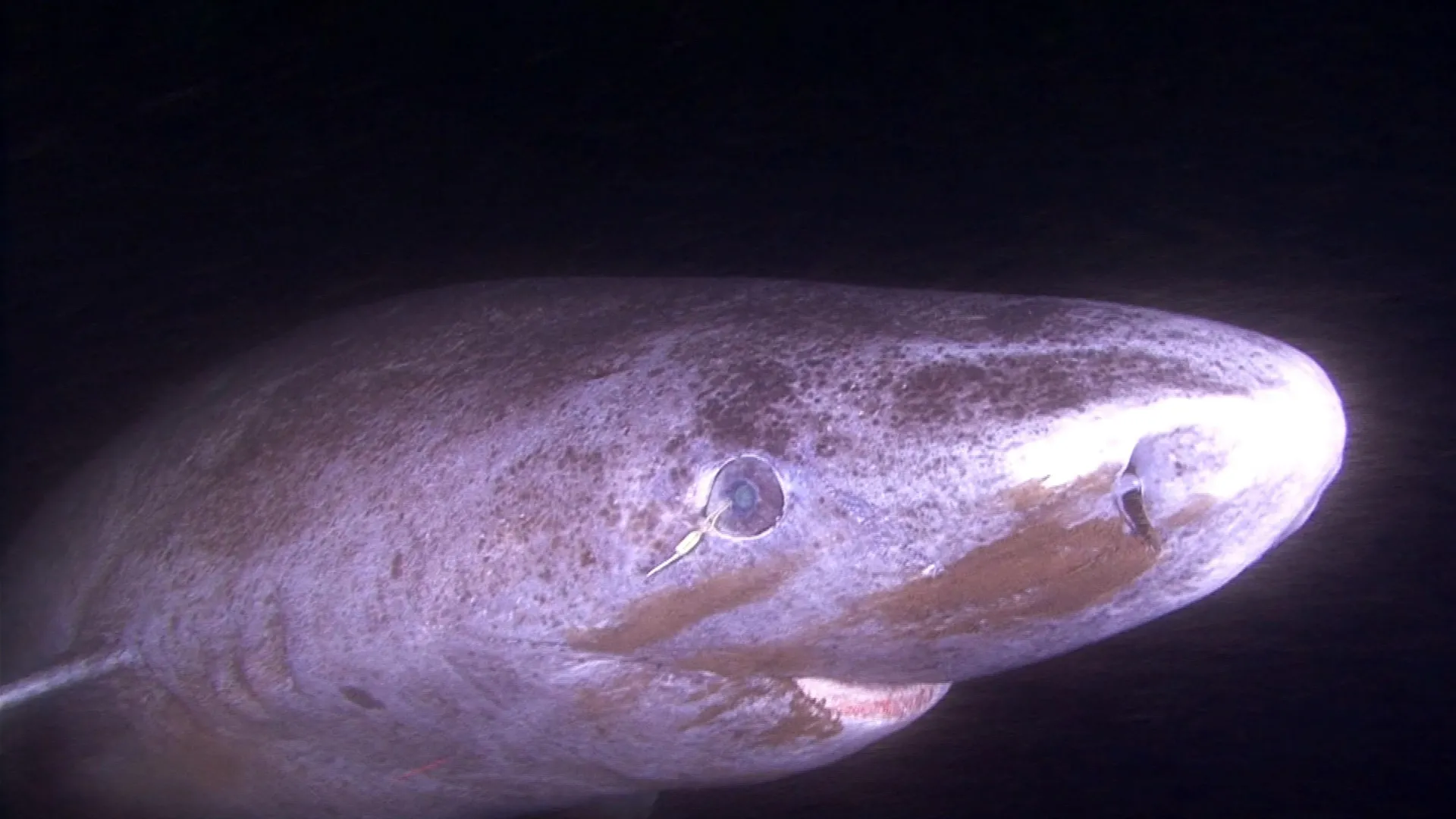
Greenland shark eye tissue resists retinal aging for centuries without cell death
 ↗
↗
Researchers found Greenland shark retinas remain healthy for up to 400 years with no signs of age-related degeneration or cell death.
The discovery challenges assumptions about biological aging and vision degradation. If the mechanisms behind the shark’s retinal longevity can be isolated, they may offer new pathways for treating human age-related eye diseases. Engineers working on bio-inspired systems or medical diagnostics could find value in understanding these adaptations.
Written by elseif from the cluster below · every claim links back to a sourceThe three things worth knowing
Greenland shark retinas show no retinal cell death despite living up to 400 years.
DNA repair mechanisms and blue-light-adapted proteins may preserve their vision in Arctic depths.
The findings could inform research into human age-related eye diseases and longevity.
THE READ
What the cluster adds up to.
Greenland sharks exhibit an exceptional resistance to retinal aging, with eye tissue remaining functional for centuries. Researchers found no evidence of cell death in the retina, a stark contrast to the age-related degeneration observed in most vertebrates, including humans. The sharks’ visual systems are adapted to low-light Arctic conditions, relying on proteins like rhodopsin to maintain sensitivity. This adaptation may contribute to their ability to preserve vision over extraordinarily long lifespans.
The study suggests that DNA repair mechanisms play a critical role in maintaining retinal health. These mechanisms could counteract the cumulative damage that typically leads to vision loss in other species. While the exact processes are not yet fully understood, the findings open avenues for exploring how similar pathways might be leveraged in human medicine. For engineers, this could translate into new approaches for designing diagnostics or therapies targeting age-related eye diseases.
The research also challenges prior assumptions about the sharks’ vision. Parasites and cloudy eyes had led scientists to believe the species was functionally blind, but behavioral observations and tissue analysis disproved this. The sharks’ ability to track light and maintain retinal integrity despite harsh conditions underscores the robustness of their biological systems. This resilience may hold lessons for fields like bioengineering, where durability and longevity are key design considerations.
Practical applications of this research remain speculative but could be significant. If the DNA repair or protein adaptations can be replicated or mimicked, they might inform treatments for conditions like macular degeneration or cataracts. However, translating these findings into human therapies would require overcoming substantial biological and technical hurdles. The study provides a foundation for further investigation rather than immediate solutions.
Written by elseif from the cluster below · checked for specifics the sources never containedTHE CLUSTER