AI Signal 424
Trading firms could control meaningful amounts of compute by 2030
 ↗
↗
Trading firms are predicted to significantly increase their compute capacity by 2030.
This shift could disrupt the current allocation of computing resources, which are heavily dominated by AI research labs. If trading firms achieve this, it may lead to increased competition for compute resources, affecting both costs and availability for AI research. The implications for financial modeling and algorithmic trading strategies could be profound as firms leverage advanced computational power.
Written by elseif from the cluster below · every claim links back to a sourceThe three things worth knowing
Trading firms are expected to increase their compute capacity significantly by 2030.
Compute-intensive mid-frequency trading strategies are gaining traction among trading firms.
Current compute commitments from leading trading firms are already substantial, indicating a trend towards greater resource control.
THE READ
What the cluster adds up to.
The prediction that trading firms could control meaningful amounts of compute by 2030 indicates a major shift in the landscape of computational resource allocation. Currently, AI research labs, like those at OpenAI and Anthropic, dominate compute resources. However, as trading firms increasingly adopt compute-intensive strategies, they may begin to challenge this dominance.
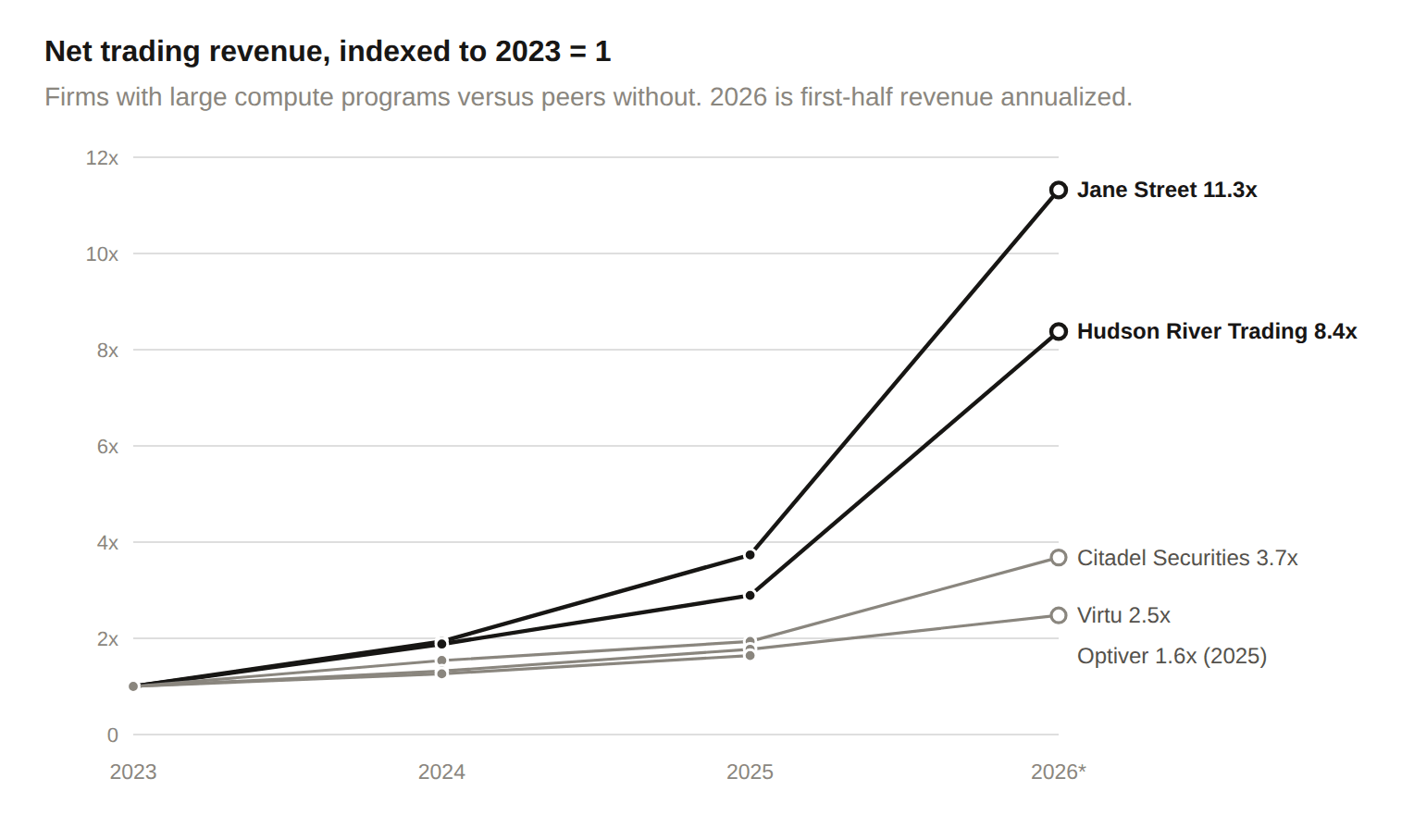
The costs associated with this shift could be significant, as trading firms are already investing heavily in GPU resources. For instance, Hudson River Trading and Jane Street have contracted around $600 million in compute capacity, which is substantial compared to their historical commitments. This trend of increasing investment in compute is likely to continue as profitability in trading strategies grows.
The growth of compute in trading firms may reach a tipping point where they outbid traditional AI labs for access to these resources. This dynamic could lead to a scarcity of compute for AI research, driving up prices and limiting availability. As trading firms leverage advanced AI for market predictions, there's a risk that they could overshadow research efforts that traditionally relied on these resources.
Written by elseif from the cluster below · checked for specifics the sources never containedTHE CLUSTER