DATABASES Signal 56
Syitren RM1 transparent CD player reaches $540,000 Kickstarter total against $3,000 goal
 ↗
↗
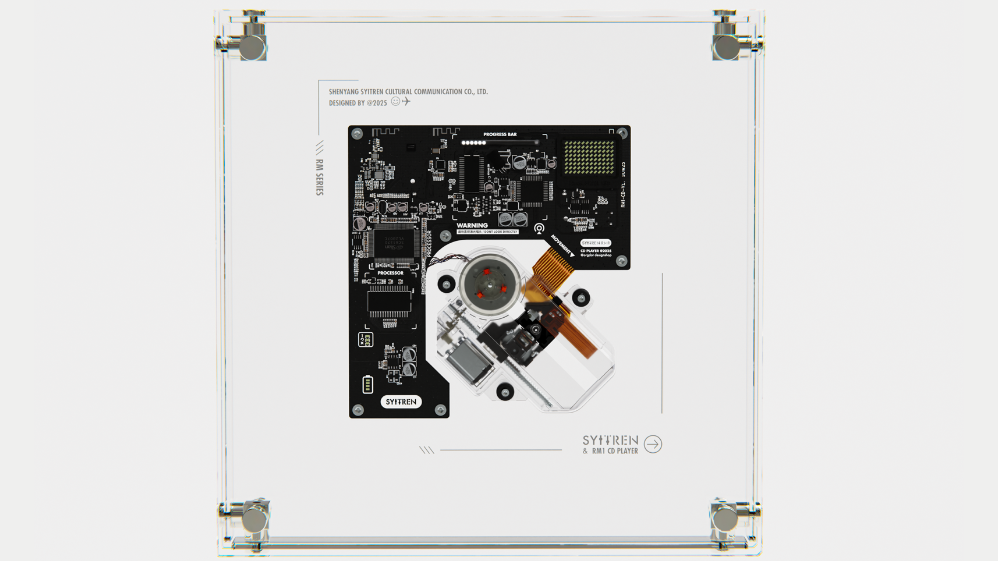
Syitren's RM1 transparent wall-mounted CD player, priced at $109 per unit, has raised over $540,000 on Kickstarter against a $3,000 funding goal.
This is a consumer hardware story, not database infrastructure, the feed topic does not match the content and no storage engine, query system, or schema is named in the source. The engineering signal is that visible-mechanism CD players have formed a small but funded product category alongside the Coolgeek M1, Clearframe CD Player, and Moondrop Discream 2. Buyers are paying for nostalgia and industrial design rather than audio fidelity, since Bluetooth is limited to SBC and AAC and the wired output is rated well below modern desktop audio interfaces.
Written by elseif from the cluster below · every claim links back to a sourceThe three things worth knowing
Syitren RM1 raised over $540,000 on Kickstarter at $109 per unit, well above its $3,000 goal, with bundle tiers up to $319 for a four-pack.
The unit ships with Bluetooth limited to SBC and AAC codecs, a 2000 mAh 18650 battery rated at 6 to 8 hours of playback, USB-C charging in 1 to 2 hours, a 3.5 mm output, MP3 data-disc support, and visible read head, mechanics, and backlight LED inside a transparent acrylic frame.
Wired output is specified at over 70 dB dynamic range and THD under 0.1%, which the source compares unfavorably to the Audient Evo 4 audio interface at 113 dB dynamic range and THD under 0.0015%.
THE READ
What the cluster adds up to.
The Syitren RM1 is a transparent wall-mounted CD player that has raised over $540,000 on Kickstarter against a stated $3,000 goal, with the base unit priced at $109. Bundle tiers reach $139 with the N200 Bluetooth speaker, $169 for two RM1s, and $319 for a four-pack, with the N200 alone available for $59 in beige or black. The funding overrun indicates backers see demand for visible-mechanism physical-media hardware rather than for any audio quality claim, and the article notes the audience is nostalgia and industrial-design lovers rather than audiophiles.
The hardware description covers a transparent 'borderless' acrylic frame with the read head assembly, battery compartment, and onboard buttons all visible, plus a backlight LED under the moving harness. Power comes from a 2000 mAh 18650 rechargeable cell delivering 6 to 8 hours of playback and recharging in 1 to 2 hours over USB-C. A 3.5 mm output jack is present for wired playback alongside Bluetooth audio, and the unit reads standard CDs and MP3 data discs.
Bluetooth support is limited to SBC and AAC codecs, with no mention of higher-quality or lossless transport. The wired output is specified as 'over 70 dB' dynamic range and THD 'under' 0.1%, which the source compares unfavorably to an affordable audio interface like the Audient Evo 4 at 113 dB dynamic range and THD under 0.0015%. The RM1 is therefore positioned as adequate for compact Bluetooth speakers but not for larger amplification setups.
Design cues are taken from the Bang & Olufsen Beosound 9000, a 90s-era visible CD changer that the source notes appeared frequently in film and TV set dressing. Competitors in the same visible-CD niche are the Coolgeek M1, the Clearframe CD Player, and the Moondrop Discream 2, all sharing the exposed-mechanism concept. The source judges the RM1 to have the best execution of the four, though that judgment is editorial rather than measured.
The event was filed under the topic Databases, but the source material concerns consumer electronics, embedded hardware, and audio output specifications, not data storage, query systems, or schema design. No database, query language, index, or storage engine is named anywhere in the lead extract, so any database-angle analysis would have to be invented rather than grounded. The grounding rule means the analysis stays on what the source actually contains.
Written by elseif from the cluster below · checked for specifics the sources never containedTHE CLUSTER