TECH Signal 406
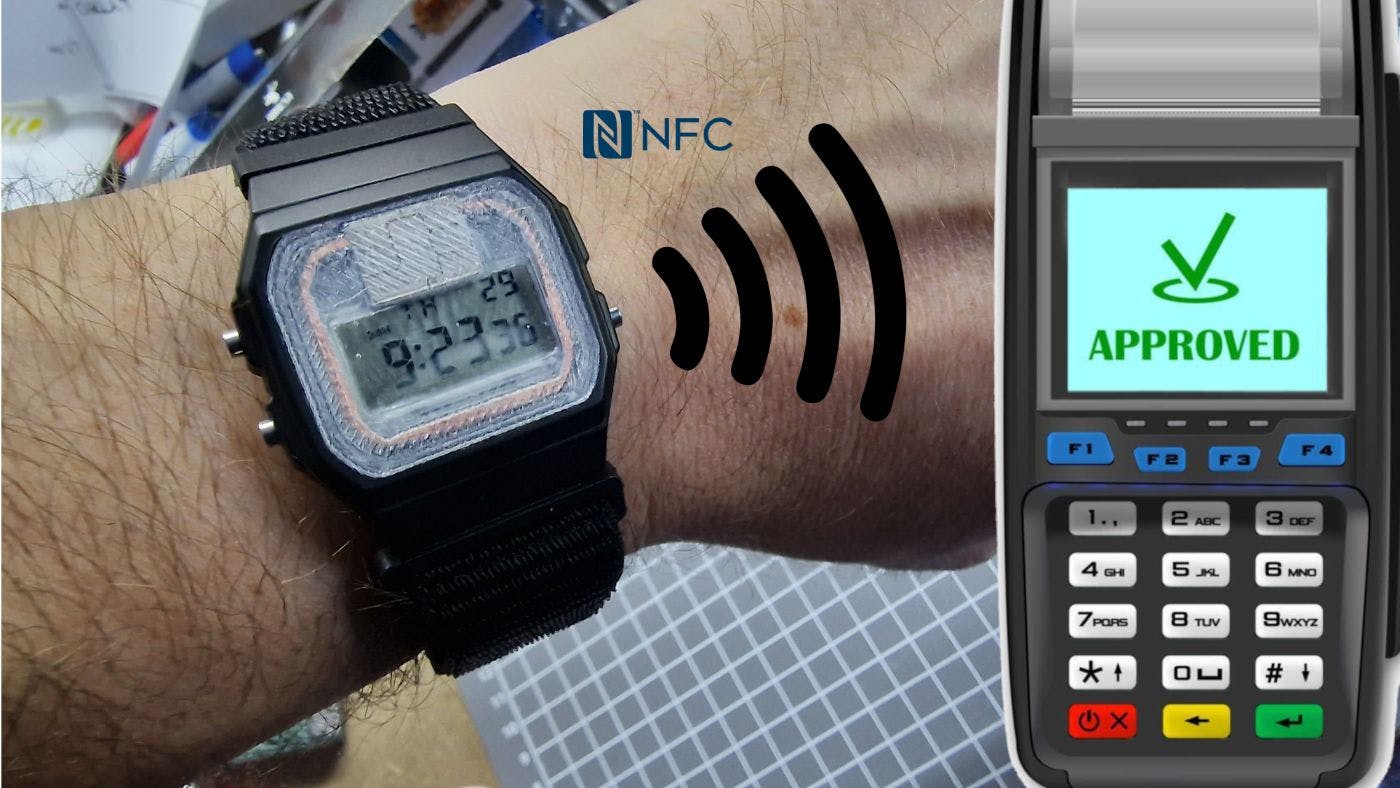
Engineer modifies CASIO F-91W digital watch to perform contactless payments via NFC
 ↗
↗
A cybersecurity engineer embedded NFC payment functionality into a CASIO F-91W watch without requiring an internal power source
This proof-of-concept demonstrates that low-power, passive NFC payment systems can be integrated into legacy or minimalist hardware. It highlights both the flexibility of contactless payment technology and the potential for unintended use cases in constrained form factors. Engineers may need to account for such modifications in security or compliance assessments of payment systems.
Written by elseif from the cluster below · every claim links back to a sourceThe three things worth knowing
The CASIO F-91W was retrofitted with an NFC antenna and microchip to enable contactless payments without a battery
Passive NFC devices rely on electromagnetic induction from payment terminals for power and communication
The modification repurposes existing contactless payment infrastructure without altering the watch’s original functionality
THE READ
What the cluster adds up to.
The project repurposes a CASIO F-91W digital watch by embedding an NFC antenna and microchip to enable contactless payments. The watch’s original design remains unchanged, but the addition of passive NFC components allows it to communicate with standard payment terminals. This demonstrates that contactless payment functionality can be added to minimalist or legacy hardware without requiring an internal power source, relying instead on electromagnetic induction from the terminal.
The modification leverages the same principles as contactless payment cards, where an antenna and microchip are embedded in a plastic enclosure. The antenna, typically made of copper or aluminum, transmits and receives radio-frequency signals at 13.56 MHz, the standard frequency for NFC. The microchip handles data processing, encryption, and authentication, while the antenna’s design ensures efficient signal transmission despite the watch’s small form factor.
This proof-of-concept highlights the adaptability of NFC technology but also raises questions about security and compliance. While the modification does not alter the underlying payment infrastructure, it shows how easily passive NFC systems can be integrated into unconventional devices. Engineers may need to consider such edge cases when designing or auditing payment systems, particularly in environments where hardware constraints or legacy devices are involved.
The project’s reliance on passive NFC means the watch does not require a battery for payment functionality, as it draws power from the payment terminal’s electromagnetic field. However, this also limits its range and functionality to scenarios where the watch is in close proximity to an active NFC device. The modification does not enable standalone payment processing or data storage, as the watch lacks the computational resources for such tasks.
Written by elseif from the cluster below · checked for specifics the sources never containedTHE CLUSTER