TECH Signal 306
Ugreen launches local AI smart home hubs ranging from $899 to $20,000 early-bird pricing
 ↗
↗
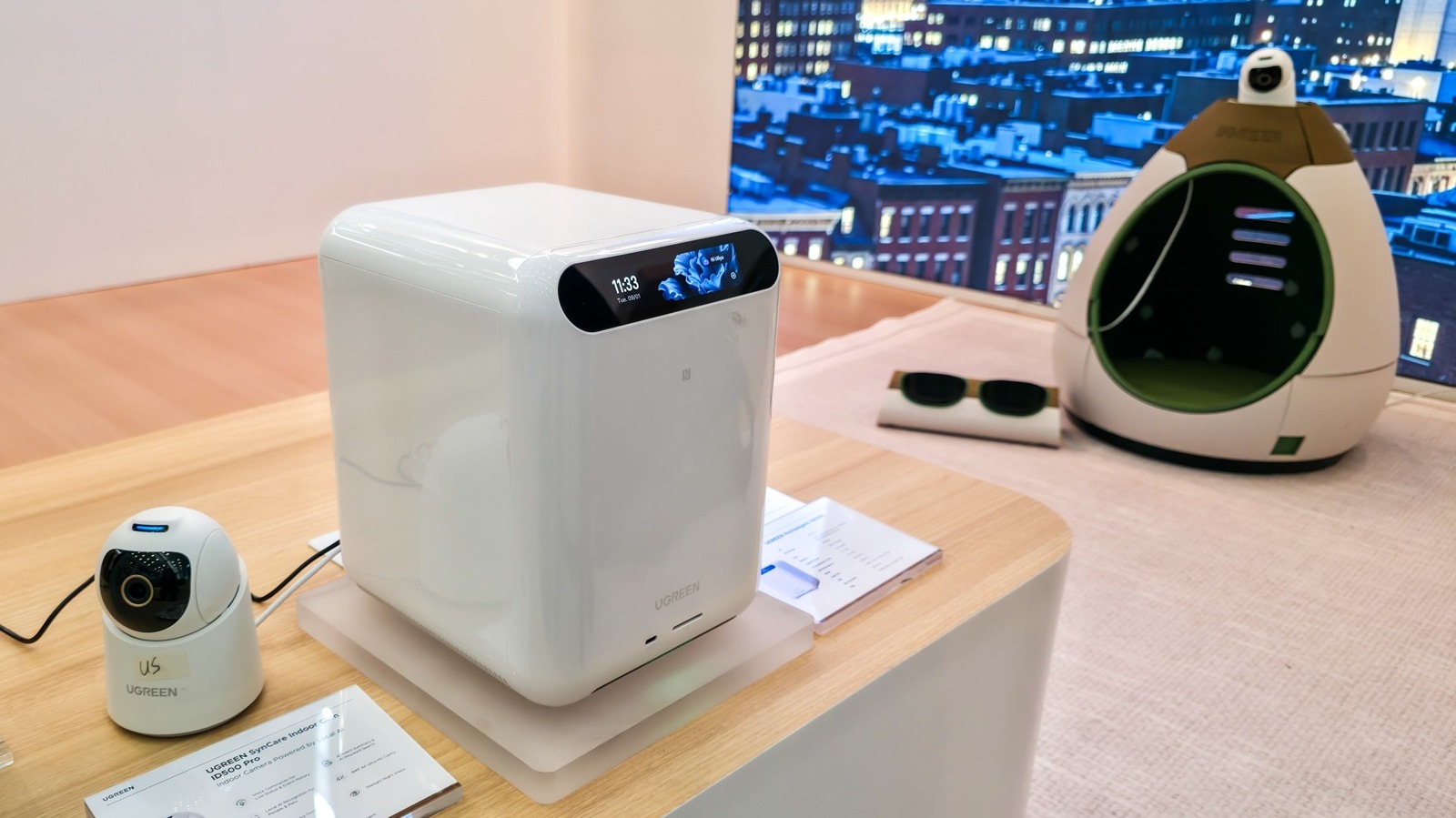
Ugreen unveiled a smart home ecosystem built around three local AI hubs that process data on-device rather than in the cloud, with the flagship MasterAgent MA100 running on Nvidia's Jetson Thor platform at 2,070 TOPS.
The lineup targets engineers and integrators who want cloud-free smart home processing, but the pricing is steep and the ecosystem lacks Home Assistant support, limiting interoperability with existing open-source setups. Only a single working unit was demoed at launch, and the more advanced features like natural-language rule creation were not shown.
Written by elseif from the cluster below · every claim links back to a sourceThe three things worth knowing
Three hubs were announced: the HA100 at 26 TOPS for $899 early bird, the HA100 Pro at 205 TOPS for $2,999 early bird, and the MasterAgent MA100 at 2,070 TOPS for $10,000 early bird.
The hubs support ONVIF and Matter out of the box with Zigbee and Thread planned, but there is no official Home Assistant support.
Only one working HomeAgent model was demonstrated at the launch event, and complex features such as voice-based rule creation were not shown.
THE READ
What the cluster adds up to.
Ugreen is entering the local AI smart home market with three hubs spanning a wide performance and price range. The base HA100 runs on an RK3588 platform with 16GB of LPDDR5 memory and 26 TOPS of AI performance, retailing at $1,799 with an early bird price of $899. The HA100 Pro steps up to a CIX-CP8180(P1) SoC with 32GB of RAM and 205 TOPS, retailing at $5,999 or $2,999 early bird. The flagship MasterAgent MA100 uses Nvidia's Jetson Thor platform, a Blackwell system-on-module with 128GB of unified memory and up to 2,070 TOPS, at a $20,000 retail price with 50 percent off for early buyers.
The differentiation strategy is privacy: Ugreen positions these hubs as alternatives to cloud-dependent products from Amazon and Google, keeping sensitive user data local. The HA100 handles rule-based automation, categorical object recognition, and device commands, while the HA100 Pro adds motion understanding, behavioral intent inference, and natural-language voice input for creating automation rules. Ugreen's NAS community manager Thomas Brown argued that savings on cloud inference token costs and cloud storage would offset the upfront hardware cost, though the retail prices remain high for consumer smart home gear.
Interoperability is a mixed picture. The hubs work out of the box with ONVIF and Matter-compatible devices, and product planning manager Markus Xie confirmed Zigbee and Thread support is on deck. That would allow integration with devices from competitors like Anker and Eufy. However, there is no official Home Assistant support, which is a notable gap given that Anker's competing hub supports both Home Assistant and Apple HomeKit. For engineers already running Home Assistant, this absence is a significant adoption barrier.
The launch event itself offered limited validation. Only a single working HomeAgent model was demonstrated, controlling smart curtains and lights. The more complex features Ugreen promises, such as voice-based rule creation, were not demoed. Alongside the hubs, Ugreen announced three SynCare security cameras (Indoor Cam ID500 Pro, PoE Cam OD600 Pro, and Battery Cam OD800 Pro), a smart picture frame, and a smart speaker, but the article does not provide full specifications or pricing for these peripherals.
The hubs also include NAS-style storage bays requiring user-supplied SATA hard drives, plus M.2 and SD card slots, with HDMI, Ethernet, and multiple networking ports. This aligns with Ugreen's existing NAS product line and suggests the hubs are intended as central home infrastructure rather than simple smart home bridges. The combination of local AI inference, storage, and networking in a single device is the core proposition, but the high entry cost and incomplete software demonstration mean the ecosystem's real-world capability remains unproven.
Written by elseif from the cluster below · checked for specifics the sources never containedTHE CLUSTER