SECURITY Signal 51
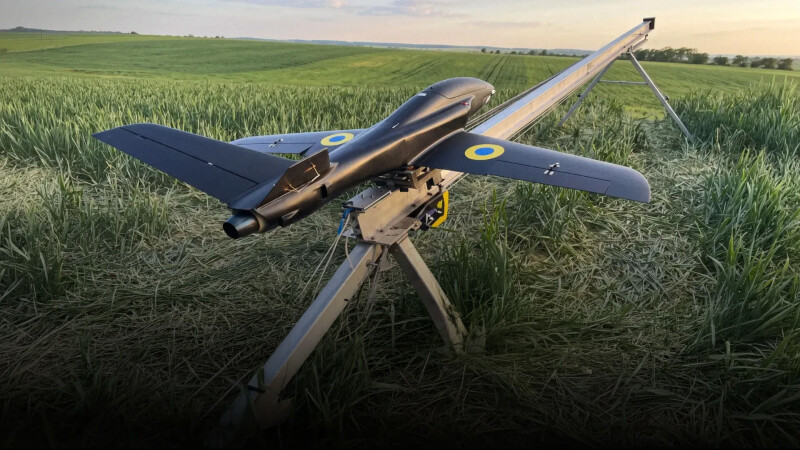
Ukraine deploys jet-powered drone interceptor to counter Russian kamikaze drones
 ↗
↗
Ukraine’s Ministry of Defence introduces a reusable, mobile-launched unmanned aircraft designed to intercept small airborne threats like Shahed drones.
This development signals a shift toward indigenous, low-cost air defense solutions amid dwindling stockpiles of traditional interceptors. For engineers, it highlights the growing role of modular, reusable drone systems in modern warfare, where adaptability and rapid deployment are critical.
Written by elseif from the cluster below · every claim links back to a sourceThe three things worth knowing
The Alexa Spatium is a v-tail unmanned aircraft launched from a mobile catapult and can return for reuse if the mission is aborted.
It carries multiple warhead types and uses TV/infrared targeting, but exact speed and range remain undisclosed.
Designed to counter small drones, it is ineffective against ballistic missiles, underscoring gaps in Ukraine’s air defense capabilities.
THE READ
What the cluster adds up to.
Ukraine’s introduction of the Alexa Spatium reflects a tactical response to the proliferation of low-cost, high-volume drone threats. The system’s mobility, launchable from a pickup truck, prioritizes rapid redeployment, a necessity in a conflict where frontlines shift frequently. Its reusability, if the aircraft survives a mission, could reduce operational costs compared to single-use interceptors. However, the lack of disclosed performance metrics (speed, ceiling, combat radius) suggests either unproven capabilities or deliberate opacity to avoid tipping off adversaries.
The interceptor’s modular warhead options (high-explosive, fragmentation, thermobaric) indicate an attempt to balance versatility with precision. TV and infrared targeting systems imply a focus on day/night operations, but reliance on pre-programmed coordinates or direct guidance may limit effectiveness against swarming drones or evasive targets. The system’s small size (1.5m x 1.7m) likely restricts payload capacity, which could impact lethality or sensor range. Engineers should note the trade-off between compactness and combat endurance.
While the Alexa Spatium addresses an immediate need, countering Shahed-style drones, it exposes a critical vulnerability: ballistic missiles. Ukraine’s reliance on Patriot interceptors has become unsustainable due to dwindling stocks, and the system’s ineffectiveness against such threats underscores the limitations of drone-based defenses. The parallel effort by European nations to develop anti-ballistic missile alternatives suggests a recognition that layered defenses are essential. For defense engineers, this highlights the need for scalable solutions that bridge the gap between low-altitude drone interceptors and high-altitude missile defense.
The comparison to Britain’s Skyhammer interceptor reveals a broader trend: nations are prioritizing turbojet-powered, radar-guided systems to counter drone swarms. However, the Alexa Spatium’s lack of an X-band radar seeker (unlike Skyhammer) may indicate a cost-saving measure or a focus on infrared/TV guidance for specific scenarios. The system’s success will depend on its ability to integrate with existing command-and-control networks, a challenge in contested electromagnetic environments. For engineers, this underscores the importance of interoperability and electronic warfare resilience in modern air defense systems.
Written by elseif from the cluster below · checked for specifics the sources never containedTHE CLUSTER