TECH Signal 500
Unreal Agent introduces asynchronous tool management for significant cost savings
 ↗
↗
Unreal Agent optimizes AI agent performance through asynchronous tool management.
Unreal Agent's design aims to enhance the responsiveness and cost-effectiveness of AI agents. By managing tool calls asynchronously, it allows for increased productivity and reduced operational costs. This innovation could lead to broader applications of AI agents in various industries, improving efficiency across multiple use cases.
Written by elseif from the cluster below · every claim links back to a sourceThe three things worth knowing
Unreal Agent reduces model management overhead by handling tool calls asynchronously.
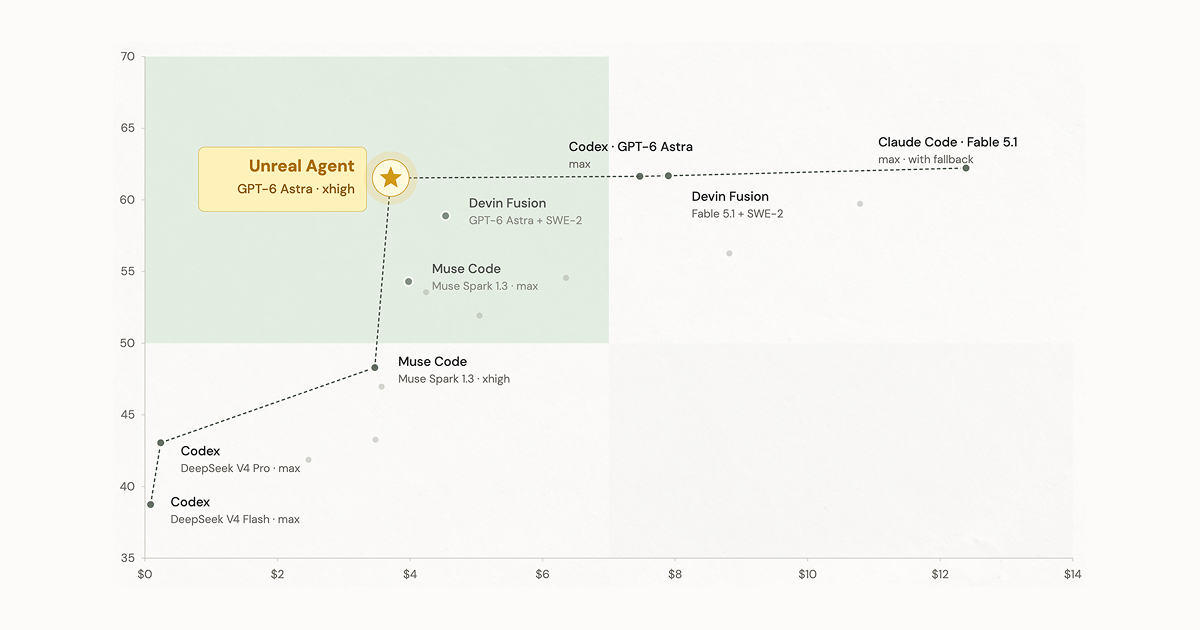
The implementation claims up to 40% cost savings compared to Codex and 20% compared to Pi.
The harness design allows for more efficient execution of tasks, enabling simultaneous tool calls.
THE READ
What the cluster adds up to.
Unreal Agent's primary change is the implementation of asynchronous tool management, which allows AI agents to operate more efficiently. This architecture relieves the underlying model from managing waits or polls, enabling quicker user interactions and reducing processing costs.
The reported cost savings of up to 40% compared to Codex and 20% compared to Pi indicate Unreal Agent's effectiveness in real-world applications. The reduction in token usage and an increase in tool work per model turn signify a strategic approach to optimizing resource allocation.
However, the effectiveness of Unreal Agent may depend on the specific use cases and workloads it is applied to. While it shows promising results in benchmarks, the performance can vary based on the tasks and tools used, necessitating careful evaluation before adoption in diverse environments.
Written by elseif from the cluster below · checked for specifics the sources never containedTHE CLUSTER