INFRA Signal 430
US Navy 3D-prints combat drones and 1,000+ parts aboard aircraft carrier in rough seas
 ↗
↗
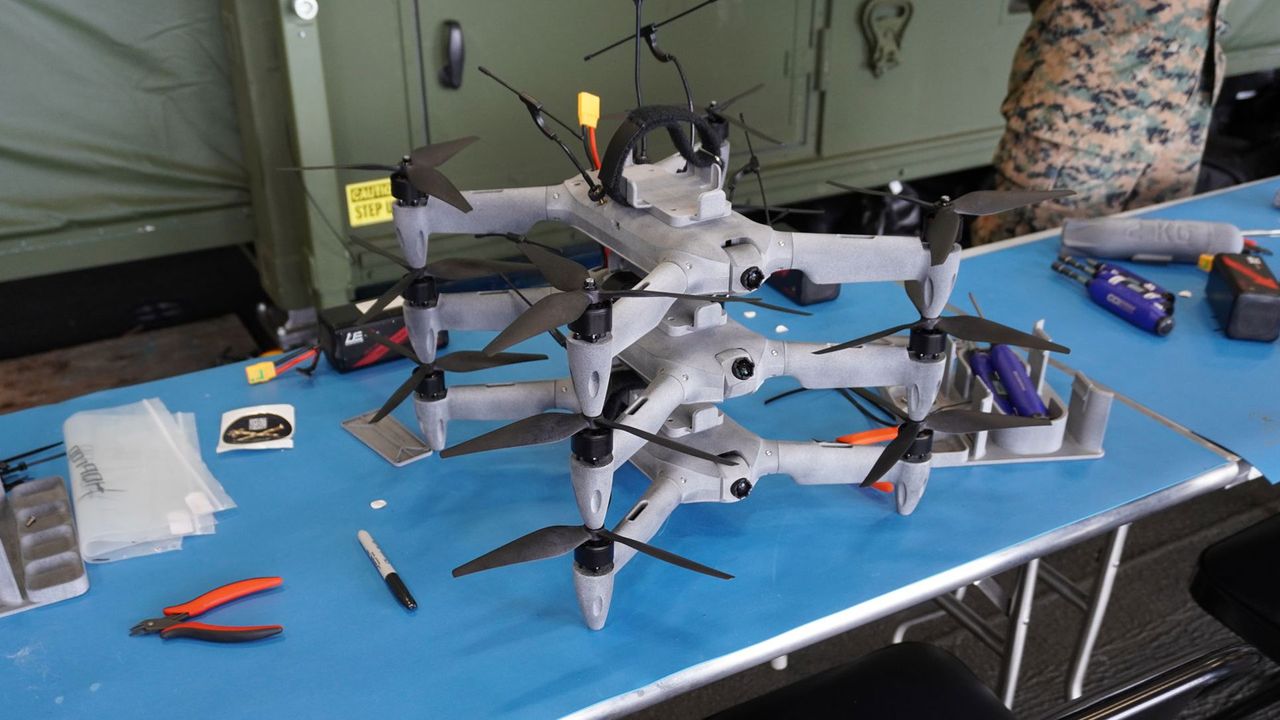
A containerized 3D-printing factory aboard the USS Essex produced flight-ready drones and critical spares during a two-week transit to Hawaii.
This demonstrates that additive manufacturing can operate reliably in extreme maritime conditions, reducing dependency on resupply chains. For engineers, it signals the viability of on-demand production in remote or contested environments, where traditional logistics may fail.
Written by elseif from the cluster below · every claim links back to a sourceThe three things worth knowing
The xCell platform printed 12 combat-ready FPV drones and over 1,000 parts, including Apache helicopter spares, during the exercise.
Production continued despite 12-foot waves and rough seas, proving the system’s resilience in real-world conditions.
On-demand printing cut reliance on external supply chains, enabling faster repairs and reducing operational downtime.
THE READ
What the cluster adds up to.
The US Navy’s exercise aboard the USS Essex marks a shift in expeditionary manufacturing. A containerized 3D-printing factory, the xCell platform, produced a dozen 80-mph FPV drones and over 1,000 parts while enduring rough seas. This wasn’t a controlled lab test, it was a real-world deployment where the system had to function despite 12-foot waves and constant motion. For engineers, the takeaway is clear: additive manufacturing can now operate in environments where traditional fabrication would fail.
The parts printed weren’t just prototypes or non-critical items. The system produced Apache helicopter rotor droop-stops, which prevent costly rotor damage, and custom vacuum-hose couplings for life preserver testing. These are mission-critical components, and their successful fabrication at sea suggests that on-demand manufacturing can replace or supplement traditional supply chains. The implication is significant: ships or forward bases could reduce their reliance on resupply runs, which are vulnerable to disruption in contested environments.
The xCell platform’s footprint is minimal, just two expandable 20-foot ISO containers, yet it houses industrial-grade HP Multi Jet Fusion printers and semi-automated assembly stations. This compactness is key for deployment in constrained spaces like aircraft carriers. However, the system’s limitations are worth noting. While it handled polymer-based parts well, metal or composite components would likely require additional equipment or post-processing. The exercise also didn’t address long-term durability of printed parts in harsh maritime conditions, a factor engineers would need to validate for broader adoption.
The drones printed during the exercise were flown in a counter-UAS exercise upon arrival, proving their immediate combat readiness. This rapid turnaround, from printing to deployment, highlights the speed advantage of on-site manufacturing. For engineers, the challenge will be scaling this capability while maintaining quality control. The system’s success in rough seas is promising, but consistent performance across varying environmental conditions remains untested. Additionally, the reliance on polymer materials may limit the types of parts that can be produced, particularly for high-stress applications.
The broader impact of this exercise is the potential to transform logistics in remote or contested theaters. By printing parts on demand, the Navy reduced the need for fuel, aircraft hours, and personnel to transport supplies. This could be a game-changer for operations where resupply is risky or delayed. However, the system’s dependence on pre-loaded digital designs means that unanticipated part failures could still pose a problem. Engineers will need to develop robust digital inventories and possibly integrate AI-driven design tools to address unforeseen needs in real time.
Written by elseif from the cluster below · checked for specifics the sources never containedTHE CLUSTER