TECH Signal 229
UTF-8000 Introduces Unlimited UTF-8 Code Units for Enhanced Encoding
 ↗
↗
Comments
UTF-8000 enhances UTF-8 by allowing for larger code units, improving the encoding of complex characters. This change facilitates better data handling for software that needs to manage diverse character sets. Engineers may need to adapt their systems to support this new encoding standard.
Written by elseif from the cluster below · every claim links back to a sourceThe three things worth knowing
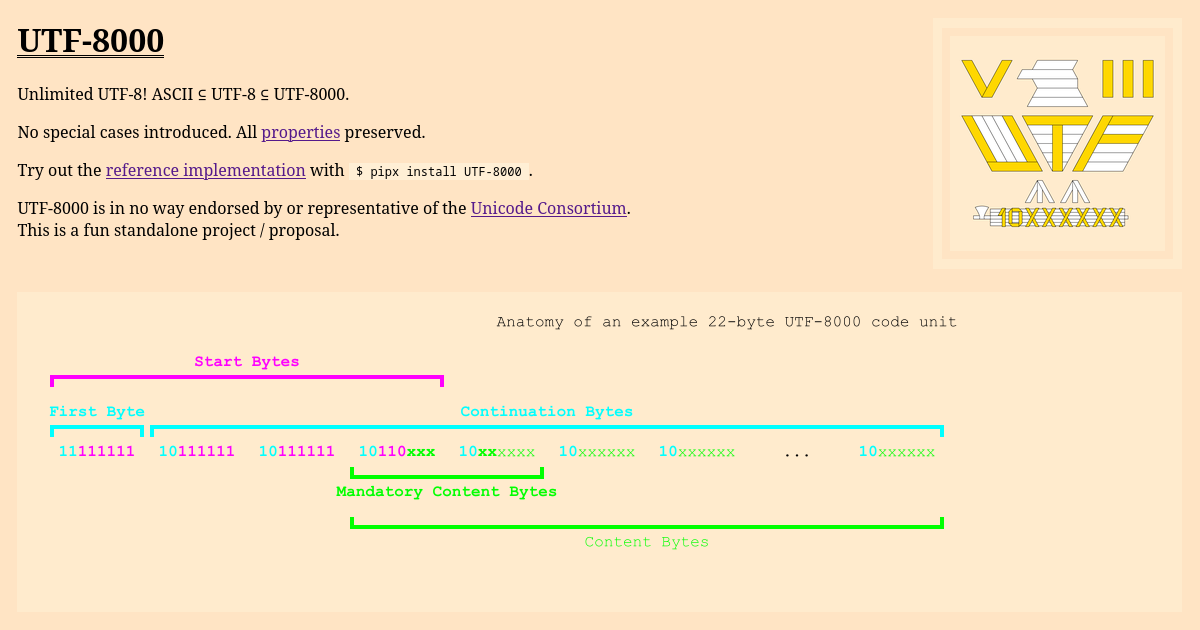
UTF-8000 allows for up to 22-byte code units, significantly increasing the range of characters that can be represented.
The specification clarifies how to manage self-synchronization bits in multi-byte code units for better data integrity.
Engineers will need to revise existing data processing methods to accommodate the larger UTF-8000 code units.
THE READ
What the cluster adds up to.
The introduction of UTF-8000 marks a significant enhancement over UTF-8 by allowing for unlimited code units, which can extend up to 22 bytes. This change allows for a broader representation of characters, accommodating more complex scripts and symbols that are prevalent in global communication.
Adopting UTF-8000 may involve updating software and systems that currently rely on UTF-8. The cost of this transition could include development time for reworking data processing functions and compatibility checks to ensure seamless integration with existing systems.
However, the benefits of UTF-8000, particularly in random access decoding, could justify these costs. The self-synchronization feature allows systems to quickly identify the type of byte they are processing, which can improve performance when handling large files or databases with varied character sets.
While UTF-8000 offers greater flexibility, it may not be universally applicable. Systems that are not designed to handle larger code units may encounter limitations, and engineers must carefully evaluate when and where UTF-8000 should be implemented to avoid potential compatibility issues.
In summary, UTF-8000's introduction requires engineers to reassess their encoding strategies to leverage its advantages while managing potential integration challenges with legacy systems.
Written by elseif from the cluster below · checked for specifics the sources never containedTHE CLUSTER