TECH Signal 372
Leaked Valve Steam Frame videos demonstrate headset fitting, IPD adjustment and sign-in process
 ↗
↗
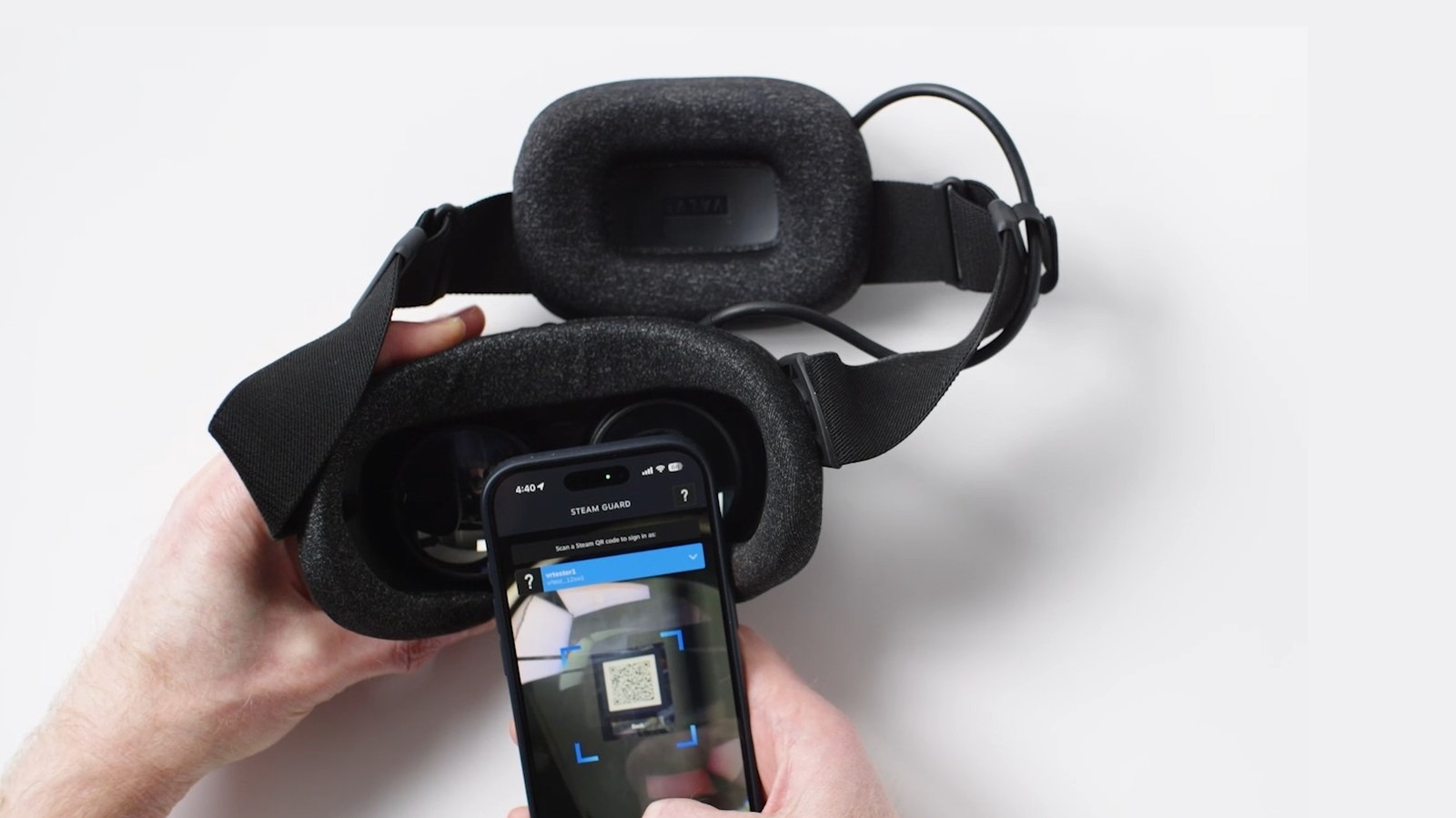
The leaked videos provide step-by-step instructions for wearing, adjusting and signing into the Steam Frame VR headset.
The videos reveal the headset’s fit mechanism, including the interpupillary distance wheel with a sliding lock and optional eye spacer that attaches magnetically. They also show the sign-in method that uses a phone camera to scan a QR code on one lens, illustrating a low-friction authentication approach. By exposing these details before launch, the leak gives engineers early insight into the user-experience design and accessory ecosystem of the Steam Frame.
Written by elseif from the cluster below · every claim links back to a sourceThe three things worth knowing
The leak consists of eight short videos that cover unboxing, basic fit, IPD adjustment, sign-in, wireless adapter, ergonomic accessories, hand strap installation and head strap/light blocker installation.
The IPD wheel features a sliding lock and the ergonomic accessories include controller hand straps, a crown support strap and an extended light blocker for small noses.
The face gasket and eye spacer attach via magnets, and the charging port is located in a battery pack on the rear of the main head strap.
THE READ
What the cluster adds up to.
The leak consisted of eight short videos that Valve inadvertently published through an ARM Steam Client update. These videos walk through unboxing, basic fit, IPD adjustment, sign-in, wireless adapter setup, ergonomic accessories, hand strap installation and head strap/light blocker installation. They show the interpupillary distance wheel featuring a sliding lock and the magnetic attachment of the face gasket and optional eye spacer. Together the clips give a complete visual guide to wearing the headset and preparing it for use.
Adopting a similar magnetic fastening system for VR headsets can increase design complexity because it requires precise alignment and reliable bonding strength. Engineers must also consider the supply chain implications of sourcing sliding lock mechanisms and ergonomic straps that adjust to different head sizes. The QR-code sign-in approach demonstrated in the videos implies additional software work to ensure fast, reliable camera-based authentication across varying lighting conditions. These factors affect both hardware bill of materials and firmware development effort.
The leaked videos do not reveal the headset’s price, exact launch date beyond a summer timeframe, or any performance specifications such as display resolution or refresh rate. Without that information, procurement teams cannot assess cost-effectiveness or compare the device against competing VR platforms. Similarly, performance-focused engineers lack data on latency, tracking accuracy or battery life needed for system integration studies. Thus the leak is useful for user-experience insight but stops short of supporting detailed engineering trade-off analysis.
The appearance of the videos in an ARM Steam Client update shows how internal documentation can be exposed through routine software patches. This highlights a potential risk for companies that bundle firmware or client updates with unreleased hardware assets. Improving change-control and asset tagging in update pipelines could reduce the chance of similar premature disclosures.
Written by elseif from the cluster below · checked for specifics the sources never containedTHE CLUSTER