DATABASES Signal 52
Venus may have swallowed its own moon due to slow rotation, research suggests
 ↗
↗
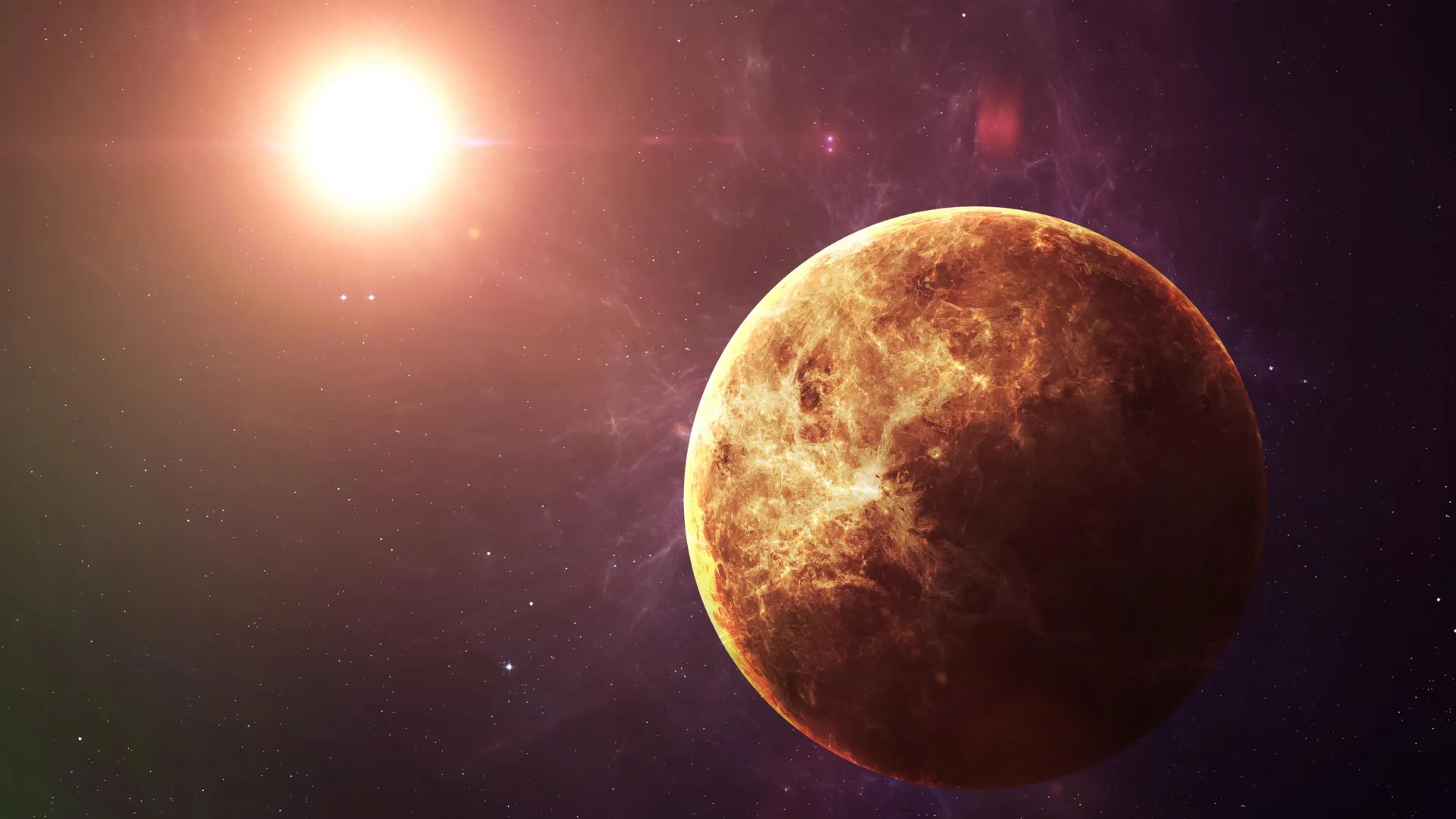
Research indicates that Venus's slow rotation could have caused a former moon to spiral inward and collide with the planet.
Understanding the fate of Venus's potential moon sheds light on its geological history and planetary dynamics. This research could also inform theories about planetary evolution and the conditions for life on other planets. Insights from such studies can refine our understanding of moon-planet interactions in various celestial environments.
Written by elseif from the cluster below · every claim links back to a sourceThe three things worth knowing
Venus's slow rotation may have led a former moon to spiral inward and crash into the planet.
Computer simulations indicate that larger moons would have fallen into Venus even faster.
The research changes previous assumptions about why Venus lacks a moon, focusing on internal dynamics instead of external impacts.
THE READ
What the cluster adds up to.
The study presents a new explanation for Venus's lack of a moon, attributing it to the planet's slow rotation rate. Unlike Earth, where the moon gradually drifts away, a hypothetical moon around Venus would likely spiral inward due to the planet's gravitational forces combined with its rotational speed. This finding challenges long-held beliefs that external catastrophic events were necessary to explain Venus's moonless state.
Adopting the findings from this research could shift how planetary scientists approach the study of moons and their interactions with planets. The simulation results suggest a consistent outcome where moons of varying sizes could not survive in orbit around Venus, indicating that this phenomenon may be more common than previously thought among slowly rotating planets.
However, the research also acknowledges that it does not definitively prove that Venus ever had a moon. The simulations illustrate a possibility rather than a certainty, and further exploration is needed to determine if remnants of such an event might exist within Venus's geological record. The implications of this study could extend to other planets with similar conditions, potentially influencing the search for moons and understanding their fates.
Written by elseif from the cluster below · checked for specifics the sources never containedTHE CLUSTER