TECH Signal 478
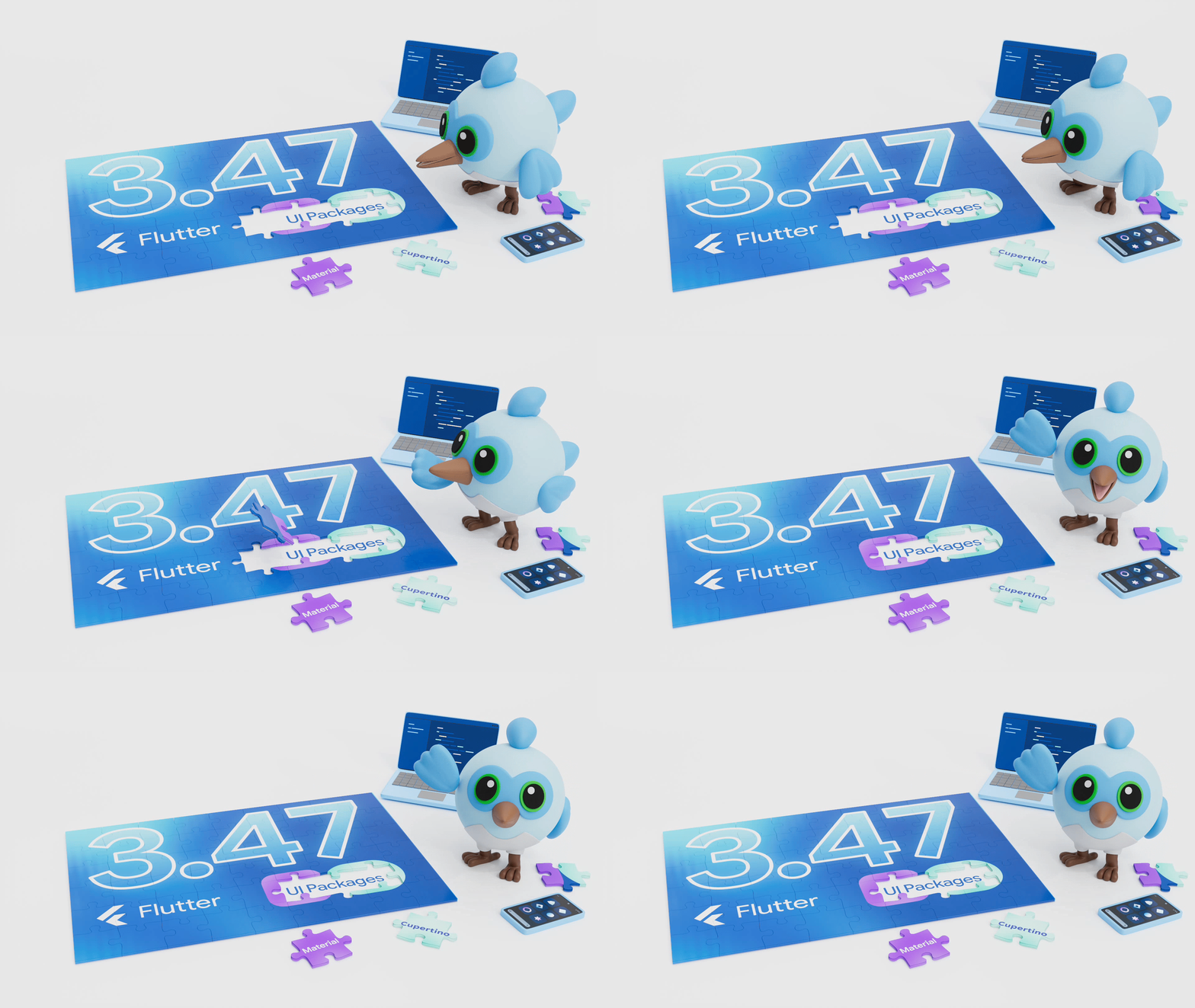
Flutter 3.47 adds standalone material_ui and cupertino_ui packages, decoupling design systems from core SDK
 ↗
↗
Flutter 3.47 releases version-1.0 material_ui and cupertino_ui as independent packages, letting developers opt-in to decoupled design libraries and improving update cadence.
Separating the design libraries lets teams receive bug fixes and new widgets without upgrading the entire Flutter SDK, shortening release cycles for UI changes. The shift also prepares the core for a style-neutral widget catalog, making custom design systems easier to build. Enabling Impeller on desktop by default improves rendering performance for desktop apps.
Written by elseif from the cluster below · every claim links back to a sourceThe three things worth knowing
material_ui and cupertino_ui are now published as standalone 1.0 packages on pub.dev, optional to the core SDK.
A migration command updates imports automatically, though an early bug may require a manual pub add of the new packages.
Impeller rendering is enabled by default on desktop, and Flutter Widget Previews have moved to stable.
THE READ
What the cluster adds up to.
Flutter 3.47 introduces two new first-release packages, material_ui and cupertino_ui, which contain the Material and Cupertino widget libraries previously bundled inside the core SDK. By publishing them separately, the design systems can evolve on their own release schedule. The core SDK still ships the libraries for this release, but developers can opt-in to the new packages via imports.
To adopt the change, developers run a provided migration tool that rewrites imports from the core SDK to the new package names. The tool may hit a known early bug that leaves the pubspec.yaml unchanged, requiring a manual "flutter pub add" for each package before re-running the fix. This migration is a one-time cost, after which future UI updates can be pulled without a full SDK upgrade.
Impeller, Flutter's GPU-accelerated rendering engine, is now enabled by default on desktop platforms, delivering smoother frame rates and lower latency. Desktop projects may need to verify that their target hardware and drivers support Impeller, but no code changes are required to benefit from the default. This performance boost complements the UI package decoupling by making the overall stack more modular.
Localization assets have also been moved out of the core SDK; the flutter_localizations package no longer contains Material and Cupertino strings, which now reside in the new UI packages. Applications must adjust their localization delegate imports accordingly, typically by importing material_ui or cupertino_ui and using the provided delegate collections. This change aligns localization updates with the same independent release cadence as the UI widgets.
Overall, the release gives engineers finer control over when and how UI components are updated, reducing the risk of large SDK jumps for minor design tweaks. The trade-off is an added migration step and the need to manage two extra package dependencies. Teams that rely heavily on custom UI schedules will see the most benefit, while existing projects can continue using the bundled libraries until the planned deprecation later in the year.
Written by elseif from the cluster below · checked for specifics the sources never containedTHE CLUSTER