TECH Signal 339
Low fiber diets may drive gut microbes to consume protective gut lining, producing harmful metabolites
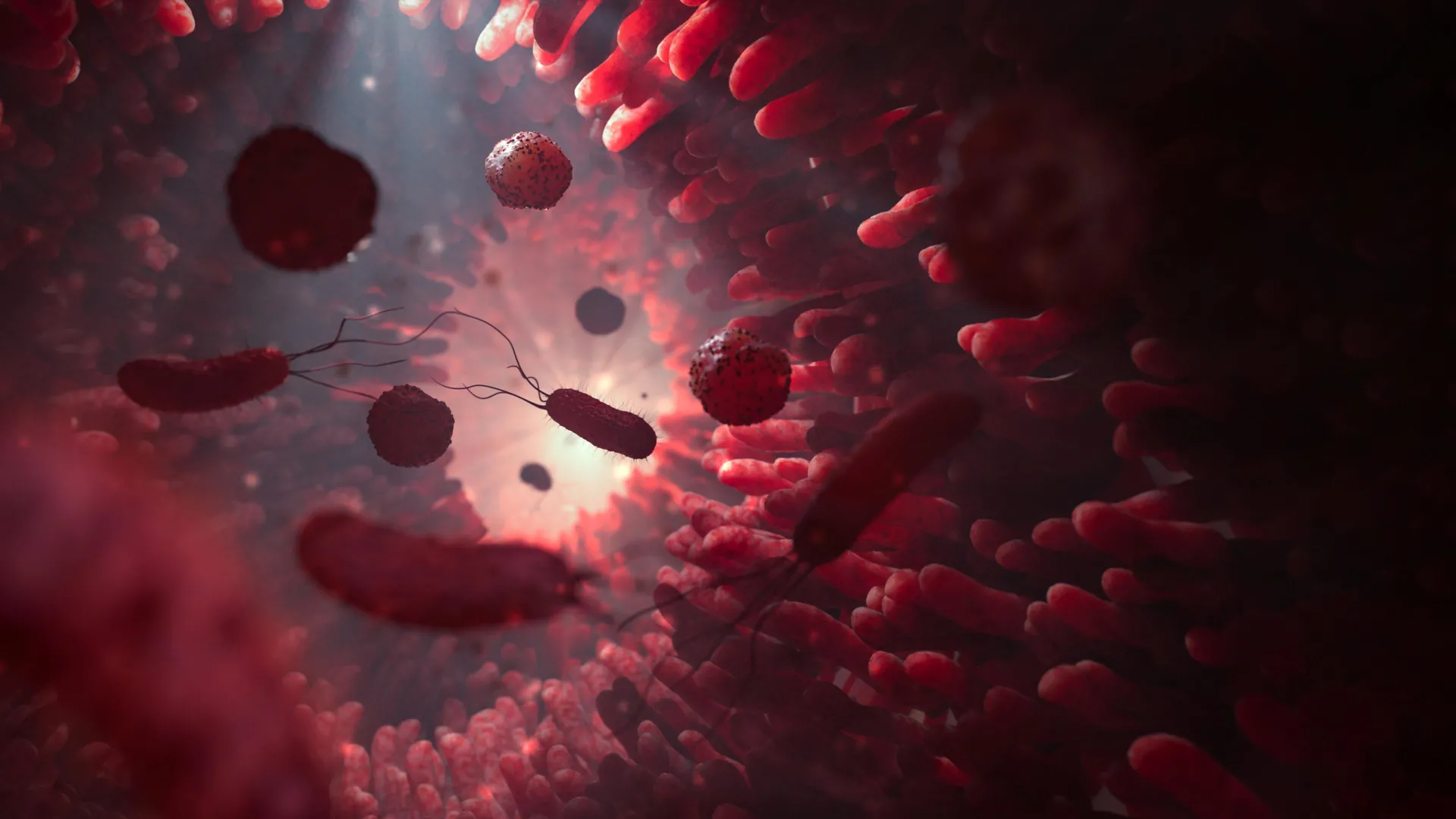 ↗
↗
Researchers at Ludwig Princeton found that when dietary fiber is scarce, gut bacteria feed on the mucus lining of the gut, producing harmful phenol metabolites linked to cancer and kidney disease outcomes, while indigestible plant proteins shift microbial metabolism toward beneficial compounds.
The work identifies a mechanism by which diet composition directly controls whether gut microbes produce harmful or beneficial metabolites, with implications for therapeutic microbiome manipulation. It also introduces a category of dietary nutrients the researchers call Prif, indigestible plant proteins that function alongside fiber, that could eventually appear on food labels.
Written by elseif from the cluster below · every claim links back to a sourceThe three things worth knowing
When fiber is limited, gut microbes consume proteins from the host's gut mucus lining, producing harmful phenols such as p-cresol sulfate and phenol sulfate.
Indigestible plant proteins, dubbed Prif, shift microbial metabolism toward beneficial phenols like phenylpropionate and hippuric acid derived from dietary protein rather than host tissue.
A companion study in Nature Metabolism found that several metabolites previously attributed to gut microbes can also be produced in substantial amounts by mammalian metabolism itself.
THE READ
What the cluster adds up to.
The central finding is a dietary mechanism with a clear cause and effect. When fiber is scarce, gut bacteria turn to the host's own mucus lining for protein, and the metabolites they produce from that source, p-cresol sulfate and phenol sulfate, are associated with worse outcomes in cancer patients and systemic toxicity in kidney disease. Fiber suppresses this mucus-foraging behavior, and indigestible plant proteins the researchers call Prif provide an alternative protein source that drives production of beneficial phenols instead.
The distinction between harmful and beneficial phenols maps to the amino acid each derives from. Harmful phenols come from tyrosine, which in this context the bacteria obtain from host mucus proteins. Beneficial phenols come from phenylalanine, sourced almost entirely from indigestible dietary plant proteins. The isotope-tracing approach in mice made it possible to distinguish host-derived from diet-derived protein as the substrate for microbial metabolism.
The two studies together complicate the simple story that gut microbes are the sole producers of these metabolites. The Nature Metabolism study showed that mammalian metabolism itself can produce several of these compounds in substantial amounts, meaning that attributing phenol metabolites entirely to the microbiome would overstate its role. This matters for anyone designing dietary or microbiome-based therapies, since the source of a metabolite determines which intervention would actually move its levels.
The practical implication the researchers draw is that Prif represents an emerging nutrient class. Rabinowitz suggests food packaging may eventually list Prif alongside fiber, which would require identifying and quantifying indigestible plant proteins in foods the way current labels quantify fiber. The work does not yet establish human clinical outcomes; the tracing experiments were conducted in mice, and the therapeutic claims are framed as future directions rather than demonstrated results.
Written by elseif from the cluster below · checked for specifics the sources never containedTHE CLUSTER