LANGUAGES Signal 174
Rust powers two Windows 11 servicing DLLs
 ↗
↗
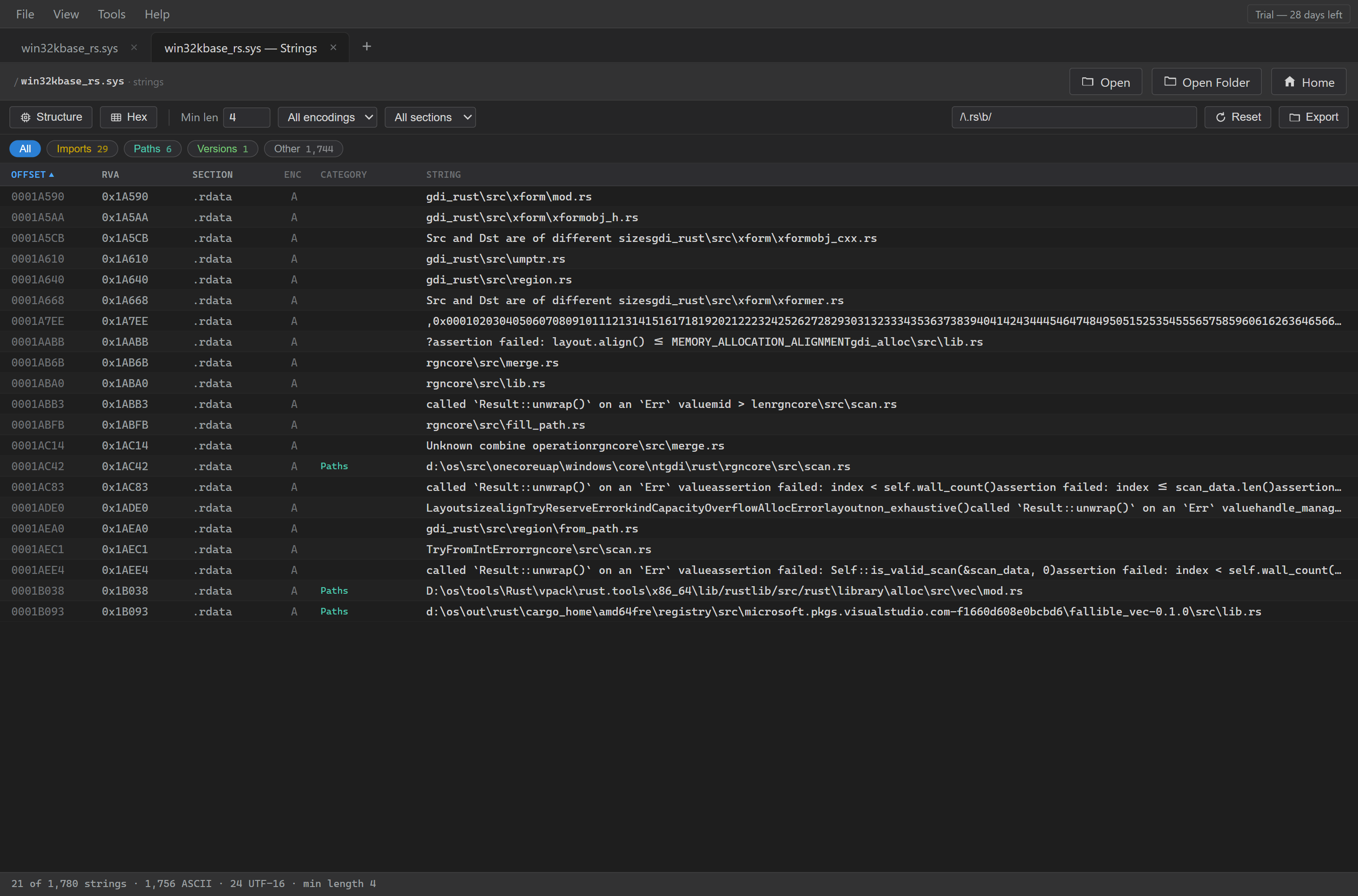
Two Windows 11 servicing DLLs are predominantly Rust and share internal crates.
Engineers see Rust used in core Windows components, indicating a shift toward Rust in system-level code.
Written by elseif from the cluster below · every claim links back to a sourceThe three things worth knowing
Two servicing DLLs are over 96 percent Rust and share seven internal crates.
DirectWrite implementation DWriteCore is 57.9 percent Rust by code bytes.
NarratorMCAT.dll uses an open-source MathCAT crate compiled with Microsoft's internal toolchain.
THE READ
What the cluster adds up to.
The article identifies two servicing DLLs, CloudRecoveryDownloadTool.dll and UdiApiClient.dll, that are predominantly Rust and share internal crates, confirming Rust's presence in Windows 11 servicing components.
Adopting Rust in these DLLs requires Microsoft's internal toolchain and signed binaries, which introduces dependency on proprietary build infrastructure and may affect compatibility with existing C++ workflows.
The analysis stops short of claiming full Rust adoption because many system components, such as kernel drivers and legacy binaries, remain primarily C++ and rely on LLVM rather than Rust.
Written by elseif from the cluster below · checked for specifics the sources never containedTHE CLUSTER