TECH Signal 363
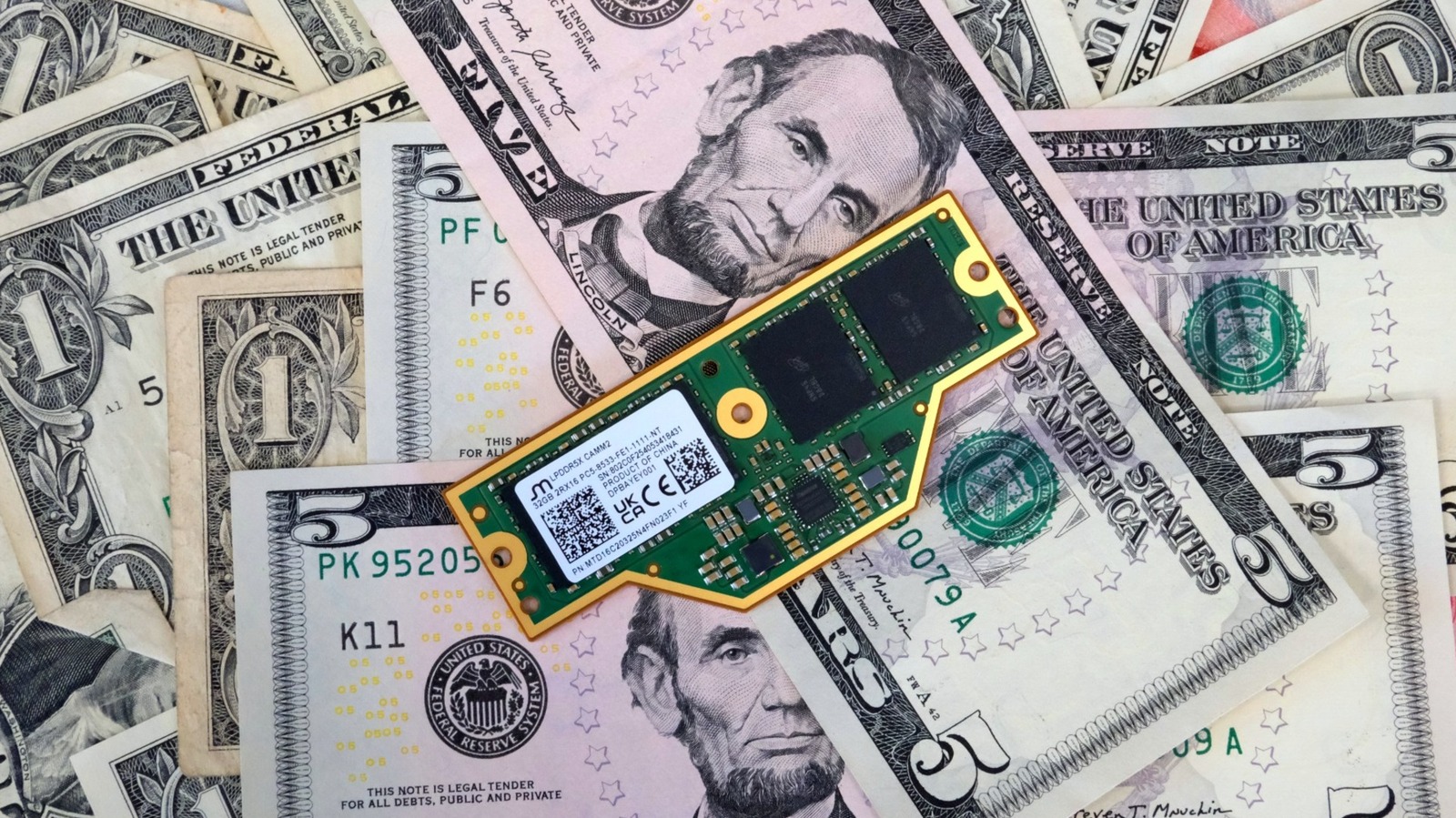
AI demand reportedly drives RAM prices up 300-400 percent in 18 months
 ↗
↗
RAM costs have tripled or quadrupled since early 2025 due to AI firms pre-booking global supply
Engineers building or upgrading systems now face RAM as the single largest line-item cost. The shift from commodity to constrained resource changes hardware planning for everything from embedded devices to cloud instances. Until new fabs come online, the price floor is set by AI budgets, not consumer demand.
Written by elseif from the cluster below · every claim links back to a sourceThe three things worth knowing
AI workloads consume 3× the wafer area per GB compared to consumer DRAM, tightening supply
32 GB of DDR5-6000 now costs over $1,200, up from under $250 in early 2025
Manufacturers report 2027 RAM capacity already sold out to AI customers
THE READ
What the cluster adds up to.
The event is a structural supply shift. AI training clusters use High Bandwidth Memory (HBM), which requires three times the silicon wafer area per gigabyte than standard DDR5. Because HBM and DDR5 share the same foundry lines, every HBM module produced reduces potential DDR5 output by three modules. This zero-sum trade-off is not temporary; it persists until new fabs are built or AI demand subsides.
Costs for engineers are immediate and non-linear. A 300 to 400 percent price increase on RAM means that a mid-range workstation build now allocates more budget to memory than to CPU or GPU. For cloud operators, the cost of instance memory has become the dominant factor in pricing, often exceeding the cost of compute cycles. This inverts the traditional cost hierarchy and forces redesigns of memory-bound applications.
The constraint is not just price but availability. Reports indicate that 2027 production capacity is already fully allocated to AI customers. This pre-booking removes spot-market liquidity, making it harder for smaller firms or individual engineers to source modules at any price. Lead times stretch from weeks to quarters, disrupting build schedules and product launches.
Where the model stops working is at the edge. Embedded and IoT devices that rely on low-power DDR (LPDDR) are insulated for now because they use a different packaging path. However, if AI inference moves to edge devices, the same wafer constraints will propagate downstream. Until then, the pain is concentrated in high-performance computing, workstations, and cloud infrastructure.
Written by elseif from the cluster below · checked for specifics the sources never containedTHE CLUSTER