 ↗
↗
AI Chip Architectures
Why it matters — Only one feed elseif tracks has carried this so far, so there is no independent corroboration yet. Read it as a single-source report.
Why it matters — Only one feed elseif tracks has carried this so far, so there is no independent corroboration yet. Read it as a single-source report.
CLUSTERED TODAY
This incident shows that cyberattacks can now cause physical disruption to critical infrastructure, not just data breaches. Engineers must consider th...
This practice shifts cognitive labor onto peers, who must parse verbose, jargon-heavy, or incorrect AI output. It also erodes accountability in code r...
Engineers targeting embedded or heterogeneous systems now have an officially supported RISC-V target within NetBSD, which can simplify cross-platform...
THE INDEX
Why it matters — For engineers selecting AI models for production systems, this signals that cost efficiency may outweigh raw capability for many practical use cases. The adoption gap suggests premium models face a pricing ceiling even among users who could benefit from higher performance.
Why it matters — This incident shows that cyberattacks can now cause physical disruption to critical infrastructure, not just data breaches. Engineers must consider that even small facilities are targets and that coordinated attacks across sectors require a broader security posture. The success of this attack suggests that current defenses may be insufficient, prompting a need for more robust industrial control system security.
Why it matters — Engineers lack visibility into capabilities, limitations, or security implications of undocumented models. Adoption without scrutiny risks integration issues or unintended behavior in production systems. The absence of official sources complicates risk assessment for teams evaluating its use.
Why it matters — While the material is too thin to confirm scope or cause, the claim highlights how a single misconfiguration or credential leak can cascade into total ownership loss. Engineers who build or secure personal infrastructure should treat this as a worst-case reference point.
Why it matters — For engineers, pngine reduces the burden of sharing WebGPU wiring by representing it as data that can be validated ahead of time. It also allows packaging a pipeline as a single file, though the PNG requires a tiny player to execute.
Why it matters — Only one feed elseif tracks has carried this so far, so there is no independent corroboration yet. Read it as a single-source report.
Why it matters — Engineers evaluating or budgeting for email hosting need current pricing to make adoption decisions. The individual plan now starts at $6 per month with volume discounts for longer commitments, but without knowing the prior pricing, the cost impact of this change cannot be assessed.
Why it matters — Engineers targeting embedded or heterogeneous systems now have an officially supported RISC-V target within NetBSD, which can simplify cross-platform toolchains. The upgraded Linux compatibility layer reduces friction when running Linux binaries on NetBSD, useful for legacy software or container-like workloads. Firewall improvements in NPF affect anyone who relies on NetBSD for routing or security appliances.
Why it matters — The event highlights growing public skepticism toward cryptocurrency from non-technical figures with platforms. For engineers, it underscores the reputational and regulatory risks facing decentralized systems when high-profile critics frame them as fraudulent. The debate may influence policy or investor sentiment without addressing technical trade-offs.
Why it matters — This incident highlights the risks of integrating untrusted hardware into critical infrastructure, even when isolated on closed networks. The backdoor and disabled security features could allow remote access or data exfiltration, undermining the integrity of traffic monitoring systems. Engineers must treat such devices as potential attack vectors, not just tools.
Why it matters — These breakthroughs resolve problems that have been open for a long time, potentially reshaping algorithmic design and security assumptions used by engineers. One of the cryptographic results was uncovered with the help of an AI model, showing that large-scale language-model prompting can contribute to security research, albeit at a significant token cost. The mix of new theory and AI-driven discovery suggests both new technical constraints and new research tools for software builders.
Why it matters — Engineers migrating data to UniFi NAS devices may encounter silent failures on files with NTFS Alternate Data Streams. Using Robocopy with the /COPY:DATX flag bypasses this filesystem limitation, but permanently strips those streams from the destination.
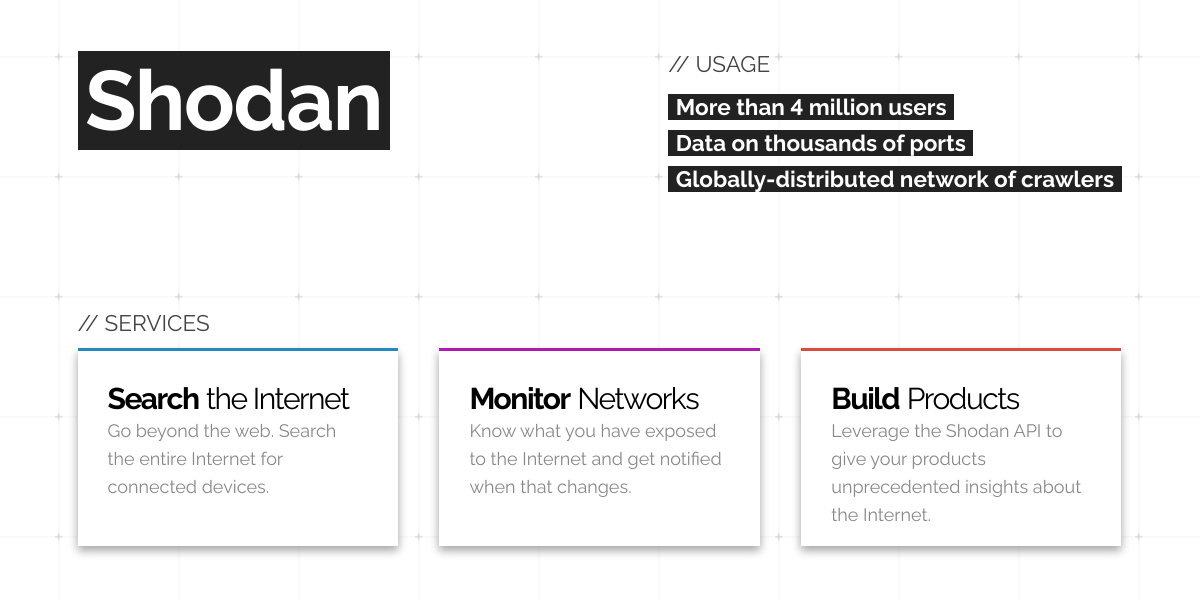
Why it matters — Engineers can use Shodan to monitor their network exposure and get real-time alerts for unexpected devices. The article provides an API for integrating device data into their own security tools.
Why it matters — For engineers tracking the Linux ecosystem, this week's releases confirm a new kernel with Btrfs and scheduler improvements, plus a COSMIC desktop update with per-app sound controls and a Firefox release with WebSocket local network protection. The wrap-up also flags a Rust supply-chain attack and a PINE64 production halt, both of which affect infrastructure decisions.
Why it matters — This demonstrates a shift from cloud-dependent AI NPCs to local, low-latency systems that can handle dynamic game interactions without breaking immersion. For engineers, it highlights the feasibility of real-time AI agents in performance-sensitive applications like VR and gaming.
Why it matters — Only one feed elseif tracks has carried this so far, so there is no independent corroboration yet. Read it as a single-source report.
Why it matters — This practice shifts cognitive labor onto peers, who must parse verbose, jargon-heavy, or incorrect AI output. It also erodes accountability in code reviews and technical discussions, as the original author may not understand the work they’re submitting. Teams adopting AI tools must now explicitly decide whether to treat them as assistants or crutches.
Why it matters — A proactive CFIUS review signals heightened US scrutiny of foreign acquisitions, which may affect technology and data handling plans. Engineers at Shein may need to prepare for possible restrictions on data sharing or system integration with Everlane.
Why it matters — Engineers need to understand how harnesses govern model behavior through system prompts and tool availability. This knowledge lets them design agents that can safely perform tasks such as web search, code generation, or email composition.
Why it matters — This demonstrates AI’s growing capability to automate complex security research, reducing the barrier for low-level device control. It also highlights the fragility of vendor-enforced restrictions when users combine AI tools with persistence. The cost and effort required remain prohibitive for most, but the approach could scale if models improve.
HOW RANKING WORKS
Every story carries a signal score, and every score decomposes into named parts you can inspect on the story page. If you disagree with a ranking, you can see exactly which component put it there.
Read the full method →01 · RECENCY
How recently it was published, decaying on a fixed half-life rather than falling off a cliff.
02 · CROSS-FEED AGREEMENT
How many independent feeds carried the same story. Agreement reached separately is the strongest signal we have.
03 · SOURCE AUTHORITY
Editorial trust in the feed that carried it, which is not always the publisher shown. Primary engineering write-ups outrank rewrite desks.
04 · EARLY VELOCITY
Discussion the story drew in the feed that surfaced it, not on elseif. We never rank on our own click data.
05 · TOPIC CLARITY
How confidently the story classified. A story we cannot place is unlikely to be what you came for.
Top stories right now