ELSEIF
Your brief EB
183 stories from 71 feeds 32 clusters Refreshed 8 minutes ago next pull 13:20

TOPIC

Performance

Profiling, benchmarks, and the hunt for the bottleneck that actually matters. Work that reports a baseline, a method, and a number you could reproduce yourself.

5TODAY
8FEEDS
4mMEDIAN
FEEDS Hacker News 4 Hugging Face 3 Google Developers 3 Redis 2 Dan Luu 2 Phoronix 1 Slashdot 1 Techmeme 1

PERFORMANCE

Everything in Performance.

01 522 -5

Performance Hacker News

MPs demand answers on Fujitsu's inclusion in lucrative frameworks

Why it matters — This scrutiny highlights parliamentary concern over vendor selection in public sector procurement processes. It may signal potential changes to how frameworks are awarded or monitored. Engineers should note that such oversight could affect future contract opportunities and compliance expectations.

1 feed
4 min
02 458 -2

Performance Hacker News

Show HN: Shitty – fast terminal. Memory-unsafe and faster than yours

Why it matters — For engineers working heavily in terminals, a demonstrably faster terminal with lower latency and predictable resource use directly improves daily workflow. The project shows that bypassing generic windowing toolkits in favor of native GPU APIs yields measurable throughput gains, though the memory-unsafe C++23 foundation trades safety guarantees for that speed.

1 feed
6 min
04 338 -1

Performance Hacker News

Running Kimi K3 on MI355X at Better Performance per Dollar Than B300

Why it matters — For teams deploying frontier-scale models, the MI355X's 288GB VRAM enables single-node deployments that would require multi-node setups on B200s, yielding a practical cost advantage at 48 tok/s/$ versus B300's 33 tok/s/$. The tradeoff is significantly slower prefill performance and lingering ROCm software gaps that demand engineering effort, such as a missing top-k renorm function that crashed the speculative decode scheduler.

1 feed
5 min
05 323 -2

Performance Techmeme

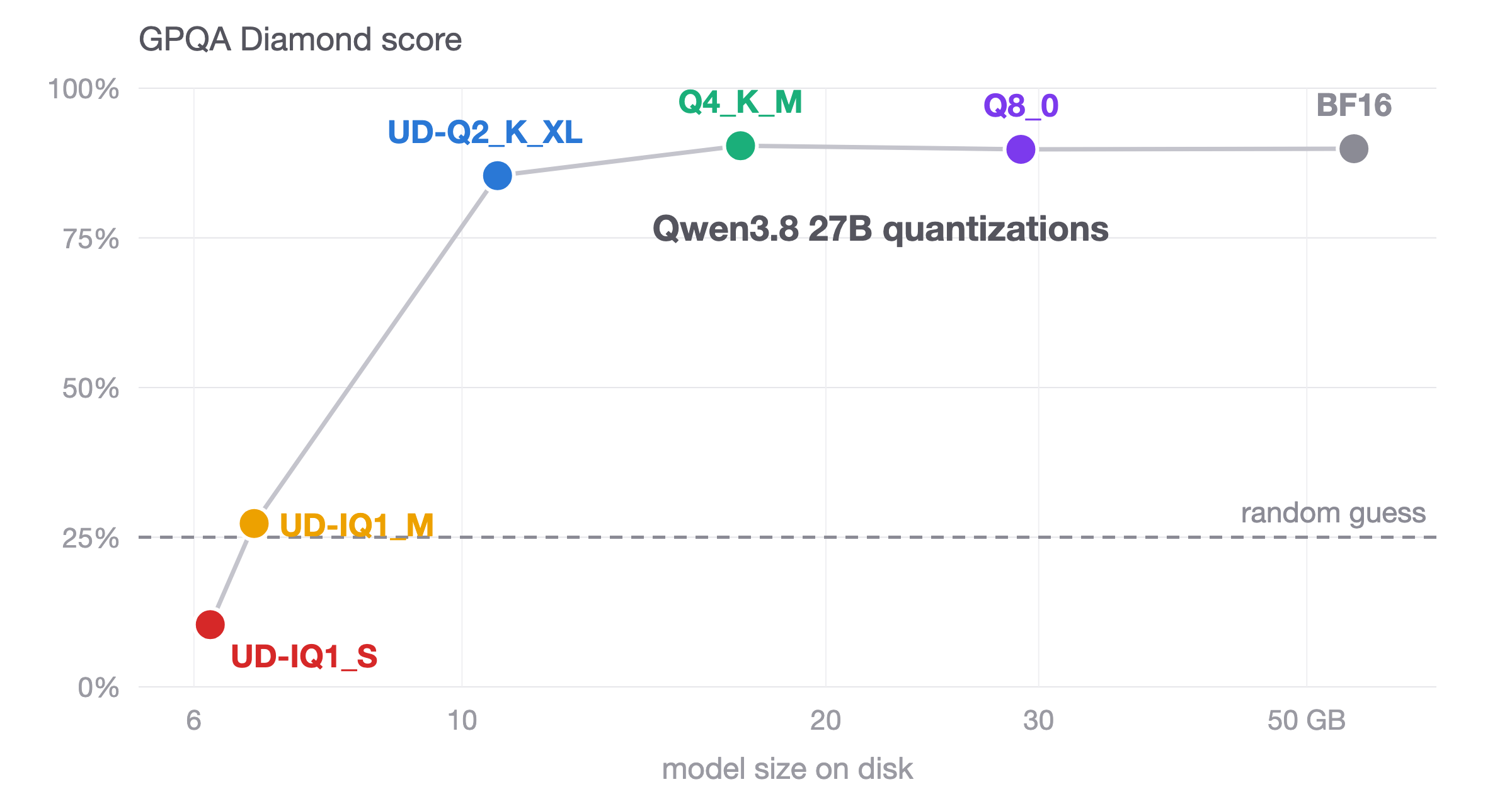
Alibaba says its 2.4T-parameter Qwen3.8-Max tops Kimi K3 on some benchmarks, and plans to release the open weights of Qwen3.8-Max and Qwen3.8-27B next week (Luz Ding/Bloomberg)

Why it matters — The release of open weights for two large models gives engineers new options for local deployment and modification. The claimed performance parity with models like Anthropic's Fable suggests these new weights could be competitive alternatives for production use.

1 feed
50 min
06 252 -3

Performance Slashdot

IT Teams Report 11 Hour a Week on Cloud Connectivity Problems

Why it matters — The disconnect between perceived readiness and actual operational burden means engineers are losing significant time to connectivity firefighting rather than building. Private interconnection—dedicated infrastructure bypassing the public internet—is emerging as the practical response, with 61% of companies already using it and another 31% actively considering it.

1 feed
3 min
07 198 new

Performance Google Developers

How to use Google microbenchmarks for evaluating TPU performance

Why it matters — Engineers working with TPUs can now empirically measure and isolate performance bottlenecks in specific subsystems like interconnect, compute, memory, and I/O rather than relying on vendor specifications alone. This enables systematic optimization and helps verify whether deployed hardware actually meets its theoretical performance claims.

1 feed
6 min
09 178 new

Performance Google Developers

Scaling Agentic RL: High-Throughput Agentic Training with Tunix

Why it matters — Training multi-step reasoning agents traditionally forces TPUs to wait for environment interactions like API calls or web searches, degrading hardware utilization. Tunix overlaps inference, tool execution, and reward computation to keep accelerators busy and streams variable-length trajectories to the trainer without synchronization stalls. This allows engineers to train tool-using LLM agents more efficiently on TPU hardware.

1 feed
10 min
10 168 new

Performance Google Developers

Systems Engineering Playbook: Optimizing Qwen 3.5-397B MoE on Ironwood (TPU7x)

Why it matters — Decomposing large models into reusable, hardware-aware building blocks allows teams to optimize new architectures rapidly rather than treating them as monolithic systems. This approach yielded up to a 4.7x speedup for prefill-heavy workloads and integrates directly into open-source serving frameworks like vLLM and SGLang, reducing friction for production deployments.

1 feed
19 min