TECH Signal 504
50k Boat Names
 ↗
↗
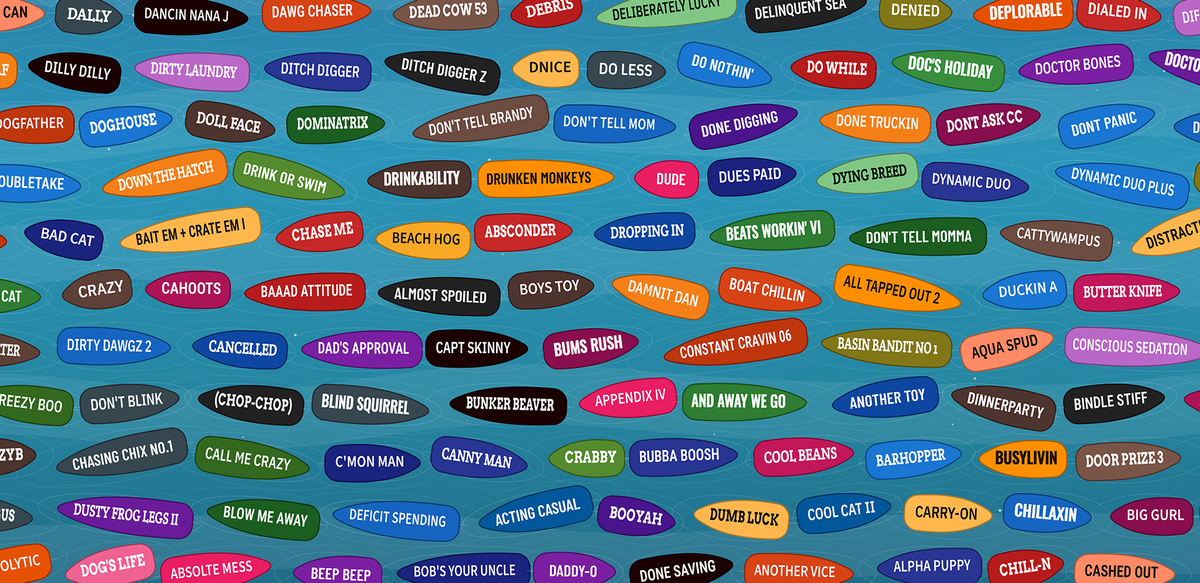
A researcher extracted and visualized over 50,000 vessel names from NOAA’s AIS broadcast data, revealing a wide range of personal, cultural, and occupational references.
The collection shows that publicly available AIS streams can be mined for non-technical metadata, offering a new angle for social or market analysis. Engineers building tools that ingest maritime data now have a concrete example of how to enrich location feeds with human-generated identifiers. The dataset also highlights coverage gaps, reminding developers that AIS-based name data is incomplete and biased toward larger or voluntarily broadcasting vessels.
Written by elseif from the cluster below · every claim links back to a sourceThe three things worth knowing
More than 50,000 boat names were harvested from NOAA’s Marine Cadastre AIS broadcast points.
Names reflect owners’ humor, professions, and cultural interests, and the sample includes a mix of recreational and commercial vessels.
Only vessels that transmit AIS within range of US terrestrial stations appear, leaving many boats unnamed in the source.
THE READ
What the cluster adds up to.
The new dataset is built by filtering several years of NOAA vessel traffic records for entries that include a transmitted vessel name. This adds a layer of human-readable context to the raw positional data that most maritime applications ignore. The resulting searchable interface lets users explore naming trends across categories such as pleasure craft, cargo ships, and military vessels.
For engineers, incorporating this kind of name data requires pulling the same AIS broadcast points from NOAA’s public feeds and joining them to existing location pipelines. The cost is primarily in data processing time and storage for the additional text fields, plus any effort to normalize or categorize the varied naming styles. Because the source does not require owners to register names, the dataset is not exhaustive and must be treated as a sample rather than a definitive registry.
Coverage is limited to vessels that both carry AIS transponders and are within range of US shore-based receivers, which skews the sample toward larger commercial ships and hobbyists who choose to broadcast. Many smaller or privacy-concerned boats never appear, and the dataset does not include vessels operating outside the monitored waterways. Systems that rely on name data for identification or analytics should therefore implement fallback handling for unnamed or missing entries.
The demographic notes accompanying the names indicate that boat ownership in the United States is concentrated in a specific socioeconomic group, with ownership costs cited in the tens of thousands of dollars per year. This suggests that name-based analyses could inadvertently reflect broader wealth or cultural patterns, which engineers must consider when designing privacy safeguards or bias-aware models. The visual presentation also demonstrates how public data can be repurposed into engaging, exploratory tools without additional proprietary inputs.
Written by elseif from the cluster below · checked for specifics the sources never containedTHE CLUSTER