PERFORMANCE Signal 388
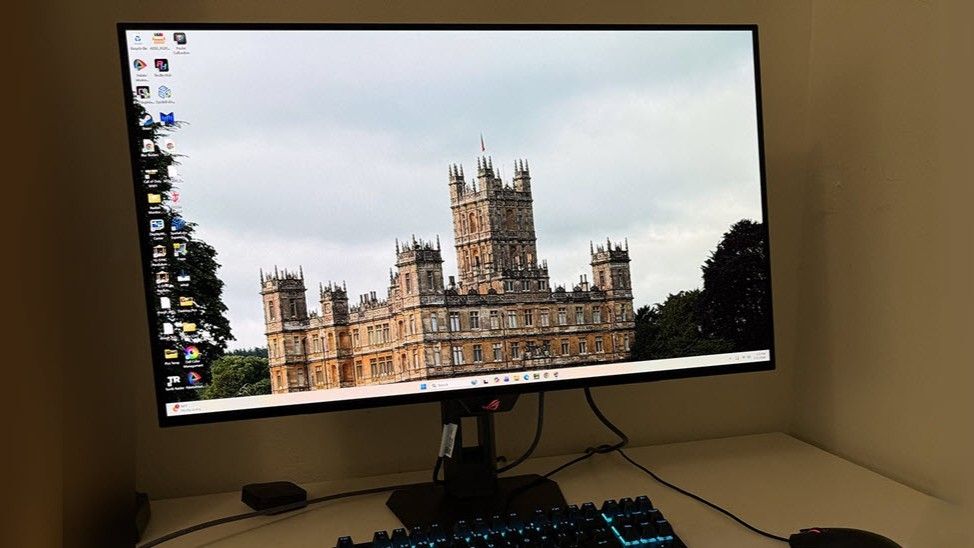
Asus ROG Strix XG32UQWMS 4K OLED monitor adds 240 Hz native and 480 Hz FHD boost
 ↗
↗
It provides a 32-inch 4K Tandem OLED panel that runs at 240 Hz natively, can boost to 480 Hz at 1080p, delivers over 108% DCI-P3 color and up to 1 500 nits peak brightness with Adaptive-Sync and ELMB options.
For engineers building or testing high-frame-rate visual systems, the monitor combines OLED per-pixel response with selectable refresh modes, reducing motion blur without sacrificing 4K detail. The high peak brightness and wide color gamut support HDR content validation, while the built-in OLED care features address longevity concerns. However, the lack of internal speakers and premium positioning may limit deployment in cost-sensitive or all-in-one setups.
Written by elseif from the cluster below · every claim links back to a sourceThe three things worth knowing
Native 240 Hz refresh at 4K resolution with a 0.03 ms GTG response time provides low-latency gaming and smooth motion.
Frame rate boost doubles refresh to 480 Hz at 1080p, enabling ultra-high-speed esports while retaining Adaptive-Sync and ELMB blur reduction.
Tandem OLED delivers >108% DCI-P3 color, up to 1 500 nits peak brightness in a 3% window, and includes pixel-orbiting, logo dimming and a three-year burn-in warranty.
THE READ
What the cluster adds up to.
The Asus ROG Strix XG32UQWMS introduces a 32-inch 4K Tandem OLED panel that can operate at a native 240 Hz refresh rate. A frame-boost feature lets the same panel switch to 480 Hz when the resolution is reduced to 1920×1080. This dual-mode capability gives engineers a single display that serves both detailed 4K work and ultra-high-speed 1080p scenarios. The panel uses four-layer Tandem OLED technology to increase brightness and efficiency. Adaptive-Sync and ELMB options are available to further tune motion clarity.
Adopting the monitor means accepting a premium positioning as indicated by its market placement. The device lacks built-in speakers, requiring external audio solutions for full multimedia use. Power consumption is rated at 40.5 W when the panel is driven at 200 nits, which is modest for an OLED of this size. Connectivity includes two HDMI 2.1 ports, one DisplayPort 1.4 with DSC, and a USB hub layout. These factors affect the total cost of ownership for a workstation or test rig.
Where the monitor stops working is mainly in scenarios that demand uniform full-screen brightness or perfect gamma. The full-screen brightness is specified at 330 nits, which is lower than the peak window brightness, limiting its use in brightly lit environments without additional shading. The review notes a slight gamma deviation that may require calibration for color-critical tasks. Although the panel includes pixel-orbiting, logo dimming and a proximity sensor to reduce burn-in, OLED technology still carries a long-term risk of image retention. Finally, the absence of internal speakers and the premium positioning may make it less attractive for all-in-one deployments where audio integration is desired.
Written by elseif from the cluster below · checked for specifics the sources never containedTHE CLUSTER