TECH Signal 481
Researchers claim data tampering in seminal procrastination deadline study
 ↗
↗
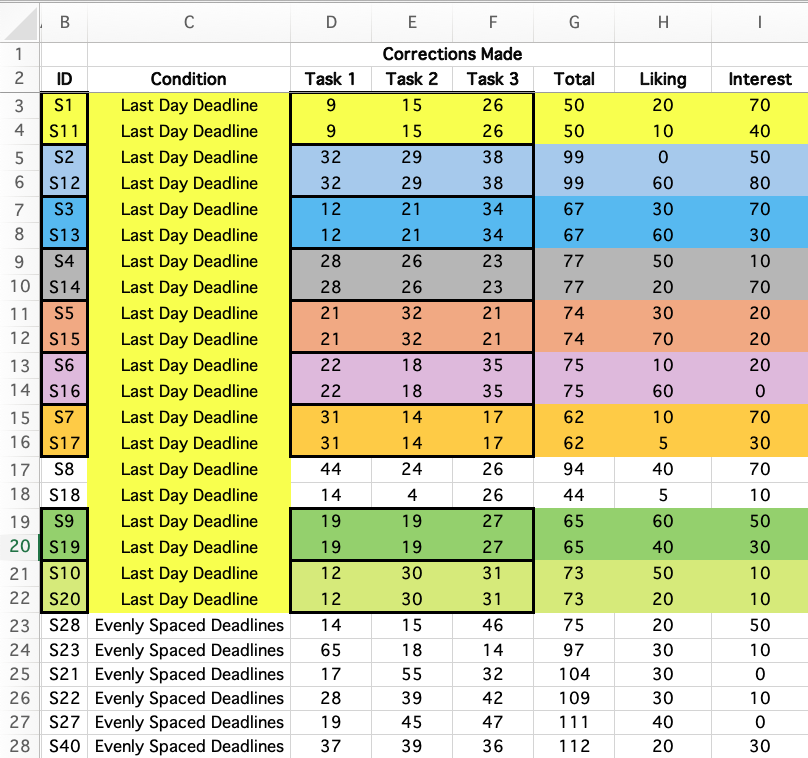
Analysts say the original data from Study 2 of an influential 2002 procrastination paper show signs of manipulation, contradicting its claim that evenly spaced deadlines boost performance.
The paper is assigned reading in many economics and psychology courses and has been frequently cited, shaping how deadlines are understood in research and practice. If the findings are invalidated, educators and designers may need to revise teaching materials and product guidelines that rely on the deadline-spacing effect. Ongoing retraction requests highlight the importance of verifying influential results before they become embedded in standards or curricula.
Written by elseif from the cluster below · every claim links back to a sourceThe three things worth knowing
Researchers obtained the original Excel files in 2006 and again in 2023, noting the files were last saved by Dan Ariely.
Analysis of those files indicates tampering in Studies 1 and 2, with the authors focusing on Study 2 because it failed to replicate in a recent attempt.
The authors of the original paper have asked Psychological Science to retract the article, and the retraction process is currently underway.
THE READ
What the cluster adds up to.
Researchers allege that the data underlying Study 2 of the 2002 procrastination paper were altered, which challenges the reported benefit of evenly spaced deadlines over self-set or final-day deadlines. The claim comes from a re-analysis of Excel files said to have been last saved by Dan Ariely. If true, the original conclusion that spaced deadlines improve performance would be unsupported.
Product designers often rely on the spacing-deadline rule when configuring notification schedules or milestone alerts in software. Adopting a rule based on faulty data could lead to wasted development time on features that do not actually boost task completion. Over time, such misguided design choices might reduce user satisfaction and increase support costs.
The allegation depends on the integrity of the files received years ago, a point the original authors contest by suggesting the files may not be the genuine data. Without access to the verified original dataset, external reviewers cannot confirm whether tampering occurred. Consequently, the debate remains unresolved until further evidence emerges.
Because the article appears on reading lists for many economics and psychology classes, instructors may need to adjust lecture content if the findings are retracted. Likewise, meta-analyses that pool the deadline effect could see their overall estimates shift. Updating teaching slides and citation-based guidelines takes effort but prevents the propagation of potentially inaccurate advice.
The ongoing request for retraction illustrates how scientific self-correction can operate over long timescales, even for work that has shaped practice for decades. Practitioners should treat influential results as provisional, seeking independent replication before embedding them in standards. This cautious approach helps avoid building products on shaky empirical foundations.
Written by elseif from the cluster below · checked for specifics the sources never containedTHE CLUSTER