TECH Signal 372
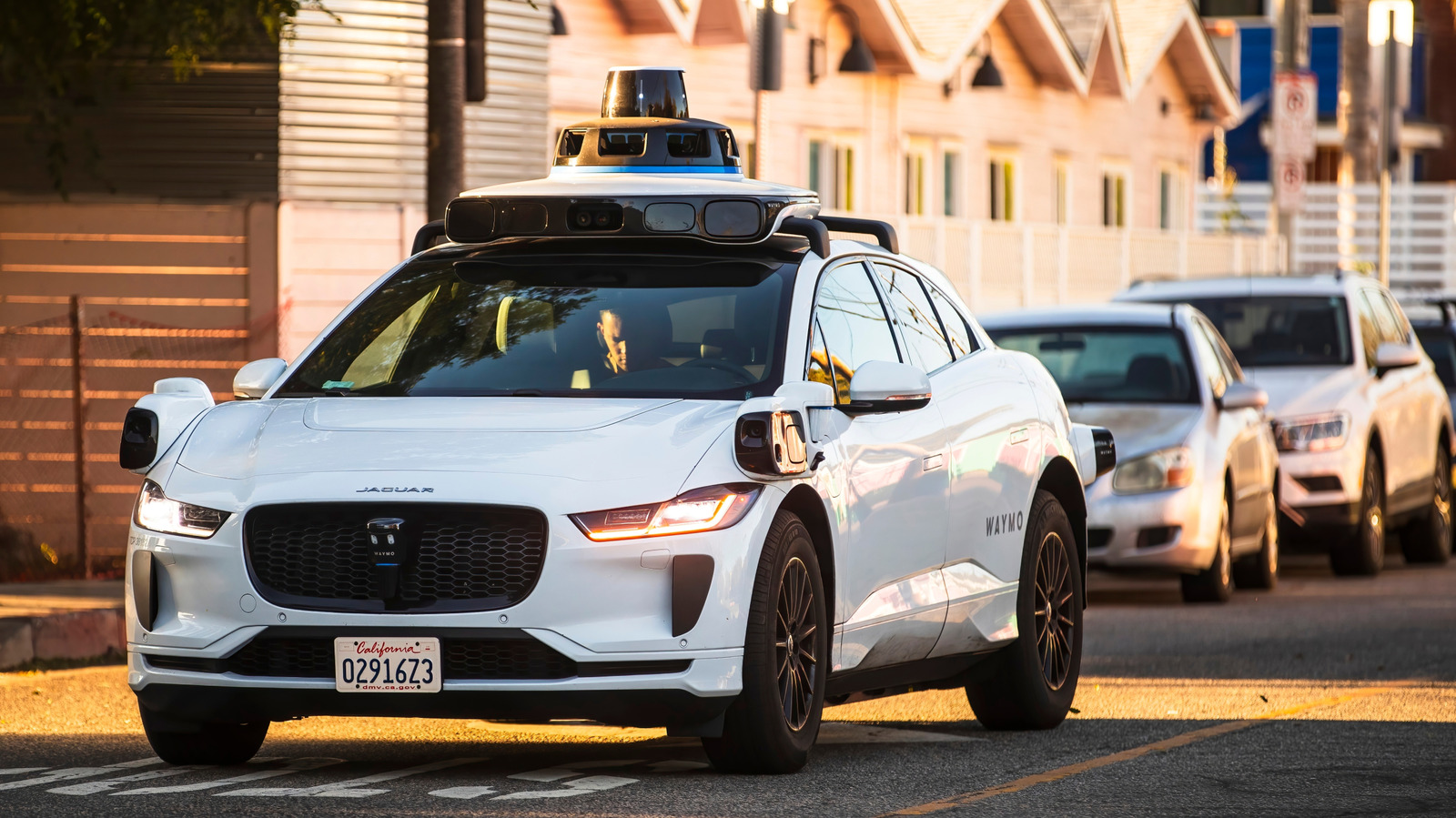
Level 5 autonomy requires removing all operational boundaries unlike Waymo’s Level 4 system
 ↗
↗
SAE Level 5 automation demands universal operation without geographic or environmental limits, unlike Level 4’s defined conditions.
Engineers building autonomous systems must design for either bounded (Level 4) or unbounded (Level 5) operation. The shift from Level 4 to Level 5 isn’t incremental, it requires handling every possible scenario, not just expanding existing domains. This distinction shapes testing, safety validation, and deployment strategies.
Written by elseif from the cluster below · every claim links back to a sourceThe three things worth knowing
Level 4 autonomy operates within a defined operational design domain (ODD), such as specific cities or weather conditions.
Level 5 removes all ODD restrictions, requiring the system to handle any driving scenario universally.
Expanding a Level 4 system’s capabilities (e.g., new cities or weather) doesn’t achieve Level 5, it only broadens the ODD.
THE READ
What the cluster adds up to.
The distinction between Level 4 and Level 5 autonomy hinges on operational boundaries, not driving capability. A Level 4 system like Waymo’s can fully control a vehicle without human intervention, but only within a predefined operational design domain (ODD). This domain includes geographic limits, road types, and environmental conditions. Level 5, by contrast, requires the system to operate universally, without any such restrictions. For engineers, this means Level 4 systems can be scoped and tested within known constraints, while Level 5 demands handling every conceivable scenario.
Level 4’s bounded approach allows developers to focus on specific challenges, such as urban navigation or adverse weather, within a controlled environment. Waymo’s expansion into new cities or weather conditions, for example, broadens its ODD but doesn’t elevate it to Level 5. The system remains Level 4 as long as it relies on defined boundaries. This scoped approach simplifies validation, as testing can prioritize scenarios relevant to the ODD. Level 5, however, requires accounting for an unbounded set of variables, making validation exponentially more complex.
The difficulty of achieving Level 5 lies in the sheer unpredictability of real-world driving. Level 4 systems can avoid edge cases by restricting their ODD, but Level 5 must handle them all. For instance, Waymo’s suspension of operations during flooded roads in Atlanta and San Antonio highlights the challenges of even Level 4 systems in unanticipated conditions. Level 5 would require the system to navigate such scenarios autonomously, without predefined limits. This demands advances in sensor robustness, AI adaptability, and fail-safe mechanisms beyond current capabilities.
For engineers, the choice between Level 4 and Level 5 shapes system design and deployment strategies. Level 4 systems can be incrementally improved by expanding their ODD, but Level 5 requires a fundamental shift in how autonomy is achieved. The trade-off is between scoped, deployable systems today and the theoretical universal autonomy of Level 5. Until Level 5’s challenges are resolved, Level 4 remains the practical target for real-world applications.
Written by elseif from the cluster below · checked for specifics the sources never containedTHE CLUSTER