TECH Signal 612 2 feeds carried it
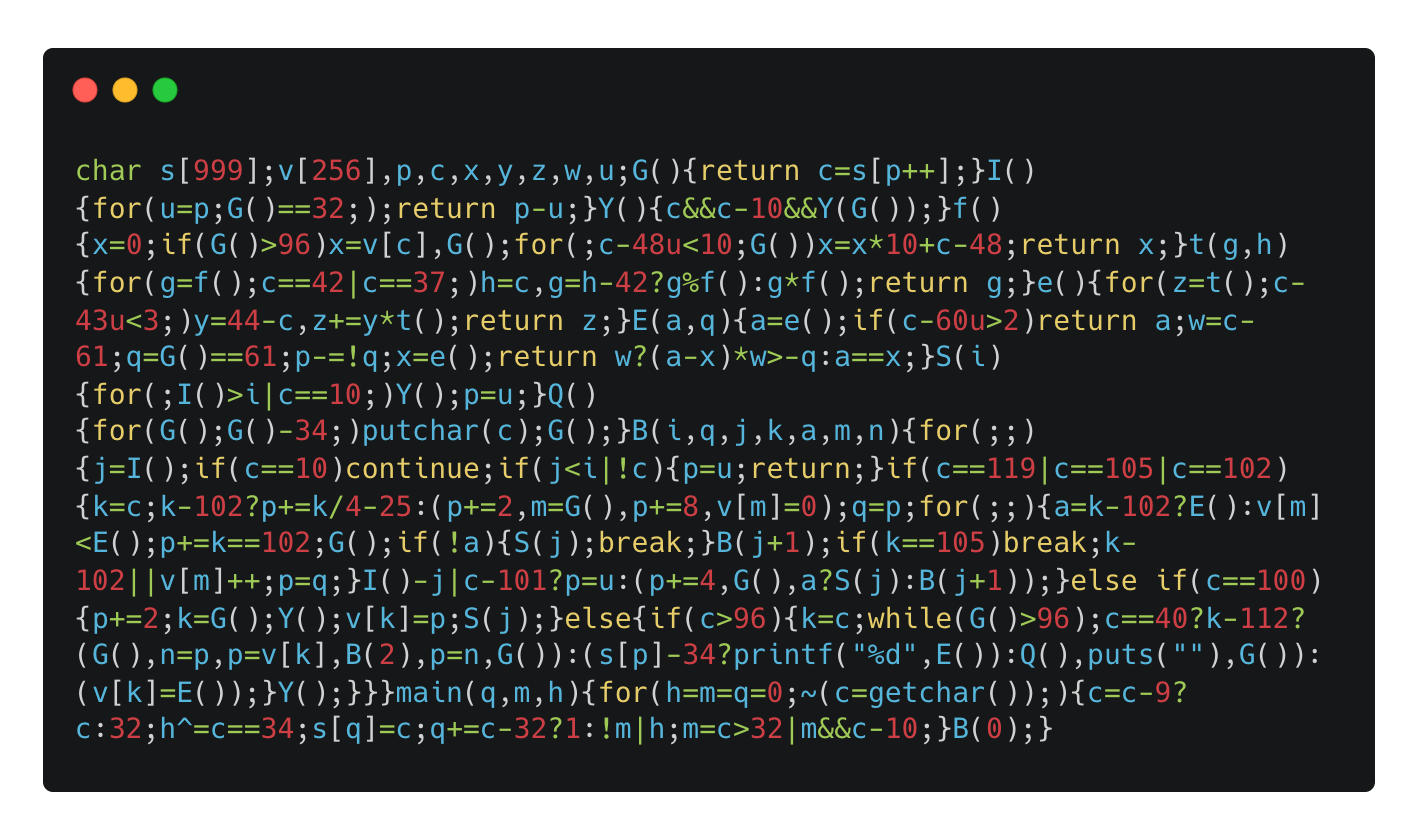
Python interpreter subset implemented in 1024 bytes of C without macros or libraries
 ↗
↗
A minimal Python interpreter supporting FizzBuzz-style syntax fits into 1024 bytes of hand-written C code
This demonstrates how little machinery is needed to parse and execute a recognisable subset of Python. For engineers, it reveals the trade-offs between code size, correctness, and language coverage in embedded or constrained environments.
Written by elseif from the cluster below · every claim links back to a sourceThe three things worth knowing
The interpreter handles single-letter variables, basic arithmetic, if/else, for loops, and function definitions
No error handling or syntax validation is implemented; the code assumes correct input
Control flow relies on recursive descent parsing and direct source-code jumps instead of bytecode
THE READ
What the cluster adds up to.
The project implements a Python-like interpreter in 1024 bytes of C, stripping the language down to a minimal subset. It supports single-character variable names, basic arithmetic, if/else blocks, for loops, and function definitions. The interpreter does not tokenise or compile to bytecode; instead, it parses and executes the source directly, using recursive descent techniques. This approach eliminates the need for an abstract syntax tree or intermediate representation, reducing code size at the cost of runtime efficiency.
The implementation makes aggressive assumptions to stay within the byte limit. It skips most whitespace, assumes correct syntax, and omits error handling entirely. Variable names are restricted to single lowercase letters, allowing direct array indexing for symbol table lookups. Control flow is managed by tracking indentation and jumping back to source positions for loops and function calls. These constraints make the interpreter fragile but demonstrate how little state is required to execute a recognisable Python subset.
The trade-offs highlight the challenges of extreme code golfing. While the interpreter can run FizzBuzz and similar small programs, it lacks support for strings, lists, or complex expressions. The absence of error handling means incorrect input will likely crash or produce undefined behaviour. For engineers, this project underscores the minimal viable feature set for a language interpreter and the compromises required to fit it into constrained environments, such as embedded systems or bootloaders.
Written by elseif from the cluster below · checked for specifics the sources never containedTHE CLUSTER