DEV TOOLS Signal 420
GitHub suffers service disruption due to database saturation from internal job
 ↗
↗
GitHub experienced significant service issues linked to an internal data-cleanup job that overloaded their database system.
This incident highlights the complexities of managing database loads, especially under increased demand from AI usage. Understanding the failure modes of such systems can help engineers design better safeguards to prevent similar issues in the future.
Written by elseif from the cluster below · every claim links back to a sourceThe three things worth knowing
An internal data-cleanup job caused saturation of GitHub's primary database connection limits.
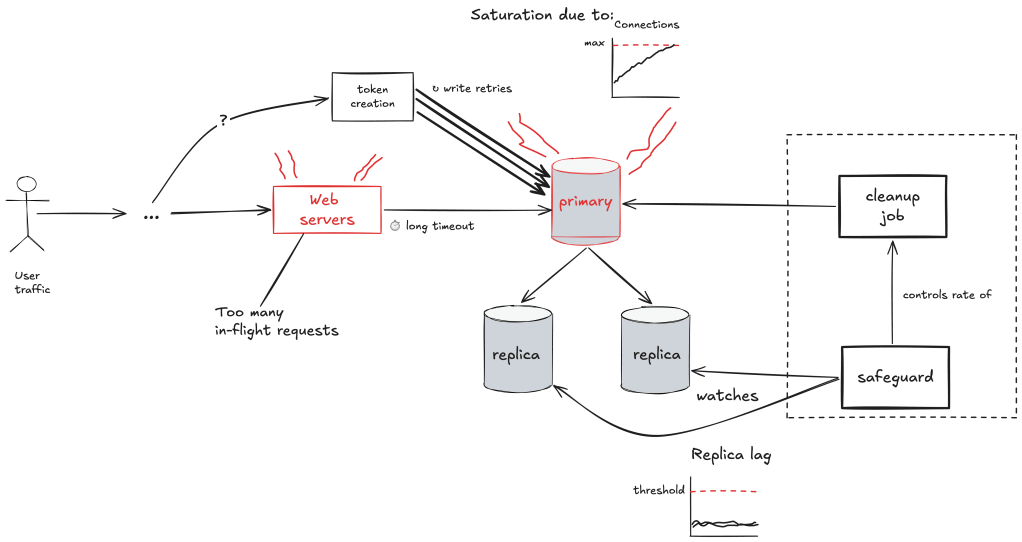
The job's safeguards failed to prevent overload as they monitored only replica lag, not the primary's health.
Service recovery required halting the job and shedding internal load, indicating a need for improved monitoring.
THE READ
What the cluster adds up to.
The incident at GitHub was triggered by an internal data-cleanup job that inadvertently saturated the primary database node. While the safeguards in place monitored the health of the read replicas, they did not account for the load that the cleanup job placed on the primary, which eventually maxed out its connection limits.
When the primary database reached its maximum connections, requests from web servers were left hanging without immediate failure due to long timeout settings, leading to an accumulation of blocked requests. This cascading effect caused the web servers to also become saturated, exacerbating the service disruptions experienced by users.
The reliance on a single health signal for monitoring highlights a critical flaw in GitHub's approach to resource management. Improved monitoring that accounts for the actual load on the primary database, rather than just relying on replica lag, is necessary to prevent similar incidents.
Once the source of the overload was identified, GitHub mitigated the situation by pausing the cleanup job and shedding internal load, which restored service functionality. However, this incident serves as a reminder of the importance of robust error handling and dynamic load management in complex systems.
Ultimately, this event underscores the impact that increased developer reliance on AI tools can have on infrastructure, necessitating a reevaluation of resource allocation and monitoring strategies to ensure system resilience.
Written by elseif from the cluster below · checked for specifics the sources never containedTHE CLUSTER