PERFORMANCE Signal 66
SIMD mask registers gain hardware support in modern CPUs despite limited installed base
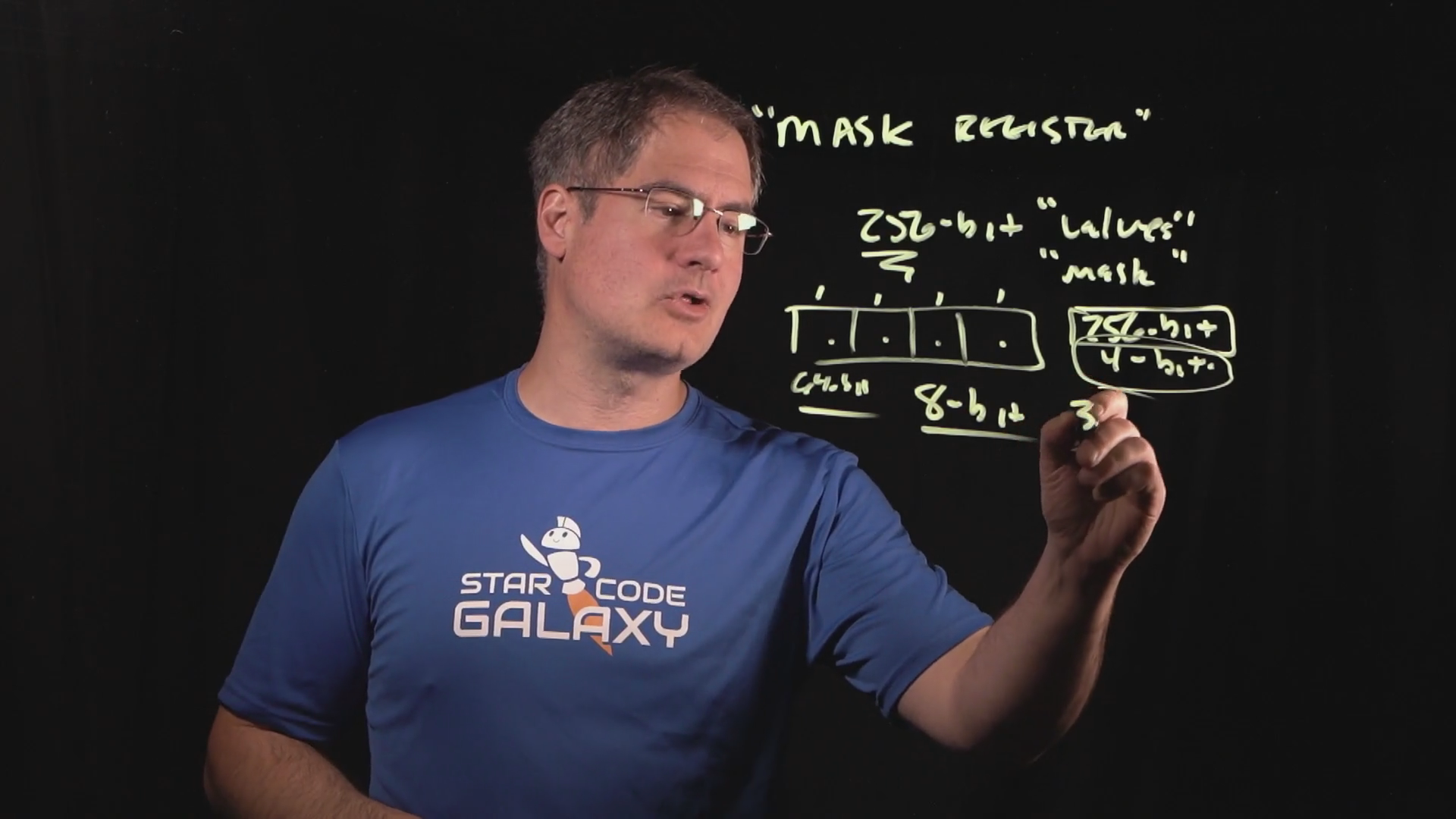 ↗
↗
Modern SIMD hardware now includes mask registers, though adoption remains low in existing systems.
Mask registers enable conditional SIMD operations without branching, improving performance in data-parallel workloads. Their limited hardware support means engineers must still design fallback paths for older systems. Understanding this feature helps optimize code for future-proof architectures.
Written by elseif from the cluster below · every claim links back to a sourceThe three things worth knowing
Mask registers allow SIMD instructions to execute conditionally on subsets of data without branching.
Current hardware support is sparse, requiring compatibility layers for broader deployment.
Adoption may accelerate as newer CPUs integrate the feature into standard instruction sets.
THE READ
What the cluster adds up to.
SIMD mask registers introduce a mechanism to apply operations selectively across vector lanes without explicit branching. This reduces pipeline stalls in data-parallel workloads, such as image processing or numerical simulations, where conditional logic would otherwise disrupt throughput. The feature is particularly useful for algorithms that process irregular data patterns, as it avoids the overhead of scalar fallbacks or predicated execution paths.
The installed base of CPUs supporting mask registers remains small, limiting immediate applicability. Engineers targeting heterogeneous environments must implement runtime detection or compile-time alternatives to maintain compatibility. This adds development overhead, as code paths must be tested across architectures with and without the feature. The trade-off between performance gains and portability will influence adoption timelines.
Hardware vendors appear to be integrating mask registers into newer instruction sets, suggesting future ubiquity. However, the lack of widespread support today means their use is confined to niche or forward-looking projects. Performance-critical applications may benefit from early adoption, but general-purpose software will likely wait for broader hardware penetration. The feature’s value hinges on its ability to simplify complex SIMD logic without sacrificing efficiency.
Written by elseif from the cluster below · checked for specifics the sources never containedTHE CLUSTER