TECH Signal 310
Slate Truck cuts base price by requiring drivers to supply their own infotainment devices
 ↗
↗
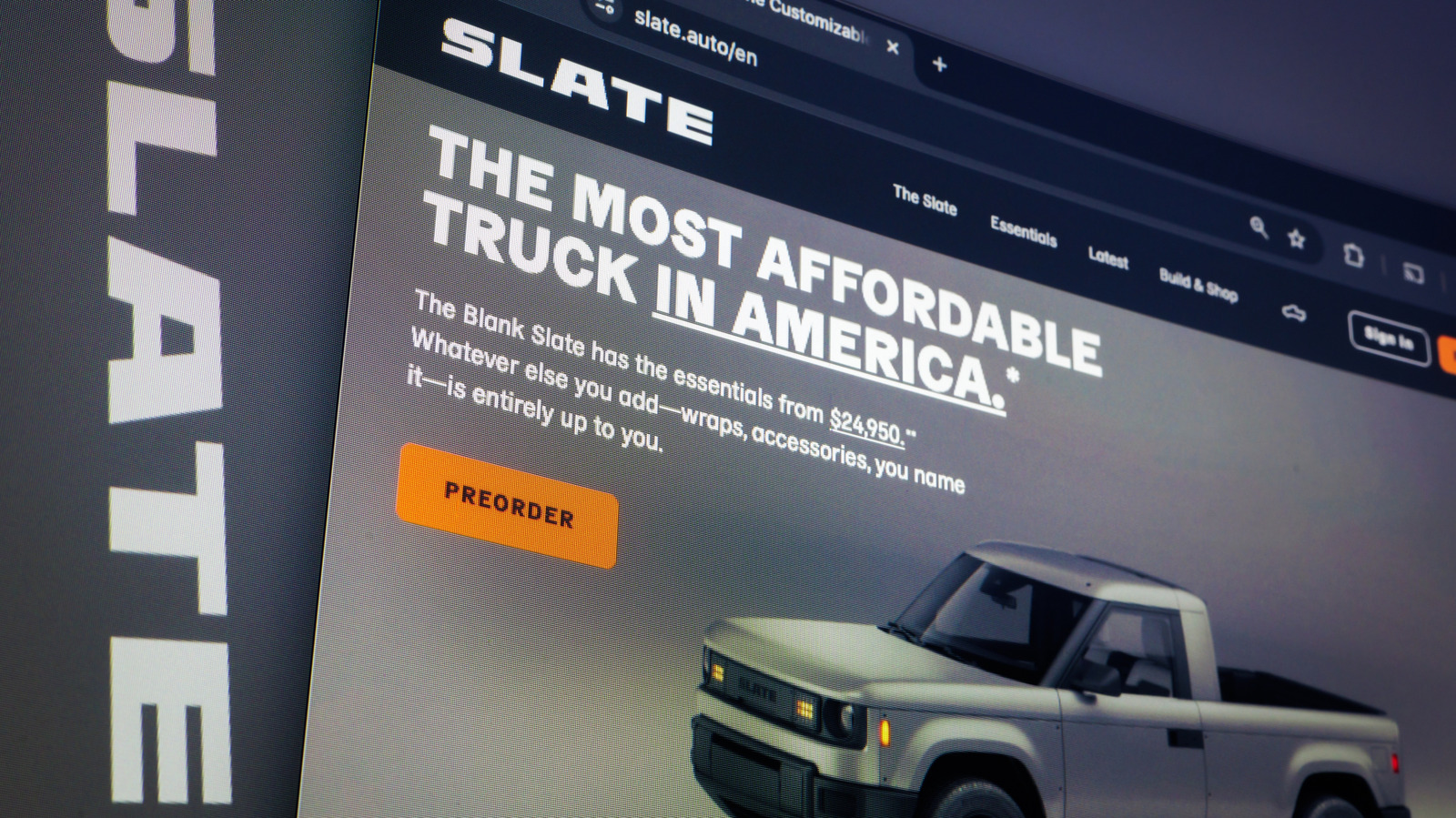
The Slate Truck reduces its starting price by omitting built-in infotainment and relying on users' smartphones or tablets as the primary interface.
This approach shifts hardware and software costs to the owner, reducing upfront vehicle price but increasing long-term dependency on personal devices. For engineers, it highlights a trade-off between affordability and integration complexity in embedded systems.
Written by elseif from the cluster below · every claim links back to a sourceThe three things worth knowing
The base model starts at $24,950 but lacks built-in infotainment, requiring users to mount their own smartphones or tablets.
Optional add-ons like speaker mounts, steering wheel controls, and a telematics module can raise the total cost to $46,493.
A minimal 4" LCD screen is included only for legally required features like the backup camera.
THE READ
What the cluster adds up to.
The Slate Truck’s pricing strategy hinges on eliminating built-in infotainment hardware, a departure from traditional automotive design. By requiring users to supply their own devices, the vehicle avoids the cost of screens, processors, and software licenses, directly lowering the base price. However, this creates a dependency on external hardware, which may not always integrate seamlessly with the truck’s limited built-in controls. Engineers evaluating this model must consider the long-term implications of relying on consumer-grade devices for critical functions like navigation or media playback.
The modular add-on system allows for customization but introduces variability in user experience. Optional components like the tablet mount, Bluetooth speaker, and steering wheel controls are sold separately, meaning the final cost and functionality depend on individual choices. This approach contrasts with conventional vehicles, where infotainment is standardized and included. For operators, the lack of a unified system could complicate diagnostics, updates, or repairs, as compatibility issues may arise from mixing proprietary and third-party hardware.
The minimalist design extends to legally mandated features, such as the backup camera, which uses a small 4" LCD screen instead of a larger display. While this meets regulatory requirements, it underscores the trade-offs of the ‘bring your own tech’ philosophy. Drivers accustomed to integrated systems may find the experience disjointed, particularly if their personal devices fail or require frequent charging. For engineers, this model raises questions about the scalability of such an approach in mass-market vehicles, where reliability and ease of use are critical.
The subscription-based telematics module further complicates the cost structure. While it enables features like remote unlocking and battery pre-conditioning, it adds recurring expenses on top of the initial purchase. This mirrors trends in other industries where hardware is subsidized by software-as-a-service models. For those building or maintaining such systems, the challenge lies in ensuring that third-party integrations remain secure and functional over time, especially as consumer devices evolve independently of the vehicle’s lifecycle.
Written by elseif from the cluster below · checked for specifics the sources never containedTHE CLUSTER