TECH Signal 570 2 feeds carried it
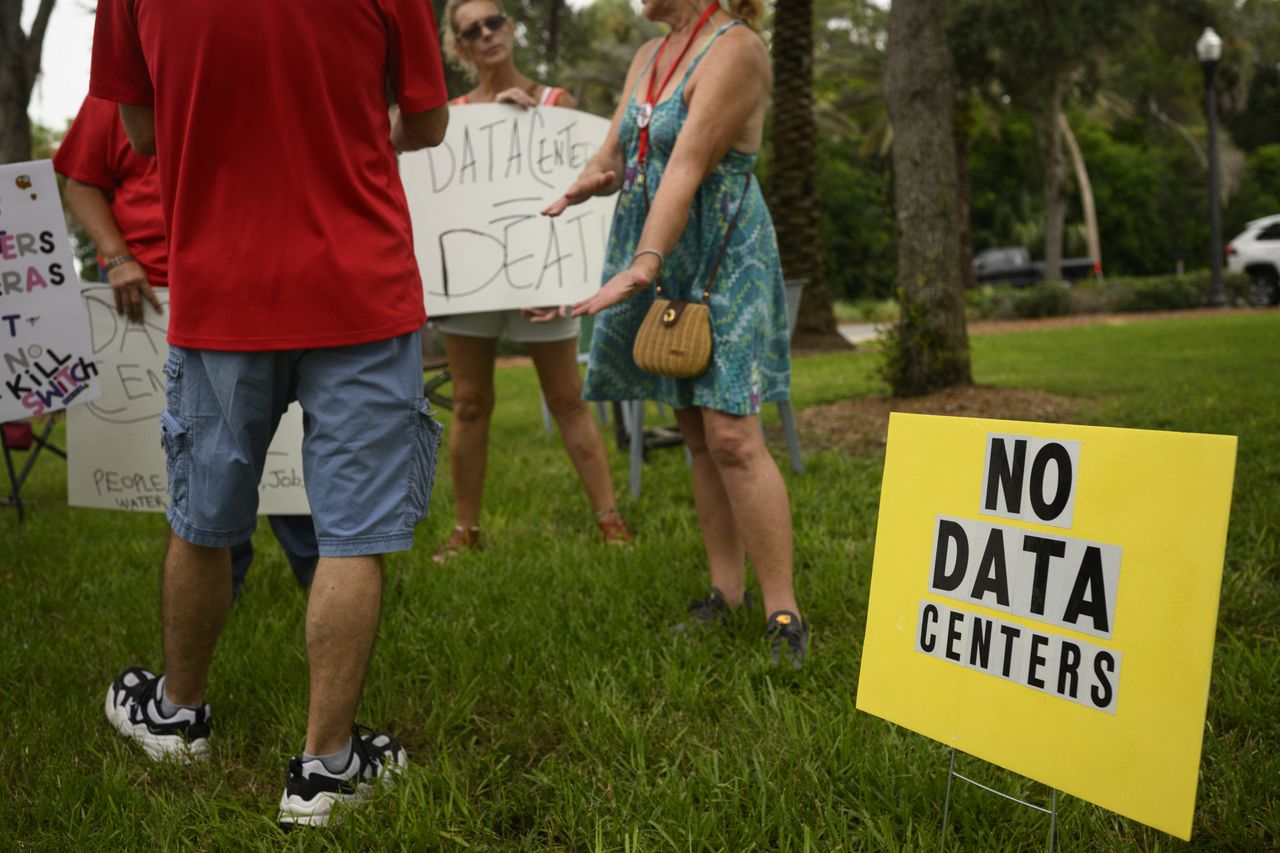
Trump claims US communities rejecting AI data centers risk economic decline amid China’s approval
 ↗
↗
President Donald Trump states opposition to AI data center construction harms local economic prospects and benefits foreign competitors.
The statement frames data center expansion as a national economic priority, directly conflicting with local pushback over infrastructure strain and environmental costs. For engineers, this signals heightened political scrutiny on data center siting and power demands, potentially accelerating regulatory changes or incentives for deployment.
Written by elseif from the cluster below · every claim links back to a sourceThe three things worth knowing
Trump argues rejecting data centers leads to economic stagnation and higher unemployment for communities.
Local and state governments are pausing data center projects to study power, water, and economic trade-offs.
Early research shows data centers raise local employment and wages but also increase electricity prices and housing costs.
THE READ
What the cluster adds up to.
Trump’s statement positions data center construction as a binary choice between economic growth and decline, dismissing local opposition as short-sighted. This framing ignores the nuanced trade-offs communities face, such as rising electricity costs and strained infrastructure. For engineers, the claim elevates data center siting from a local zoning issue to a national economic debate, which could influence permitting processes or federal incentives for rapid deployment.
The economic benefits of data centers appear concentrated in metropolitan areas, with rural regions seeing negligible gains. Studies cited in the material show modest job creation (100 to 200 permanent roles) and wage increases, but these come with higher electricity prices and housing costs. The discrepancy between urban and rural outcomes suggests that blanket policies favoring data centers may not deliver uniform benefits, complicating the argument for unrestricted expansion.
Local and state governments are responding to pushback by imposing moratoriums or audits, rather than outright bans. New York, Texas, and Ohio have paused projects to assess power, water, and environmental impacts, reflecting a cautious approach to balancing economic promises with tangible costs. Engineers should anticipate delays or additional compliance requirements for new data center projects, particularly in regions with constrained grids or water supplies.
The political divide over data centers mirrors broader tensions between technological advancement and local autonomy. Trump’s claim that China benefits from US opposition underscores the geopolitical stakes, framing data center expansion as a matter of national competitiveness. For engineers, this could translate into pressure to optimize data center efficiency or explore alternative energy sources to mitigate local resistance and align with federal priorities.
Written by elseif from the cluster below · checked for specifics the sources never containedTHE CLUSTER