ELSEIF
Your brief EB
357 stories from 122 feeds 503 clusters Refreshed 14 minutes ago next pull 05:10

Illustration only Photo by Anton Savinov on Unsplash

matklad Languages Signal 559 · 3 feeds carried it

Rust Glancer introduces low-memory Rust LSP with instant re-indexing after restart

Why it matters — Engineers working on older or resource-constrained machines can keep a Rust language server running without exhausting memory, which improves overall system responsiveness. The persistent on-disk index eliminates the need for a full re-analysis after each editor launch, saving developer time during frequent restarts. However, the design trades off some real-time analysis speed and feature completeness, so teams must evaluate whether the memory savings outweigh the slower incremental updates.

CLUSTERED TODAY

One story, several feeds.

All 503 clusters →

THE INDEX

Everything else today.

02 559 -2

Languages matklad

Rust Glancer introduces low-memory Rust LSP with instant re-indexing after restart

Why it matters — Engineers working on older or resource-constrained machines can keep a Rust language server running without exhausting memory, which improves overall system responsiveness. The persistent on-disk index eliminates the need for a full re-analysis after each editor launch, saving developer time during frequent restarts. However, the design trades off some real-time analysis speed and feature completeness, so teams must evaluate whether the memory savings outweigh the slower incremental updates.

3 feeds Compare ↗
12 min
03 536 -2

Infra ZDNET

China accelerates retirement of its Windows Government Edition for Linux desktops

Why it matters — Engineers working on Chinese government or enterprise systems will need to test applications, validate drivers, ensure document-format compatibility, and retrain staff as the shift from Windows to Kylin OS or UOS proceeds. The move reflects a broader push for digital sovereignty, reducing reliance on foreign software and increasing demand for domestic Linux expertise. Migration costs include application testing, peripheral and driver validation, identity system integration, document-format compatibility, staff retraining, and adaptation of Windows-dependent line-of-business software.

2 feeds Compare ↗
5 min
04 520 -2

Tech router.com

Ramp reportedly introduces model router for AI workload distribution

Why it matters — Engineers building AI-powered applications may gain a tool to optimise cost, latency or accuracy by dynamically selecting models. Without details on implementation or constraints, the practical impact remains unclear. If widely adopted, such routing could shift how teams manage multi-model deployments

4 feeds Compare ↗
4 min
05 507 -2

Infra Cloudflare

Say it once: introducing Bot Preference Sync

Why it matters — It removes the need to manually edit robots.txt when AI bot policies change. It keeps Search, Agent, and Training bot access in sync automatically. Engineers save time and reduce the risk of configuration drift.

1 feed
4 min
07 496 new

Infra Phoronix

NetBSD 11.0

Why it matters — Engineers targeting embedded or heterogeneous systems now have an officially supported RISC-V target within NetBSD, which can simplify cross-platform toolchains. The upgraded Linux compatibility layer reduces friction when running Linux binaries on NetBSD, useful for legacy software or container-like workloads. Firewall improvements in NPF affect anyone who relies on NetBSD for routing or security appliances.

4 feeds Compare ↗
1 min
08 493 -1

Databases The Consensus (Paywall)

Cassandra 6 reportedly adds strictly serializable cross-partition ACID transactions with Accord

Why it matters — For engineers building distributed applications, this change could reduce complexity by allowing multi-partition transactions without sacrificing Cassandra’s scalability. However, adoption may require schema redesign and performance tuning, as Accord’s strict serializability imposes coordination overhead.

3 feeds Compare ↗
3 min
09 493 -1

Tech sockpuppet.org

Developers urged to abandon terminal user interfaces in favor of native graphical applications

Why it matters — Shifting from TUIs to native GUIs changes the required skill set, pushing engineers toward platform-specific knowledge and UI frameworks. This can improve end-user experience but also raises development effort, tooling costs, and potential vendor lock-in. Teams that maintain server-side or low-resource tools may need to keep TUIs for compatibility.

2 feeds Compare ↗
14 min
10 492 -2

Tech history.com

Science paper argues sugars and starches, not just meat, drove human brain evolution

Why it matters — The study reframes a long-running debate in evolutionary biology by quantifying the dietary role of carbohydrates and glucose, the brain's primary fuel. It draws on primate brain-size comparisons and evolutionary theories of color vision to argue that sugar-seeking was a cognitive driver, not just a dietary side effect.

1 feed
6 min
11 483 -2

Tech matklad

Zig's Io.Threaded is Neat

Why it matters — For engineers building or maintaining systems that rely on blocking I/O, this approach eliminates the need for non-blocking APIs or complex event loops while still allowing safe, deterministic cancellation. It reduces the friction of mixing threads with cancellation, a long-standing pain point in concurrent programming. The trade-off is platform-specific quirks and potential signal-handling complexity on POSIX systems.

3 feeds Compare ↗
5 min
12 483 -1

Databases The Verge

Walmart begins nationwide Tap to Pay rollout for Apple Pay and Google Pay by end of the year

Why it matters — Engineers will need to enable Tap to Pay functionality on Walmart’s payment systems while keeping existing Walmart Pay and Scan-and-Go options operational. The phased rollout means payment software must support both new and legacy methods during the transition, increasing testing and maintenance effort. Engineers should also plan for the later deployment at fuel stations, which will not see Tap to Pay until the middle of 2027.

4 feeds Compare ↗
3 min
13 482 -1

Databases Farid Zakaria’s Blog

nixpkgs-multiverse explores three ways to query SQLite from inside Nix evaluation

Why it matters — Nix has no builtins.sqlite, and its JSON parsing is eager, meaning a 5.3 MB index file is fully parsed and materialized on the Nix heap for every lookup. For projects like nixpkgs-multiverse that index 305,492 package versions, this makes JSON impractical as the index grows. The post outlines escape hatches that trade safety or ergonomics for query efficiency.

2 feeds Compare ↗
11 min
14 480 new

Tech OpenAI

Ten advances in mathematics and theoretical computer science

Why it matters — These breakthroughs resolve problems that have been open for a long time, potentially reshaping algorithmic design and security assumptions used by engineers. One of the cryptographic results was uncovered with the help of an AI model, showing that large-scale language-model prompting can contribute to security research, albeit at a significant token cost. The mix of new theory and AI-driven discovery suggests both new technical constraints and new research tools for software builders.

4 feeds Compare ↗
4 min
15 475 -1

Observability Dan Luu

LLMs make specialized performance optimization cheap enough for everyday projects

Why it matters — Performance work that once required dedicated specialists, JIT compilers, custom regex engines, demoscene-style hardware-specific tricks, is now achievable through a few prompts. This shifts the economics of optimization from large-scale or high-value projects only to essentially any project, and opens the door to dynamic software fitted to particular workloads rather than general classes of them.

1 feed
21 min
16 469 -2

Tech us-debt-clock.com

US national debt reaches $39.96 trillion with per-citizen share at $119,287

Why it matters — For engineers building financial, economic, or policy-related systems, the scale and growth rate of US debt may influence long-term interest rates, inflation expectations, and fiscal stability assumptions. Real-time debt tracking tools now provide granular data that could inform risk modeling or public-sector software requirements.

1 feed
3 min
17 464 -2

Tech grapheneos.social

Standard form factor to lead Motorola partnership's initial work

Why it matters — This announcement clarifies the form factor of the partnership's first product, which is relevant for engineers considering device design and compatibility. However, the lack of additional details limits the practical implications for engineering decisions.

1 feed
4 min
18 461 -2

Infra Tomshardware

Ypsilanti Township bans new electrical infrastructure to block University of Michigan nuclear weapons data center

Why it matters — This is a novel local opposition tactic, targeting utility infrastructure rather than the data center directly, which other communities could replicate against large compute facilities. The University has threatened to sue, calling the action discriminatory, and federal precedent suggests projects deemed crucial may override local bans.

2 feeds Compare ↗
3 min
19 457 -1

Tech omarchy.org

Omacom Foundation launches with eight founding patrons each pledging $1 million to fund open-source computer future

Why it matters — The Omacom Foundation will fund infrastructure, hold trademarks, promote the work, and support the open-source projects and developers that the Omarchy Quattro platform depends on. With eight founders each pledging $1 million, the foundation aims to make the funding last a long time and provides a vote of confidence that could help achieve the goal of making the Year of Linux on the Desktop a reality.

2 feeds Compare ↗
2 min
20 456 -1

Web bram.us

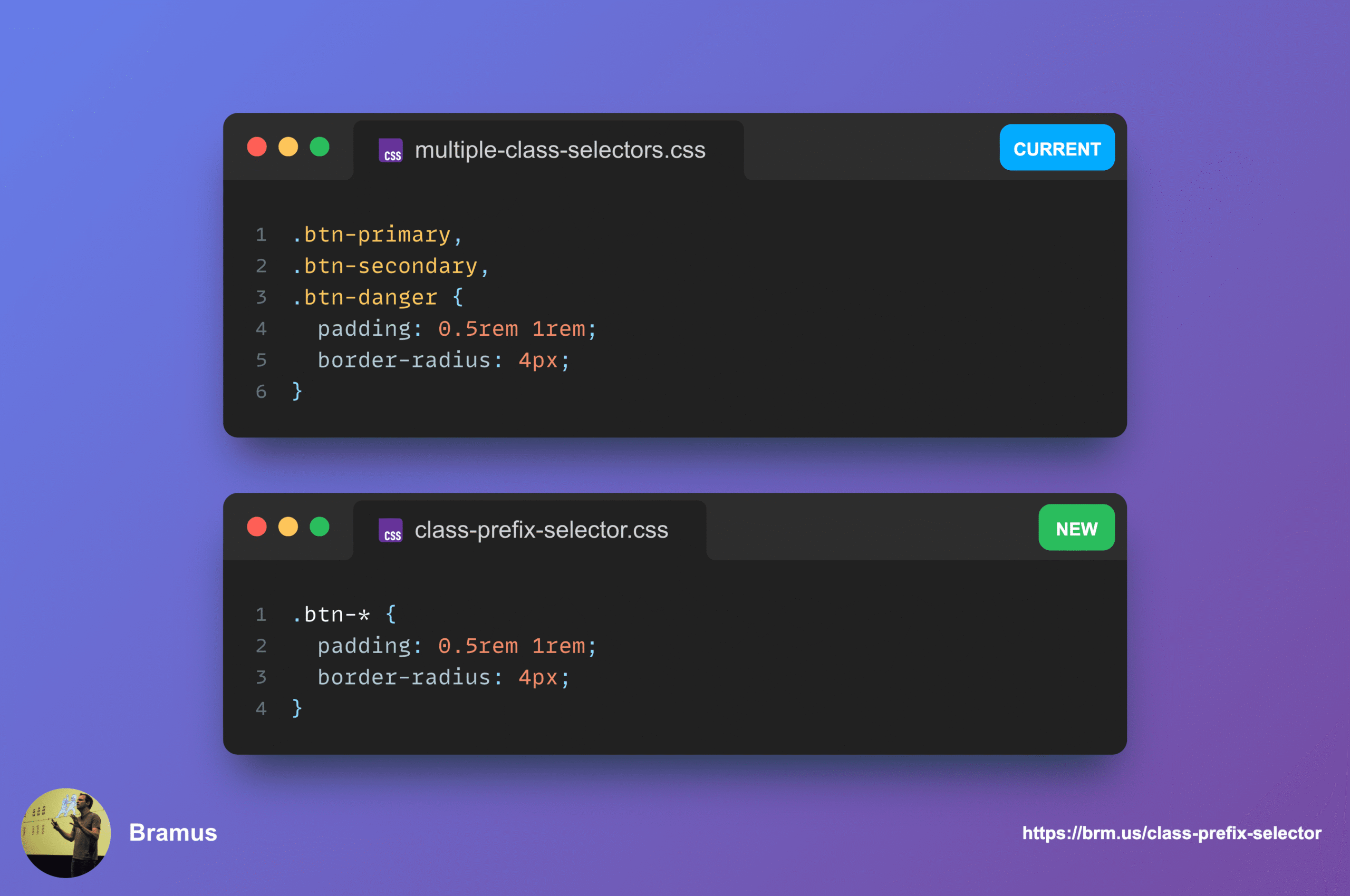
CSSWG adds .prefix-* selector to Selectors Level 5 spec

Why it matters — This selector removes the need for brittle attribute selectors or extra base classes when styling prefixed utility classes in design systems. However, since it only exists in spec text and has no browser support yet, it will be years before it can be used in production.

2 feeds Compare ↗
5 min

HOW RANKING WORKS

Nothing here is paid, boosted, or weighted by time on page.

Every story carries a signal score, and every score decomposes into named parts you can inspect on the story page. If you disagree with a ranking, you can see exactly which component put it there.

Read the full method →

01 · RECENCY

How recently it was published, decaying on a fixed half-life rather than falling off a cliff.

02 · CROSS-FEED AGREEMENT

How many independent feeds carried the same story. Agreement reached separately is the strongest signal we have.

03 · SOURCE AUTHORITY

Editorial trust in the feed that carried it, which is not always the publisher shown. Primary engineering write-ups outrank rewrite desks.

04 · EARLY VELOCITY

Discussion the story drew in the feed that surfaced it, not on elseif. We never rank on our own click data.

05 · TOPIC CLARITY

How confidently the story classified. A story we cannot place is unlikely to be what you came for.