ELSEIF
Your brief EB
339 stories from 119 feeds 474 clusters Refreshed 17 minutes ago next pull 14:25

github.com Tech Signal 544 · 2 feeds carried it

Emacs 31.1 to release August 24 with tree-sitter ABI 15

Why it matters — The tree-sitter ABI change means packages and grammars built against the previous ABI will need recompilation or updates, affecting users who rely on tree-sitter-based syntax highlighting. The release date gives developers a clear timeline for testing and upgrading their Emacs configurations.

CLUSTERED TODAY

One story, several feeds.

All 474 clusters →

THE INDEX

Everything else today.

03 544 -5

Tech github.com

Emacs 31.1 to release August 24 with tree-sitter ABI 15

Why it matters — The tree-sitter ABI change means packages and grammars built against the previous ABI will need recompilation or updates, affecting users who rely on tree-sitter-based syntax highlighting. The release date gives developers a clear timeline for testing and upgrading their Emacs configurations.

2 feeds Compare ↗
5 min
05 538 -4

Databases The Consensus (Paywall)

Cassandra 6 reportedly adds strictly serializable cross-partition ACID transactions with Accord

Why it matters — For engineers building distributed applications, this change could reduce complexity by allowing multi-partition transactions without sacrificing Cassandra’s scalability. However, adoption may require schema redesign and performance tuning, as Accord’s strict serializability imposes coordination overhead.

2 feeds Compare ↗
3 min
06 536 -5

Tech matklad.github.io

Python, Go, and Rust standard libraries compared on institutional capacity for quality

Why it matters — For engineers, the design and maintenance of a standard library directly impacts productivity and long-term maintainability. The argument shifts focus from ideological debates about library size to the practical question of whether a language's governance can sustain high-quality APIs. This affects how teams evaluate language choices for new projects or migrations

2 feeds Compare ↗
2 min
07 536 -4

Tech xda-developers.com

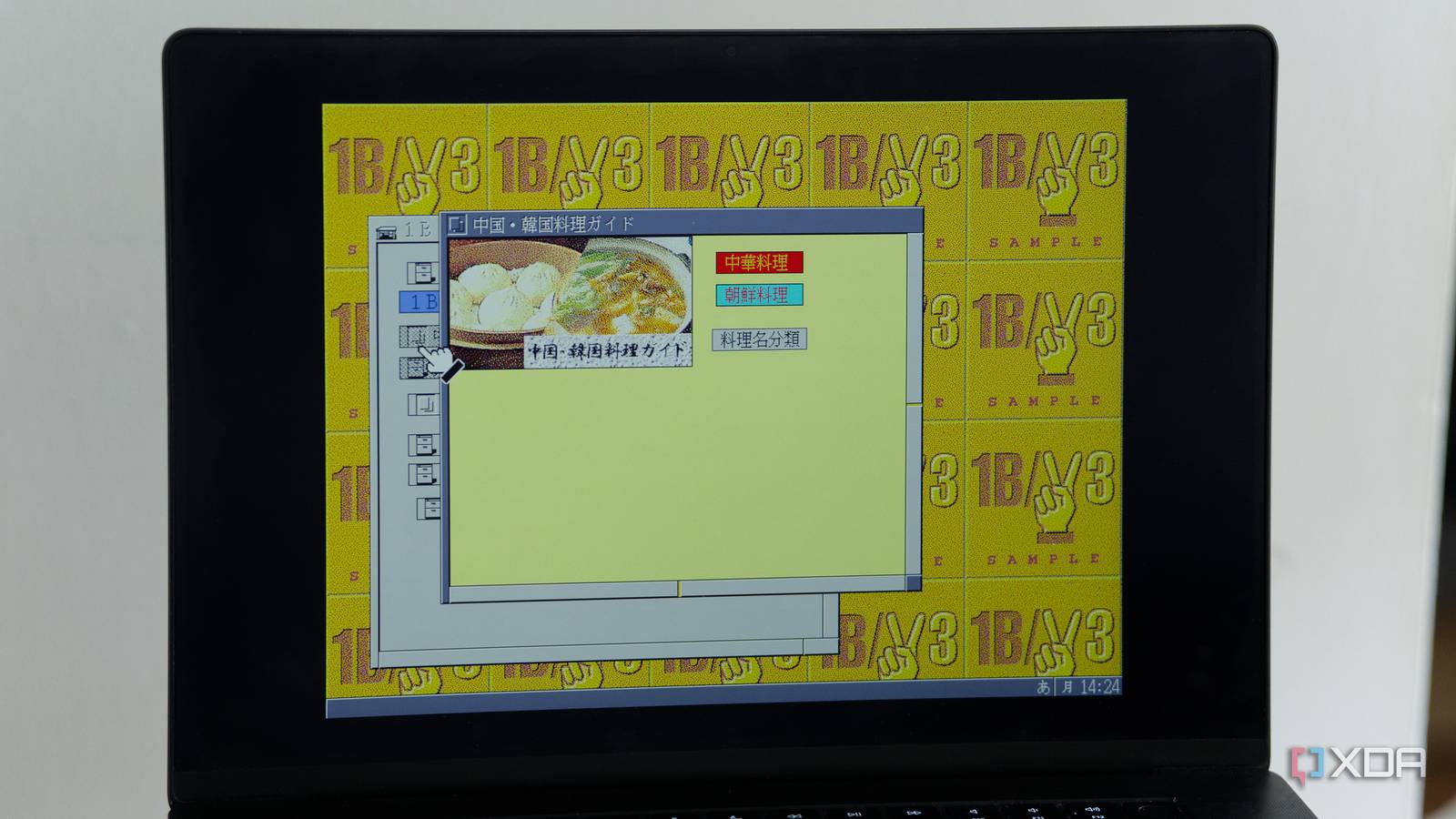
US trade report named Japan's BTRON OS as unfair barrier, effectively killing it

Why it matters — The episode shows how trade policy can determine which computing architectures reach scale, regardless of technical ambition. While BTRON was killed before reaching Japanese schools, its embedded counterpart ITRON quietly became one of the most deployed operating systems in history, proving that technical merit alone does not decide market outcomes.

2 feeds Compare ↗
16 min
08 527 -5

AI Google DeepMind

From Atari to EVE Online: Building on 15 Years of AI Research in Games

Why it matters — DeepMind's move from internal benchmarks to studio partnerships signals an effort to apply its AI research in shipped commercial products rather than purely academic settings. Engineers in game development and simulation may eventually see new tools, techniques, or research outputs emerge from these collaborations.

1 feed
4 min
11 514 -5

Tech AT Protocol Blog

Atproto Spaces alpha launch lets developers build non-public data apps

Why it matters — Until now, all data on atproto was public, limiting apps that need private settings or gated content. Spaces introduce a permissioned data primitive that lets developers keep data private without losing interoperability. This expands the kinds of services that can be built on the atproto network.

2 feeds Compare ↗
7 min
12 514 -5

Tech san.com

Grand jury declines to indict Ohio man charged with destroying Flock camera

Why it matters — The decision removes immediate criminal liability for the individual, showing that such cases can be resolved without a trial. Engineers building or maintaining hardware should be aware that destructive actions against devices can attract criminal charges, even if those charges are later dropped. The outcome may influence how companies assess legal risk around device tampering.

1 feed
4 min
13 498 -5

Performance ixuvo.com

TigerBeetle Eliminates Runtime Memory Allocation to Achieve Deterministic Sub-Millisecond Tail Latency

Why it matters — For engineers building high-throughput transactional systems, TigerBeetle demonstrates that eliminating dynamic memory allocation after initialization removes heap fragmentation and garbage collection as sources of unpredictable latency. The trade-off is rigidity: maximum connections, batch sizes, and cache sizes must be defined at startup or compile time, and workloads exceeding these limits will fail rather than degrade gracefully.

1 feed
10 min
14 497 -5

Tech nytimes.com

Felony charges for citizen deleting phone data at US Border

Why it matters — This case shows that routine data deletion practices can trigger criminal liability at border checkpoints. Engineers building travel-related software or device security features must weigh the legal risks of user-initiated data removal.

1 feed
4 min
15 496 new

Infra Phoronix

NetBSD 11.0

Why it matters — Engineers targeting embedded or heterogeneous systems now have an officially supported RISC-V target within NetBSD, which can simplify cross-platform toolchains. The upgraded Linux compatibility layer reduces friction when running Linux binaries on NetBSD, useful for legacy software or container-like workloads. Firewall improvements in NPF affect anyone who relies on NetBSD for routing or security appliances.

4 feeds Compare ↗
1 min
16 496 -5

Tech www.theregister.com - Articles

Task Manager now displays per-process NPU usage on supported Windows devices

Why it matters — Seeing which processes consume NPU resources lets engineers pinpoint AI-related performance and power-draw issues, especially on battery-powered laptops. The visibility also aids decisions about workload placement across CPU, GPU, and NPU. However, the added telemetry risks making Task Manager more complex than its original lightweight design.

2 feeds Compare ↗
2 min
18 487 -5

Performance github.com

Ruby 4.0 Ractor web server Kino delivers 1.5-2× throughput with 4-7× less memory than Puma clusters

Why it matters — Ruby’s Global VM Lock (GVL) forces production servers to fork processes, doubling memory costs per core. Kino’s Ractor mode bypasses the GVL, cutting memory use while raising throughput on both I/O and CPU workloads. The threaded fallback keeps Rails compatibility but still halves memory versus Puma clusters.

1 feed
15 min
19 480 new

Tech OpenAI

Ten advances in mathematics and theoretical computer science

Why it matters — These breakthroughs resolve problems that have been open for a long time, potentially reshaping algorithmic design and security assumptions used by engineers. One of the cryptographic results was uncovered with the help of an AI model, showing that large-scale language-model prompting can contribute to security research, albeit at a significant token cost. The mix of new theory and AI-driven discovery suggests both new technical constraints and new research tools for software builders.

4 feeds Compare ↗
4 min

HOW RANKING WORKS

Nothing here is paid, boosted, or weighted by time on page.

Every story carries a signal score, and every score decomposes into named parts you can inspect on the story page. If you disagree with a ranking, you can see exactly which component put it there.

Read the full method →

01 · RECENCY

How recently it was published, decaying on a fixed half-life rather than falling off a cliff.

02 · CROSS-FEED AGREEMENT

How many independent feeds carried the same story. Agreement reached separately is the strongest signal we have.

03 · SOURCE AUTHORITY

Editorial trust in the feed that carried it, which is not always the publisher shown. Primary engineering write-ups outrank rewrite desks.

04 · EARLY VELOCITY

Discussion the story drew in the feed that surfaced it, not on elseif. We never rank on our own click data.

05 · TOPIC CLARITY

How confidently the story classified. A story we cannot place is unlikely to be what you came for.