ELSEIF
Your brief EB
294 stories from 72 feeds 62 clusters Refreshed 10 minutes ago next pull 09:35

Lobsters AI Signal 590 · 2 feeds carried it

Rust-lang/rust is adopting an LLM policy

Why it matters — The policy gives reviewers a concrete reference for handling LLM-generated contributions, which should help curb the surge of low-effort PRs that strain review capacity. Contributors will need to adjust their workflow to disclose LLM usage and demonstrate understanding, adding a small overhead but improving signal quality for the community.

CLUSTERED TODAY

One story, several feeds.

All 62 clusters →

TECH 559

Don't Be a Meat Proxy

This practice shifts cognitive labor onto peers, who must parse verbose, jargon-heavy, or incorrect AI output. It also erodes accountability in code r...

INFRA 542

NetBSD 11.0

Engineers targeting embedded or heterogeneous systems now have an officially supported RISC-V target within NetBSD, which can simplify cross-platform...

THE INDEX

Everything else today.

01 590 -5

AI Lobsters

Rust-lang/rust is adopting an LLM policy

Why it matters — The policy gives reviewers a concrete reference for handling LLM-generated contributions, which should help curb the surge of low-effort PRs that strain review capacity. Contributors will need to adjust their workflow to disclose LLM usage and demonstrate understanding, adding a small overhead but improving signal quality for the community.

2 feeds Compare ↗
11 min
02 569 -2

Tech Phoronix

FFmpeg 9.0 Released With More Vulkan Acceleration, Animated WebP & More AMD AMF

Why it matters — For teams building video processing pipelines, the expanded Vulkan and AMD AMF support provides more hardware acceleration options, which can reduce CPU load and improve transcoding throughput. Animated WebP support eliminates a format gap that previously required workarounds or separate tooling in web-focused media workflows.

3 feeds Compare ↗
1 min
03 566 -2

Tech OpenAI

Apple is getting this wrong

Why it matters — The dispute highlights legal risk around employee moves and proprietary data, which can affect how engineers handle model training data and internal documentation. OpenAI’s public correction suggests it will tighten internal record-keeping and communication about employee contributions. Teams should be aware that similar lawsuits could impose additional compliance and legal-review overhead.

3 feeds Compare ↗
4 min
04 561 -2

AI TechCrunch

Apple says more ex-employees may have taken confidential data to OpenAI

Why it matters — The widening claims suggest Apple believes intellectual property leakage to OpenAI is more systematic than initially alleged, which could reshape how companies handle offboarding and device recovery for departing staff headed to competitors. OpenAI's public rebuttal, including the claim that residual access resulted from Apple's own poor security procedures, raises the stakes for how trade secret disputes are adjudicated when plaintiff security practices are themselves questionable.

3 feeds Compare ↗
4 min
05 559 -2

Tech Lobsters

Don't Be a Meat Proxy

Why it matters — This practice shifts cognitive labor onto peers, who must parse verbose, jargon-heavy, or incorrect AI output. It also erodes accountability in code reviews and technical discussions, as the original author may not understand the work they’re submitting. Teams adopting AI tools must now explicitly decide whether to treat them as assistants or crutches.

3 feeds Compare ↗
2 min
06 542 -1

Infra Phoronix

NetBSD 11.0

Why it matters — Engineers targeting embedded or heterogeneous systems now have an officially supported RISC-V target within NetBSD, which can simplify cross-platform toolchains. The upgraded Linux compatibility layer reduces friction when running Linux binaries on NetBSD, useful for legacy software or container-like workloads. Firewall improvements in NPF affect anyone who relies on NetBSD for routing or security appliances.

4 feeds Compare ↗
1 min
07 535 -3

Databases Cloudflare

Announcing Cloudflare Wallets: The programmable wallet for the agentic Internet

Why it matters — The solution removes the manual steps agents currently face when trying new APIs, allowing them to explore services autonomously. By pairing verifiable handles with programmable spending limits, it reduces friction while keeping financial risk under human control. This creates the foundation for a two-sided agentic market where providers can sell resources headlessly and agents can consume them without constant oversight.

2 feeds Compare ↗
7 min
08 533 -1

Tech OpenAI

Ten advances in mathematics and theoretical computer science

Why it matters — These breakthroughs resolve problems that have been open for a long time, potentially reshaping algorithmic design and security assumptions used by engineers. One of the cryptographic results was uncovered with the help of an AI model, showing that large-scale language-model prompting can contribute to security research, albeit at a significant token cost. The mix of new theory and AI-driven discovery suggests both new technical constraints and new research tools for software builders.

4 feeds Compare ↗
4 min
09 516 -3

AI OpenAI

Third-party cyber evaluations involving OpenAI models

Why it matters — If you build or operate systems that integrate OpenAI models, changes to how third-party security evaluations are conducted could affect compliance and risk-assessment workflows. The announcement signals that prior evaluation processes had issues significant enough to warrant public explanation and corrective measures.

2 feeds Compare ↗
4 min
11 494 -1

Tech Lobsters

Twenty Years of Bigtable

Why it matters — Pandoc's architecture decision, parsing to an AST rather than using regex transformations, enabled its N×M format conversion model and proved more reliable and extensible than the approach of contemporary Markdown implementations. The retrospective offers a concrete case study of how a tool built for personal academic use, written in an unconventional language choice, achieved widespread adoption through packaging and community contribution.

3 feeds Compare ↗
19 min
12 486 -3

Web Lobsters

we finally learned to center a div, then browsers added sidebars

Why it matters — CSS centering operates within the viewport, so any browser UI on one side shifts the apparent center toward that side, making technically correct layouts look wrong. This technique gives developers a way to correct for that offset, though it requires JavaScript and a pointer event on Chromium browsers before the adjustment can take effect.

2 feeds Compare ↗
2 min
13 480 -3

Security GitHub

Don’t stop early: Case-folding source code at memory speed

Why it matters — For engineers building large-scale search or indexing systems, this approach demonstrates that case-insensitive matching can be performed at memory speed, removing a common computational bottleneck. It provides a concrete reference architecture for optimizing text processing pipelines where branching would normally limit throughput.

3 feeds Compare ↗
2 min
14 476 -3

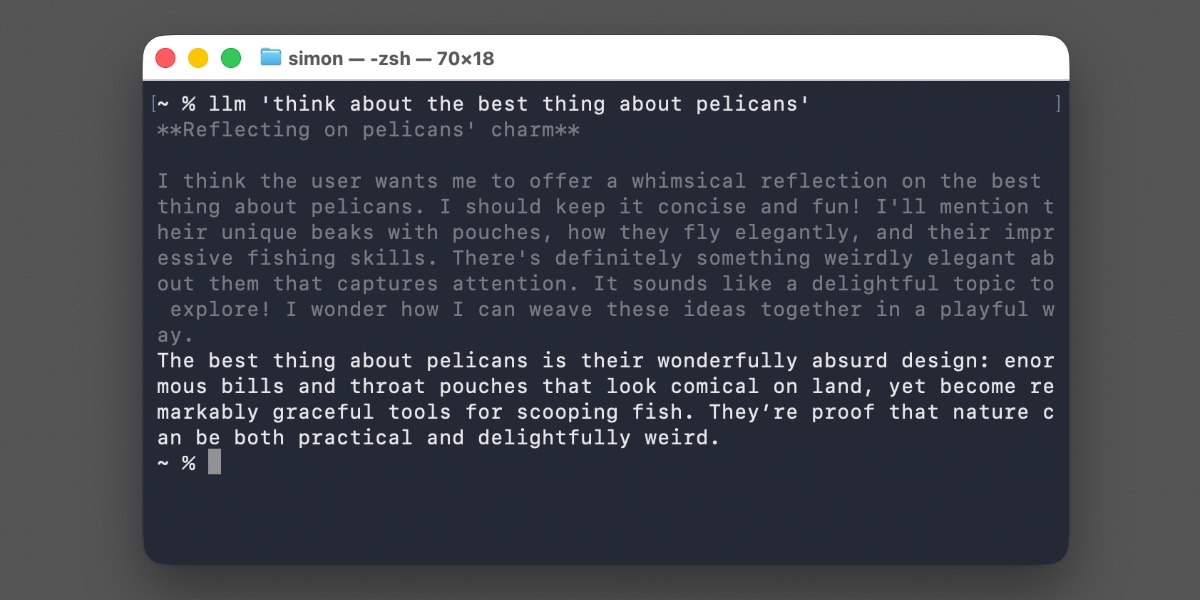
AI Simon Willison

New release of LLM adds support for reasoning traces, OpenAI Responses, server-side tools, and smarter logging

Why it matters — Engineers can now inspect a model’s internal reasoning without contaminating piped output, simplifying debugging and prompt iteration. The new tool and logging designs let workflows run code or fetch data directly from the model call and avoid storing duplicate message histories, reducing storage overhead and simplifying log processing.

1 feed
6 min
15 469 new

Tech Cloudflare

Smaller, faster, safer: running Kimi and GLM at scale

Why it matters — Engineers can serve longer contexts and more concurrent requests on the same hardware, which translates into cheaper inference for high-capacity models like Kimi and GLM. The techniques preserve benchmark scores, so model quality does not suffer, but they introduce phase-specific performance differences that must be managed in deployment pipelines.

2 feeds Compare ↗
6 min
16 460 -4

AI Hacker News

Zero-Mem: Zero-Token Memory Operations for LLM Agents

Why it matters — For engineers building or deploying LLM agents, this shifts memory overhead from recurring LLM calls to upfront encoder computation. The trade-off reduces runtime costs but requires pre-processing interaction traces into entity-context graphs and temporal hierarchies. If your agent’s memory needs are predictable, Zero-Mem can cut latency and token spend without sacrificing accuracy.

1 feed
4 min
17 457 -4

Tech MIT Technology Review

NASA’s new dark energy space telescope can also detect killer asteroids

Why it matters — Engineers building or operating space-based observation systems may need to account for dual-use capabilities in future telescope designs. The Roman telescope’s asteroid detection relies on software adjustments to filter and analyze streaks in its imagery, which could inform similar adaptations in other instruments. This pivot demonstrates how existing infrastructure can be repurposed for planetary defense without additional hardware costs.

1 feed
7 min
18 455 -4

Tech Hacker News

Saudi-led group completes $55B purchase of gaming giant EA

Why it matters — The shift to private ownership removes public-market reporting requirements and places EA under a sovereign-wealth fund that may impose different strategic priorities. Engineers can expect tighter budgets, possible staff reductions, and new constraints on game content that could affect development pipelines.

1 feed
5 min
19 452 -4

Performance InfoQ

Ponytail Agent Skill Corrects Its Own Benchmark After Contributor Challenge

Why it matters — For engineers using AI coding agents, Ponytail offers a concrete ruleset to curb unnecessary code generation, but its adoption requires trusting a benchmark that was initially misleading. The correction process shows how quickly viral AI projects can spread unverified claims, and the lack of evaluation standards for such skills means practitioners must independently verify performance. The incident also highlights that a simple prompt like 'follow YAGNI' can match or beat a complex skill on flawed benchmarks, but the skill adds safety guards that a bare prompt omits.

1 feed
5 min
20 445 -2

Security Lobsters

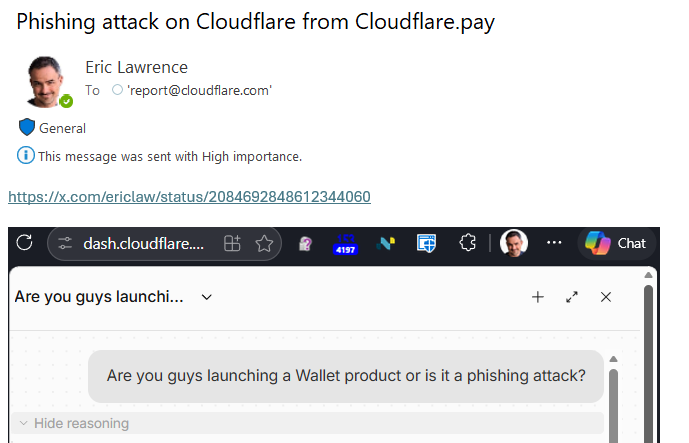
Security Is Hard, Y'all

Why it matters — When legitimate vendors use untrusted domains and confusing OAuth consent screens, they train users to ignore security warnings, making actual phishing attacks harder to stop. It also demonstrates that even sophisticated users and automated support agents cannot reliably distinguish poorly designed legitimate flows from attacks.

2 feeds Compare ↗
4 min

HOW RANKING WORKS

Nothing here is paid, boosted, or weighted by time on page.

Every story carries a signal score, and every score decomposes into named parts you can inspect on the story page. If you disagree with a ranking, you can see exactly which component put it there.

Read the full method →

01 · RECENCY

How recently it was published, decaying on a fixed half-life rather than falling off a cliff.

02 · CROSS-FEED AGREEMENT

How many independent feeds carried the same story. Agreement reached separately is the strongest signal we have.

03 · SOURCE AUTHORITY

Editorial trust in the reporting feed. Primary engineering write-ups outrank rewrite desks.

04 · EARLY VELOCITY

Discussion the story drew at its origin, not on elseif. We never rank on our own click data.

05 · TOPIC CLARITY

How confidently the story classified. A story we cannot place is unlikely to be what you came for.