Leadership changes at the helm of a major AI research lab can signal shifts in strategy, priorities, or internal dynamics. For engineers working with...
For engineers running agentic workloads on Workers, the new view fills a real observability gap: prior traces covered fetch, KV, and D1 operations but...
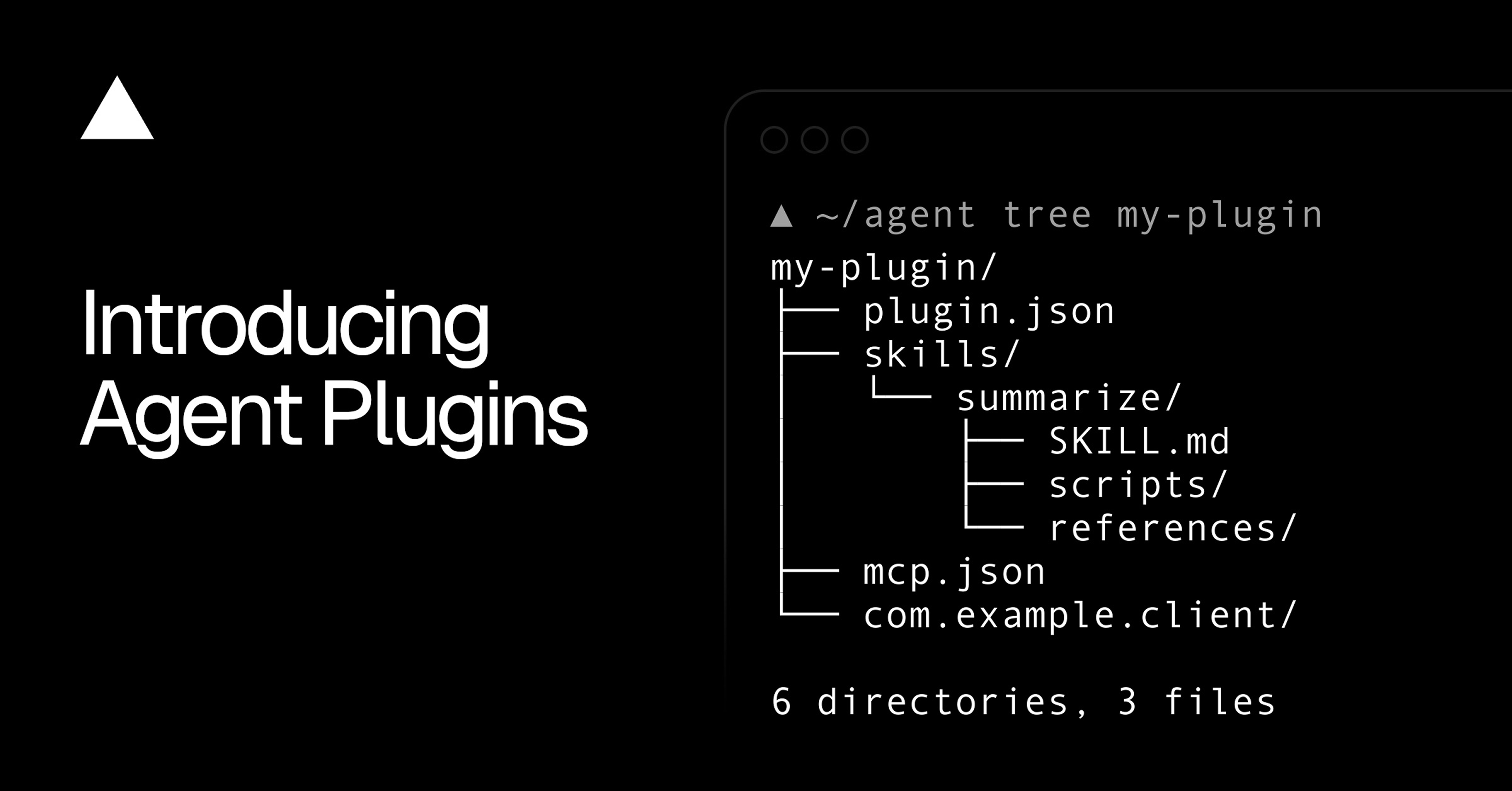
By giving all compatible clients a predictable structure, extension authors no longer need to maintain separate packages for each platform, cutting du...
Why it matters — The acquisition gives AMD a path to produce inference hardware where model parameters are hard-wired, potentially reducing latency and power use compared with conventional accelerators. Early demonstrations cited in the source show such silicon-integrated circuits achieving up to 17,000 tokens per second. This move signals AMD’s effort to differentiate its data-center offerings in the competitive AI accelerator market.
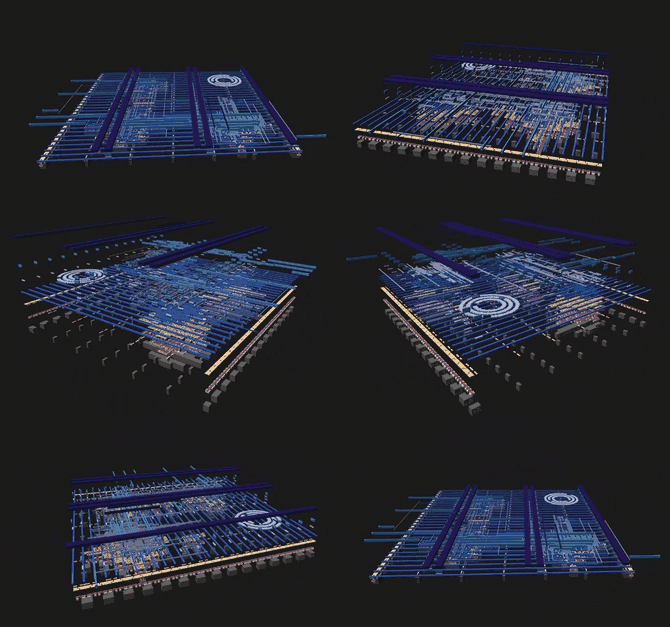
Why it matters — This puzzle gives engineers a rare, hands-on opportunity to practice hardware reverse engineering using real open-source tools and a fabricated chip layout. It highlights the growing accessibility of ASIC design and the importance of understanding the full stack from code to silicon. The competition also signals Jane Street's interest in finding talent comfortable with low-level hardware and digital logic.
Why it matters — The update adds substantial new content and a novel time-loop mechanic, requiring engineers to integrate fresh assets and gameplay logic across multiple platforms. Its free, cross-store distribution also forces teams to manage a coordinated multi-platform release and ongoing support.
Why it matters — Engineers targeting embedded or heterogeneous systems now have an officially supported RISC-V target within NetBSD, which can simplify cross-platform toolchains. The upgraded Linux compatibility layer reduces friction when running Linux binaries on NetBSD, useful for legacy software or container-like workloads. Firewall improvements in NPF affect anyone who relies on NetBSD for routing or security appliances.
Why it matters — For engineers running agentic workloads on Workers, the new view fills a real observability gap: prior traces covered fetch, KV, and D1 operations but stopped at the agent boundary, leaving you unable to tell whether a slow turn was the model, a tool, or the network. First-day support is limited to three OpenTelemetry-compatible harnesses, so adoption cost depends on whether your stack already uses one of them. Replay is recorded rather than re-executed, and payload capture is opt-in for sensitive data, so teams will need to make explicit choices about what gets stored.
Why it matters — The service gives engineers a programmable interface for AI-assisted code generation directly from the command line, which could streamline local development and automation scripts. Its explicit token-based pricing lets teams estimate operational costs, but the beta label signals that reliability and feature completeness are still evolving.
Why it matters — By giving all compatible clients a predictable structure, extension authors no longer need to maintain separate packages for each platform, cutting duplication effort. Client developers gain a small, deterministic contract for discovery and validation while retaining freedom over installation, distribution, policy, and UI. The specification is backed by multiple cloud and AI vendors, reducing the risk of a single-vendor lock-in.
Why it matters — These breakthroughs resolve problems that have been open for a long time, potentially reshaping algorithmic design and security assumptions used by engineers. One of the cryptographic results was uncovered with the help of an AI model, showing that large-scale language-model prompting can contribute to security research, albeit at a significant token cost. The mix of new theory and AI-driven discovery suggests both new technical constraints and new research tools for software builders.
Why it matters — Engineers who want the Durable Objects programming model can now run it on their own machines without depending on Cloudflare's platform, trading managed convenience for operational control and cost flexibility. The per-object SQLite architecture eliminates shared-database contention by construction, which could simplify sharding for distributed stateful applications.
Why it matters — Leadership changes at the helm of a major AI research lab can signal shifts in strategy, priorities, or internal dynamics. For engineers working with or competing against DeepMind’s technologies, this may introduce uncertainty about future roadmaps or collaboration opportunities. The move could also reflect broader industry trends in AI leadership transitions.
Why it matters — For anyone building or operating software, the value of their work is shifting from production capability to evaluative judgement. If taste is developed through friction and failure, teams that rely heavily on generated code may produce competent output without developing the discernment to recognize when that output is wrong.
Why it matters — Replacing C-based GNU Coreutils with a Rust alternative reduces memory-safety vulnerabilities, and increased GNU compatibility makes drop-in replacement more feasible for existing systems. However, with only one source reporting, the specific nature of the security hardening remains unclear.
Why it matters — The order highlights the financial liability that platforms may face for harms linked to their services. For engineers, this underscores the potential cost of safety-related work and the importance of considering harm mitigation in system design. It signals that legal outcomes can directly affect budget allocations for platform integrity efforts.
Why it matters — This shifts the first point of contact for emergencies from trained humans to software, altering response workflows for engineers who build or integrate emergency dispatch systems. The change introduces new failure modes, such as misclassification of urgency or speech recognition errors, that operators must now monitor and mitigate. It also sets a precedent for AI handling high-stakes, time-sensitive interactions where reliability is non-negotiable.
Why it matters — The flaw breaks the isolation guarantees of KVM, allowing an attacker who controls a single VM to take over the host or disrupt other tenants in a public-cloud setting. Because the exploit works with guest-side actions alone, any untrusted guest that gains root inside its VM can trigger the escape, and on systems where /dev/kvm is world-writable it also serves as a local privilege escalation vector.
Why it matters — A Series D of this size in defense manufacturing, rather than defense software alone, signals investor appetite for companies that pair physical production capacity with proprietary tooling. For engineers and operators in defense-adjacent supply chains, factory expansion implies new hiring, procurement, and integration workloads on the near horizon. The combination of a $260M Series C in 2025 followed by a $1.37B round a year later also indicates a sharp step-change in capital intensity for this category.
Why it matters — Engineers building voice agents must recognize that recognition accuracy improves with age, yet turn-taking logic based on simple silence detection disproportionately interrupts older users. Adopting a smarter turn model reduces the interruption gap, but a pure silence-based endpoint will still disadvantage elderly callers in many deployments.
Why it matters — This practice shifts cognitive labor onto peers, who must parse verbose, jargon-heavy, or incorrect AI output. It also erodes accountability in code reviews and technical discussions, as the original author may not understand the work they’re submitting. Teams adopting AI tools must now explicitly decide whether to treat them as assistants or crutches.
Nothing here is paid, boosted, or weighted by time on page.
Every story carries a signal score, and every score decomposes into named parts you can inspect on the story page. If you disagree with a ranking, you can see exactly which component put it there.
 ↗
↗