ELSEIF
Your brief EB
443 stories from 199 feeds 1253 clusters Refreshed 14 minutes ago next pull 16:16

TOPIC

Performance

Profiling, benchmarks, and the hunt for the bottleneck that actually matters. Work that reports a baseline, a method, and a number you could reproduce yourself.

3TODAY
8FEEDS
4mMEDIAN
FEEDS Hacker News 63 Phoronix 46 Lobsters 31 Tomshardware 24 Techmeme 18 InfoQ 9 The New Stack 7 www.theregister.com - Articles 5

PERFORMANCE

Everything in Performance.

02 368 -7

Performance Phoronix

Fujitsu Formally Announces Their MONAKA 144 Core CPU

Why it matters — The MONAKA CPU represents a significant advancement for Fujitsu in the Arm-based server processor market. Its introduction could impact performance benchmarks and competitive positioning in the server space. Additionally, the upstreaming of compiler support suggests a commitment to software ecosystem development.

1 feed
2 min
03 367 new

Performance Techmeme

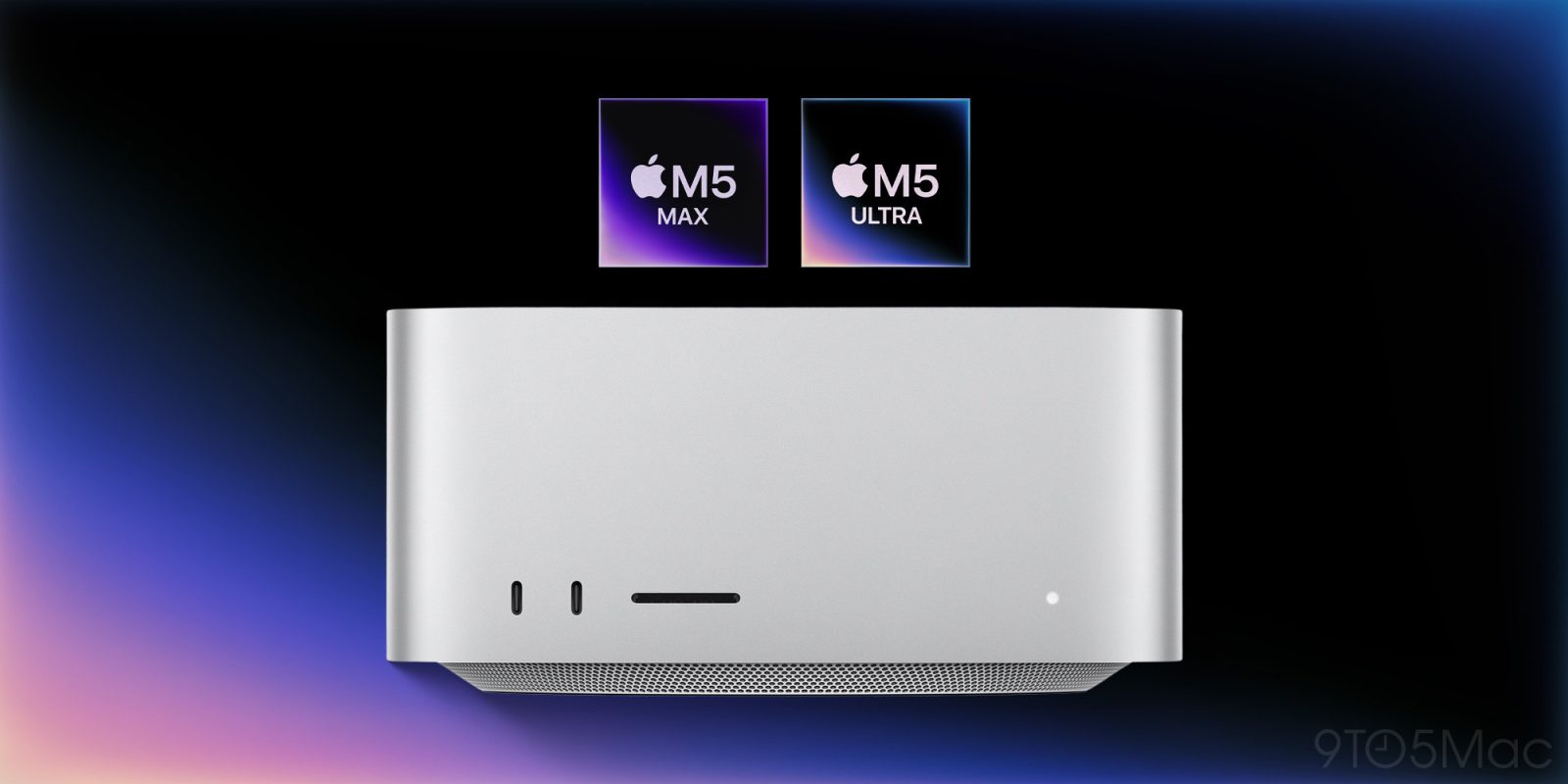
Apple unveils new Mac Studio with M5 Max and M5 Ultra

Why it matters — The update shifts the Mac Studio’s focus toward AI acceleration and memory capacity, making it a stronger option for local AI development and high-performance computing. However, the gains may not justify upgrades for users without AI-specific needs. Availability and pricing could limit adoption for smaller teams.

5 feeds
60 min

05 303 new

Performance Daniel Lemire's blog

Python sets and dictionaries can have quadratic-time performance

Why it matters — Relying on the assumption that Python hash tables are strictly O(1) can lead to severe performance degradation in applications processing large or adversarial inputs. For read-heavy workloads with known keys, alternative data structures like fastconstmap can avoid cache misses and maintain significantly lower lookup times.

3 feeds
5 min
07 303 new

Performance malisper.me

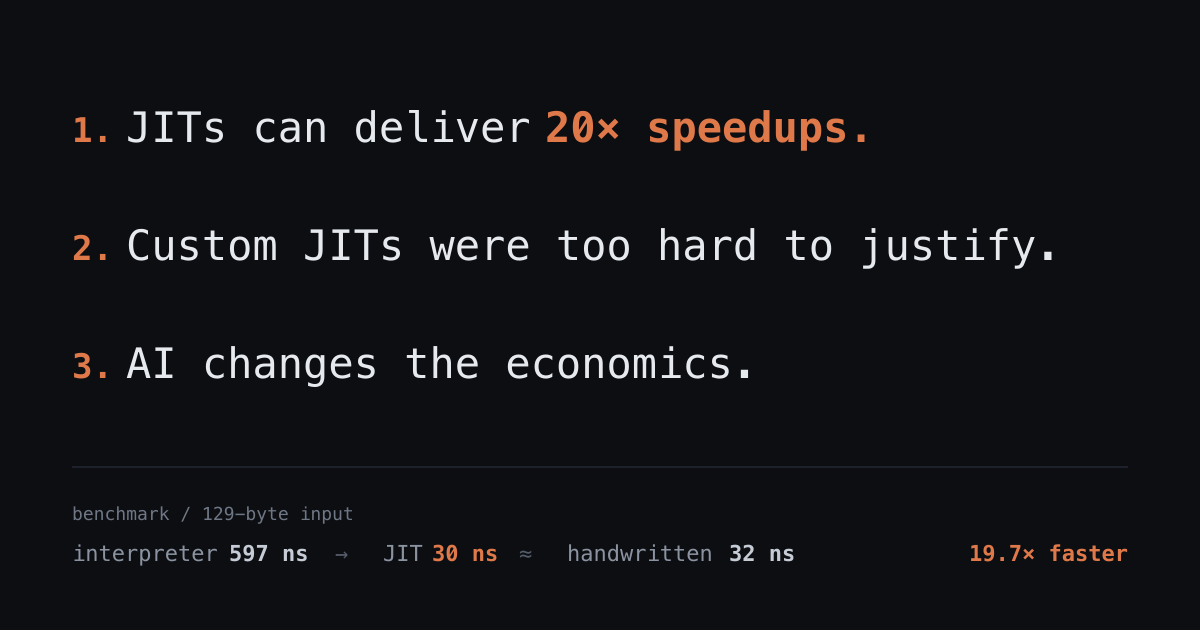
pgrust JIT compiler compiles SQL queries in around 5μs using copy-and-patch

Why it matters — Traditional database JIT compilers rely on LLVM or C/C++ code generation, both of which have high compile times that limit when compilation is worthwhile. At 5μs, the compilation cost is low enough to apply JIT optimization to every query, including single-execution ones. The author also notes that AI assistance made directly targeting assembly far more approachable than historically expected.

3 feeds
15 min
09 298 new

Performance matklad

TigerStyle's static allocation and constant work patterns avoid pool use-after-free by pre-allocating all objects at startup

Why it matters — If you build systems with object pools, the type system does not track which generation of object occupies a slot, so a stale pointer can silently read bytes belonging to a different object. Pre-allocating a fixed maximum at startup and rejecting surplus requests trades a small loss of flexibility for a guarantee that overload degrades gracefully instead of triggering an OOM kill that loses every in-flight request.

3 feeds
7 min
12 257 new

Performance Techmeme

Meta releases Muse Spark 1.3 in Muse Code and API with claimed coding and agentic gains at unchanged pricing

Why it matters — Teams already on Spark 1.2 get a claimed performance bump at no additional cost, which simplifies upgrade decisions. The emphasis on agentic performance signals Meta is pushing toward multi-step autonomous workflows, though no benchmarks or specifics are provided in the available material. Without independent verification, the significance of the improvements remains unconfirmed.

2 feeds
80 min
14 253 new

Performance Quesma Blog

RTK token compression shows mixed cost impact in terminal benchmark tests

Why it matters — RTK’s promise of cheaper AI coding via token compression is appealing, but real-world cost savings depend on model behavior and task specifics. Engineers adopting RTK must validate its impact on their own workflows, as advertised token reductions don’t always translate to lower bills. The tool’s limitations, such as potential pass-rate drops or task-specific inefficiencies, highlight the need for rigorous testing before deployment.

2 feeds
6 min
16 252 new

Performance build2.org

Faster Than Ninja

Why it matters — For engineers choosing a build system, this comparison indicates that Ninja's speed advantage is partly due to offloading work to a generation step (like CMake), which adds time. build2 offers more built-in features (like token-based change tracking) that can be disabled to achieve similar performance, giving teams flexibility without sacrificing speed.

2 feeds
12 min
18 252 new

Performance apple.com

Apple debuts M6 as first 2nm chip and M5 Ultra as first quad-die M-series SoC

Why it matters — M6's 2nm process and Dual Neural Engine deliver up to 2x peak AI compute and nearly 30% more GPU AI performance over M5, making on-device LLM workflows significantly faster. M5 Ultra's quad-die architecture provides 1.2TB/s unified memory bandwidth, 50% more than M3 Ultra, enabling desktop machines to run massive AI models locally.

2 feeds
15 min
19 252 new

Performance github.com

Assembly Hall of Shame

Why it matters — Engineers can see which instructions suffer the most from microcode assists, cache-line splits, or uncore traffic, revealing hidden worst-case paths. This insight helps in sizing timing budgets for real-time or safety-critical code and in evaluating the impact of contention-based attacks.

2 feeds
8 min
20 252 new

Performance vectorware.com

Rust SIMD on the GPU

Why it matters — Engineers can write a single Rust function using portable SIMD types and have it execute on both CPUs and GPUs without rewriting for vendor intrinsics. The approach treats a GPU warp as a vector unit, so the same arithmetic, comparison, and reduction code maps to a single warp instruction. Adoption requires a Rust toolchain that emits GPU kernels and enables the portable_simd feature, but no special GPU annotations are needed.

2 feeds
9 min
21 247 new

Performance Eileen Yoon

Apple M3 Neural Engine DRAM throughput reportedly throttles at 1 MiB weight multiples restoring 27 GB/s gain

Why it matters — Engineers running small-batch inference on M3 Macs can recover 2 to 3× token throughput by avoiding 1 MiB-aligned weight tensors. The fix is a one-line kernel change but requires retraining or padding models that hit the erratum. No silicon revision is available yet so the workaround remains necessary for affected models.

2 feeds
15 min
22 247 new

Performance Waymo

Waymo reveals custom 5nm ASIC and full-stack compute for fully autonomous driving

Why it matters — Autonomous driving requires deterministic, low-latency compute that off-the-shelf hardware cannot reliably provide. Waymo’s custom silicon and full-stack optimizations demonstrate the scale of investment needed to meet safety and performance demands. This sets a benchmark for edge AI compute in safety-critical applications.

2 feeds
4 min
24 239 new

Performance Linebender

fearless_simd v0.7 adds 64-bit integers, explicit SSE2 level, and improved generics ahead of v1.0

Why it matters — The 64-bit integer support completes full type coverage for integer and float vectors, removing a gap caused by uneven hardware support for 64-bit SIMD operations. The explicit SSE2 level lets crates that don't need runtime dispatch avoid its overhead while using real SIMD intrinsics rather than scalar fallback. Improved trait-based generics make it practical to write functions generic over vector types without resorting to macros or additional crates like paste.

2 feeds
6 min
25 234 new

Performance stefan-marr.de

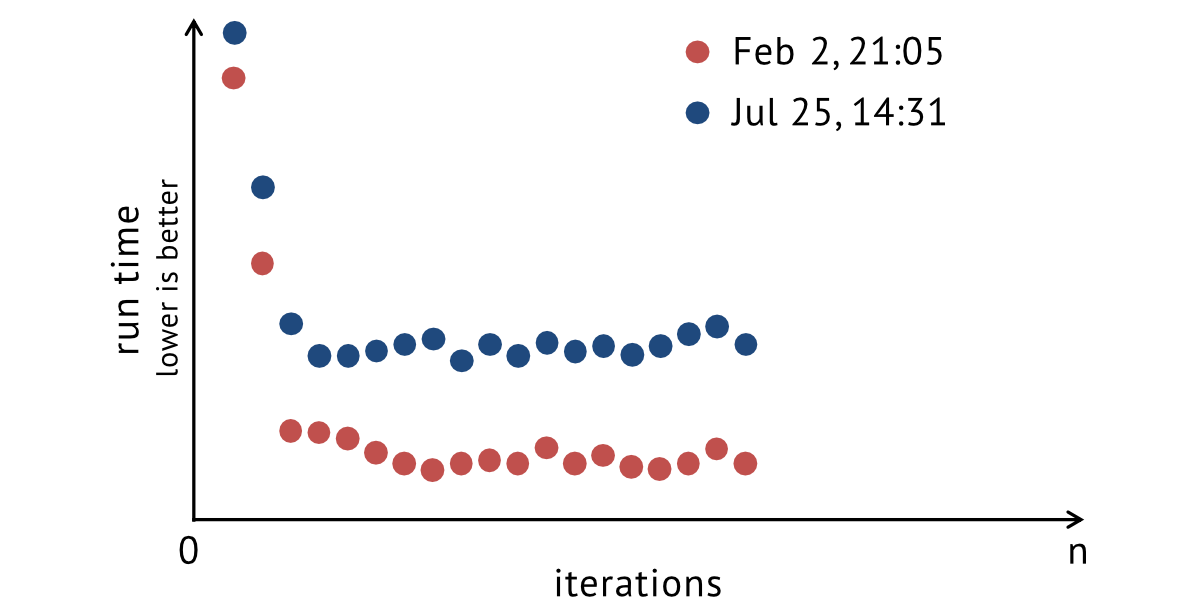
Benchmarking on modern systems reveals unpredictable performance variations despite deterministic workloads

Why it matters — Engineers rely on benchmarks to optimize and validate performance, but modern systems introduce noise that can mislead conclusions. Ignoring these pitfalls risks basing decisions on flawed data, leading to suboptimal or incorrect optimizations. Understanding these limitations is critical for designing reliable benchmarks.

2 feeds
7 min
26 234 new

Performance lemire.me

Profile-guided optimization in Go

Why it matters — For performance-sensitive Go applications, PGO offers a low-effort path to small but measurable gains by replacing compiler heuristics with actual runtime data. The process requires collecting a representative profile and performing a second build, but carries a low risk of significant regressions on unprofiled workloads due to the conservative nature of Go's optimizations.

2 feeds
4 min
27 220 new

Performance computerenhance.com

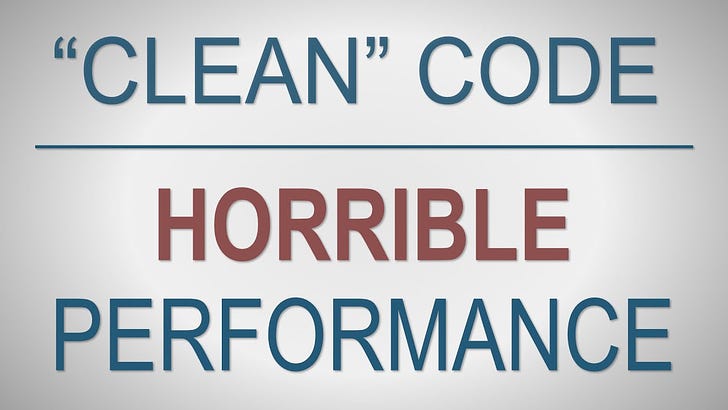
"Clean" Code, Horrible Performance (2023)

Why it matters — Engineers building performance-critical loops will see higher CPU latency from virtual dispatch and pointer indirection. The example shows that adhering strictly to readability-focused rules can outweigh their maintenance benefits in hot code paths.

1 feed
19 min
28 184 new

Performance github.com

Homebench – Benchmark local LLMs for speed, memory, and quality

Why it matters — Engineers running models on their own hardware currently stitch together llama-bench for speed and lm-evaluation-harness for quality, with no shared view of how those numbers trade off on the same machine. homebench removes that glue by caching results, diffing successive runs, and exporting Markdown or JSON reports, so a hardware swap, quantization change, or model upgrade produces a comparable record. The optional LLM-as-judge and a throughput sweep at concurrencies of 1, 2, 4, and 8 make it usable for both laptop sizing and small-server capacity planning.

1 feed
9 min
29 182 -1

Performance global.fujitsu

Fujitsu launches made-in-Japan next-generation CPU FUJITSU-MONAKA

Why it matters — Fujitsu's launch of the FUJITSU-MONAKA CPU signifies a potential advancement in processing capabilities. This CPU could enhance performance in various computing applications. Additionally, being manufactured in Japan may have implications for supply chain resilience.

1 feed
4 min
30 177 new

Performance arxiv.org

When AI Benchmarks Plateau: A Systematic Study of Benchmark Saturation

Why it matters — When benchmarks stop providing clear performance gaps, engineers lose a reliable signal for model selection and deployment decisions. The paper identifies design factors, especially expert-curated test sets, that can keep benchmarks useful longer, suggesting a shift in how evaluation suites should be built and maintained.

1 feed
3 min
36 164 -2

Performance Phoronix

OpenVDB Introduces SIMD Framework With Some 2~4x Performance Improvements

Why it matters — The introduction of the SIMD framework could significantly enhance the performance of applications utilizing OpenVDB. This improvement is particularly relevant for CGI software, which relies on efficient handling of sparse volumetric data. A 2 to 4 times performance boost can lead to faster render times and improved workflows for artists and developers.

1 feed
2 min