357 stories from 207 feeds
· 1243 clusters
Refreshed 3 minutes ago
· next pull 16:13
TOPIC
Infra
The machines, networks, and orchestration underneath everything else. Post-mortems, capacity limits, and the operational trade-offs teams made at the moment something broke.
Why it matters — This matters because compatibility support can remain difficult to validate without targeted tests. The material reports a testing effort, but provides no result showing that coverage improved.
Why it matters — This change enables Python developers to integrate seamlessly into the Cloudflare ecosystem without needing additional JavaScript code. It simplifies the development process and reduces errors related to type conversion. This advancement positions Cloudflare as a more attractive platform for building scalable Python applications.
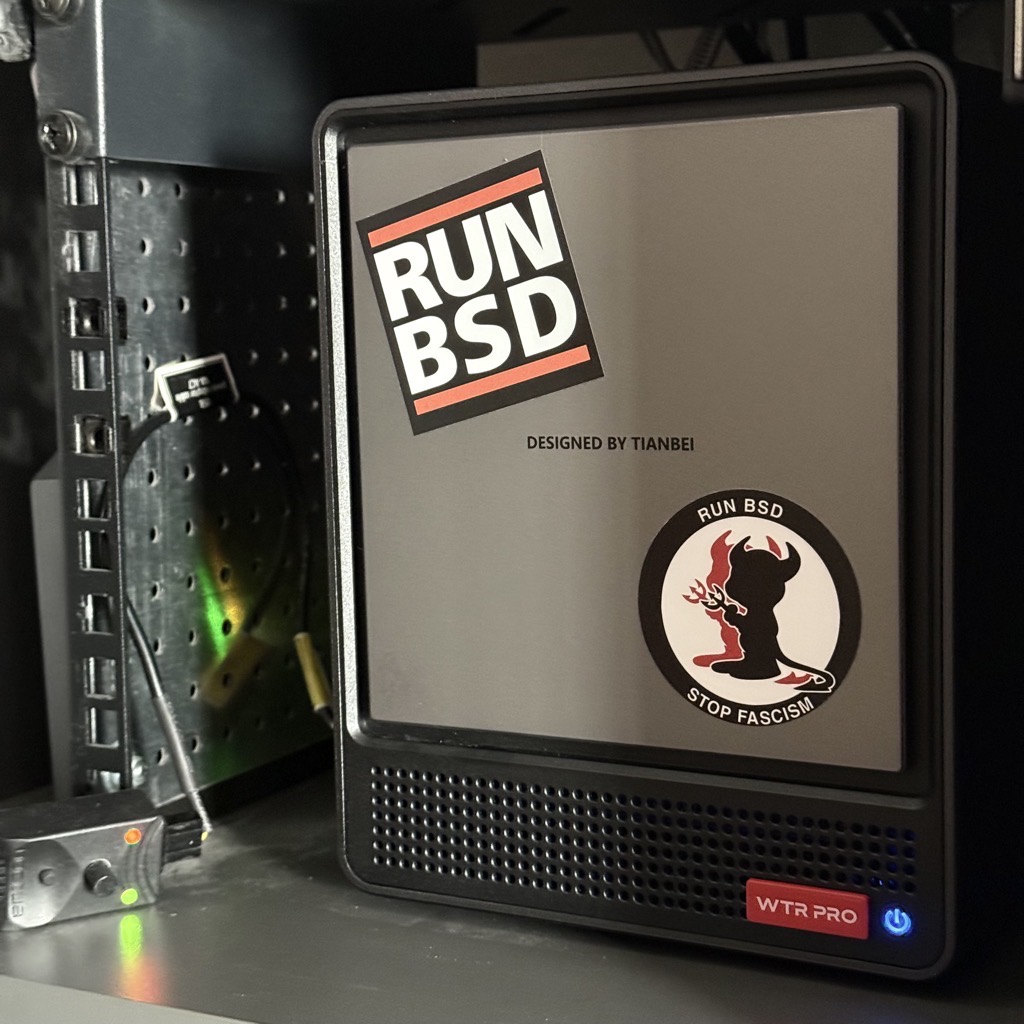
Why it matters — The Aoostar WTR Pro NAS can now utilize FreeBSD, a non-proprietary OS, offering flexibility and efficiency for users. This compatibility enhances the product's appeal to those seeking a robust and customizable network-attached storage solution.
Why it matters — The cable establishes a new benchmark for transoceanic bandwidth, directly supporting Meta's growing data demands across Europe and North America. Its deployment will increase available network capacity for services requiring high-throughput, low-latency connections, influencing infrastructure planning for major cloud providers.
Why it matters — This change restricts the ability to upgrade Raspberry Pi devices with different RAM configurations. It limits customization options for users who may require higher memory capacities for specific applications. Understanding this decision is crucial for engineers considering Raspberry Pi for their projects.
Why it matters — This technology provides a communication solution for isolated communities, enabling better access to information and resources. By bypassing the need for satellites, these digital radios can operate in areas where traditional infrastructure is lacking. This could be particularly impactful in disaster response and remote education efforts.
Why it matters — Engineers designing AI datacenters must prioritize water efficiency alongside energy use, especially as AI workloads increase and local water scarcity intensifies. Schneider's analysis provides concrete evidence that higher coolant temperatures directly reduce water demand, offering a practical path to mitigate environmental and regulatory pressures on data center expansion.
Why it matters — The proportion of AI-generated patches in the Linux kernel indicates a notable shift in development practices, raising questions about code quality and oversight. This level of AI involvement may affect maintenance responsibilities and trust in automated contributions.
Why it matters — This product merges gaming technology with sensory experience, potentially appealing to niche markets. The integration of aromatherapy into a GPU is innovative, though practical applications and cost implications remain uncertain. It reflects a broader trend of personalization in gaming hardware, which may influence future designs.
Why it matters — The updated Dropbox API documentation enhances the developer experience by providing interactive tools and AI assistance. This allows engineers to integrate more efficiently and reduces the time spent switching between documentation and testing environments.
Why it matters — Recent regulatory changes are allowing for increased emissions from US datacenters, which could worsen environmental impacts. However, Nvidia is reportedly making strides in improving the energy efficiency of these datacenters, which could mitigate some of the negative consequences. The balance between efficiency and emissions will be crucial for the future sustainability of data infrastructure.
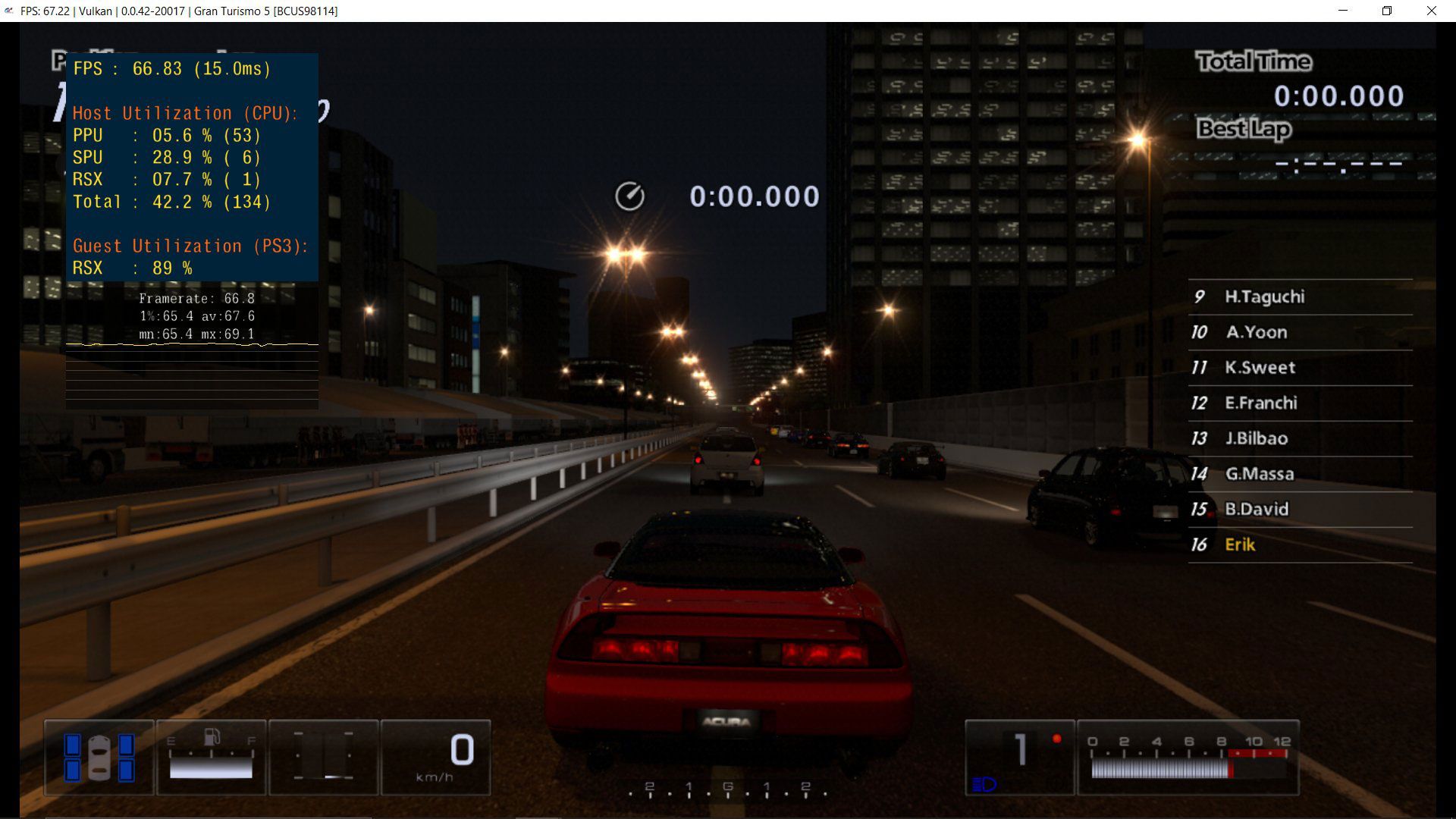
Why it matters — This workaround significantly enhances the performance of the RPCS3 emulator on Nvidia GPUs, improving the gaming experience for users. It highlights the challenges developers face in optimizing software with hardware limitations and the need for better communication with hardware manufacturers.
Why it matters — The decision bars U.S.-based internet communities from suing a foreign regulator in domestic courts, reinforcing the limits of extraterritorial enforcement. It underscores that foreign regulatory actions cannot be challenged through American litigation when the regulator enjoys sovereign immunity. This shapes how digital platforms anticipate compliance with overseas safety rules.
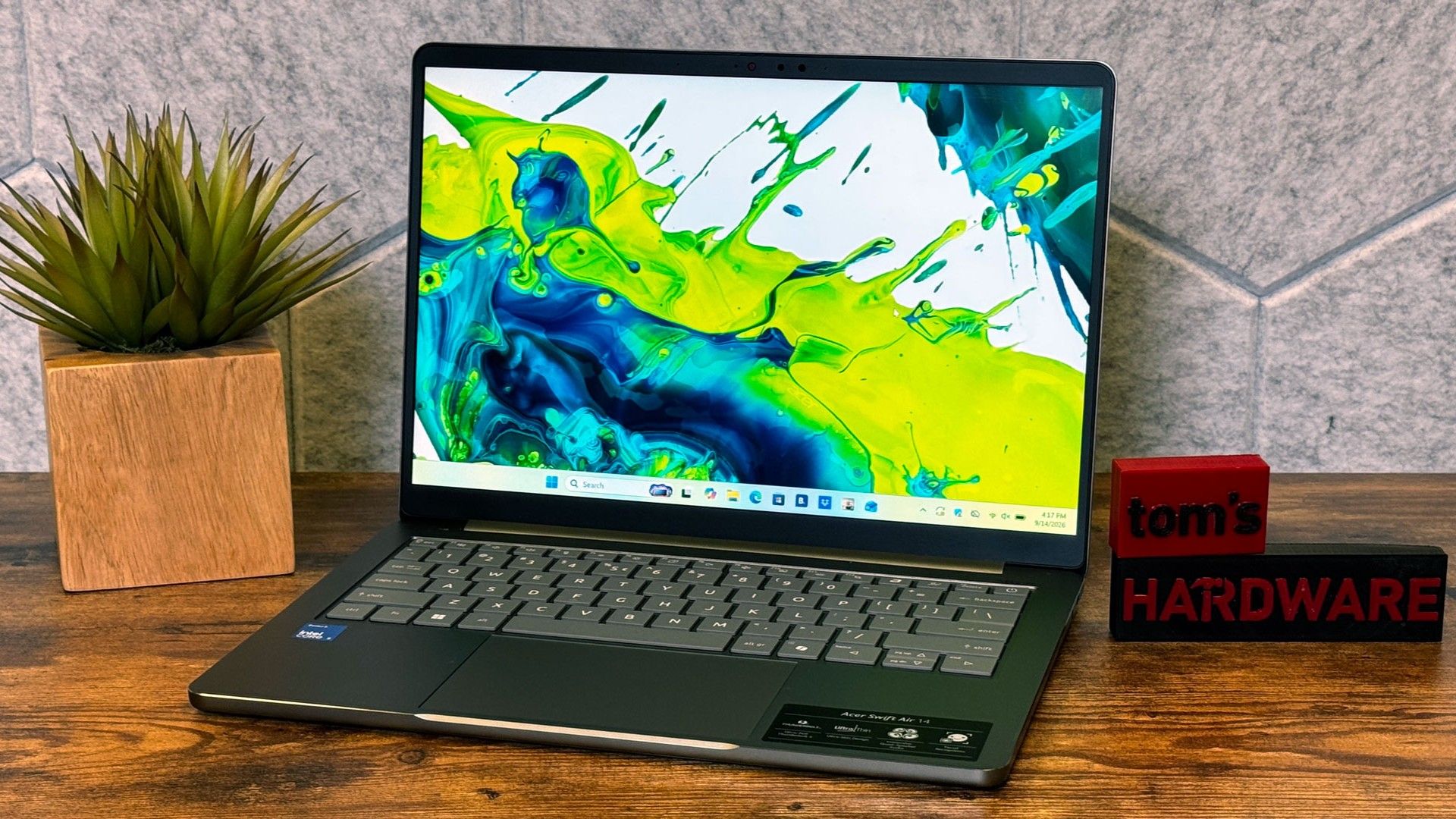
Why it matters — The launch of the Dimensity CX C10 Max marks a significant advancement in mobile computing, particularly in efficiency and performance due to its 3nm fabrication process. This SoC is expected to enhance the performance of the upcoming Googlebook laptops, which are designed for deep integration with Android, catering to a growing demand for powerful mobile computing solutions. As devices increasingly merge functionality, the need for high-performance chips like the CX C10 Max will be critical for software developers and engineers working on cross-platform applications.
Why it matters — Independent Infra feeds picked this up separately, which is the signal elseif ranks on. Open the cluster below to compare how each feed framed it.
Why it matters — The shift to Qt6 may improve cross-platform consistency and modernize the editor’s look, but it could also introduce compatibility breaks for plugins or scripts tied to the old UI framework. Engineers maintaining Audacity integrations should test workflows early.
Why it matters — The addition of mainline Linux kernel support could enhance the functionality and performance of the Kindle 4. It also opens up possibilities for further development and customization of the device. This move reflects a growing interest in maintaining older hardware within the Linux community.
Why it matters — The proliferation of tech houses like AGI House in the Bay Area raises concerns about community impact and safety. With a significant number of police incidents related to these houses, it highlights the challenges of managing informal tech spaces in urban environments. This could influence future regulations and community relations for tech startups.
Why it matters — A three-year gap between GPU generations will force builders and operators to extend the life of existing hardware, increasing total cost of ownership and limiting performance improvements for AI and graphics workloads.
Why it matters — This call for regulation comes amidst growing concerns over hacking incidents that threaten the stability of AI systems. A ban on RSI could help mitigate potential risks associated with autonomous systems operating without sufficient oversight.
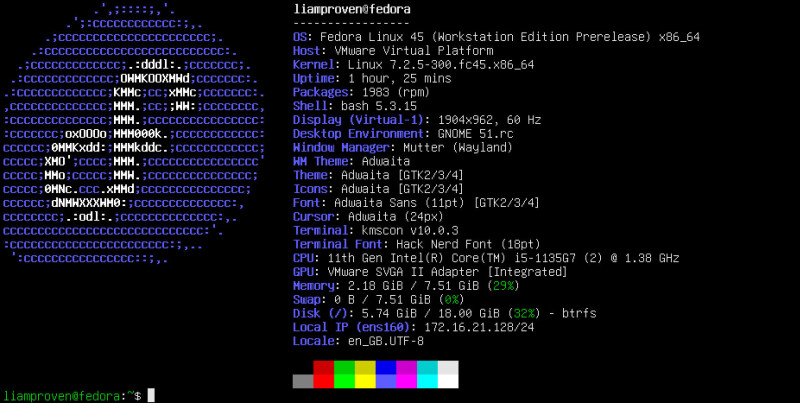
Why it matters — This release provides users with enhancements and new features for the Fedora environment. Notably, it introduces KMSCON, which may improve console performance. The inclusion of updated GNOME and KDE Plasma versions will also enhance usability and functionality.
Why it matters — For systems operating at massive scale, minor per-entry memory overhead translates to massive fleet-wide waste. These optimizations not only reclaimed 100 TB of RAM but also improved cache insert throughput by 43% and reduced lookup latency by 19%. The approach demonstrates that immutable data structures can leverage more compact memory representations without sacrificing performance.
Why it matters — Only one feed carries this story and no article body is available, so the specific boundaries of "responsible use" are unknown from the provided material. The decision nonetheless establishes a baseline AI policy for one of the largest community Linux distributions, which contributors and downstream projects will need to follow.
Why it matters — Running Linux on Apple-silicon hardware gives engineers access to a new class of low-power, high-performance machines for development and deployment. However, the stated feature caveats and lack of support for the Mac Studio M3 Ultra mean that not all workloads will run unchanged, requiring validation before adoption.
Why it matters — This breach exposes a systemic risk in identity verification services: a single compromised vendor can leak millions of sensitive documents. Engineers who integrate such services need to assume that identity data may be compromised and design for breach response. The FBI inquiry may reveal the source, but the data is already in the wild.
Why it matters — This statement from Acer's CEO indicates a potential shift in the pricing landscape for PC components. If competition increases and prices decline, it could impact the overall cost structure for computer manufacturers and consumers alike. Understanding these dynamics is essential for engineers involved in hardware design and procurement.
Why it matters — This development addresses the challenge of maintaining uptime during essential updates in cloud environments. As cloud providers aim for zero-downtime services, these patches could significantly enhance operational resilience and reliability.
Why it matters — This shift allows large tech companies to manage their capital expenditures more effectively while potentially reducing their immediate financial liabilities. It also provides Nvidia and Broadcom with a mechanism to encourage and facilitate AI investments from their customers, which could drive further innovation and adoption in the sector.
Why it matters — CERN previously co-maintained Scientific Linux, a RHEL derivative, with other research institutions, making this a notable infrastructure shift for a major scientific computing environment. However, only one source reports this and no article body is available, so scope, timeline, and rationale are unknown.
Why it matters — The release of GNU Wget 2.3 brings new capabilities, particularly the --progress=dot feature, which can improve the user experience during file downloads. Additionally, the OS/2 improvements may enhance compatibility for users still operating in that environment.
Why it matters — This prepatch is part of the ongoing development cycle for the Linux kernel, which is critical for various applications and systems. A larger prepatch typically indicates substantial changes or additions, which may require additional testing by developers. Understanding these changes is essential for those maintaining Linux-based systems.
Why it matters — These developments could enhance the performance and capabilities of the AMD BC-250, particularly for workloads that require security and management features. As the BC-250 is repurposed for Linux, it may find utility beyond its original design for cryptocurrency mining, potentially serving in AI and general-purpose applications.
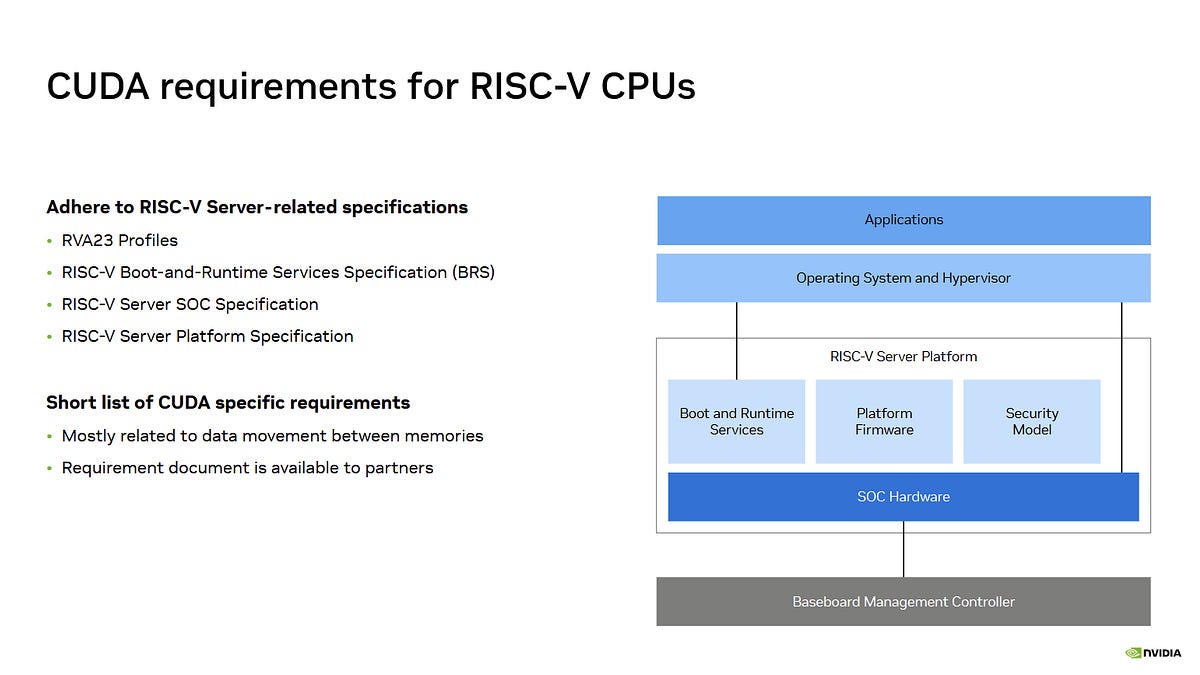
Why it matters — This could open GPU compute workloads to RISC-V server platforms, but Nvidia's requirements exclude virtually all existing RISC-V consumer hardware and demand features that avoid lowest-common-denominator code generation. The specifications set a concrete bar for any RISC-V vendor aiming to pair their CPUs with Nvidia GPUs.
Why it matters — This change enhances the performance of the Linux perf command, making it more efficient for users who rely on profiling and performance analysis. The transition to standalone Python scripts may also simplify the development and maintenance of the perf tooling in the long run.
Why it matters — For engineers building AI applications, an open MoE model with faster inference could lower latency and cost, while the agentic router hints at simpler orchestration across models. However, the speed claim is unverified and details on the router are minimal, so adoption should follow benchmarking.
Why it matters — This release extends the viability of FreeBSD 14.x for teams not yet ready to migrate to FreeBSD 15. The hardware support and security updates reduce operational friction for existing deployments. No new features are introduced, so the upgrade is low-risk for current users
Why it matters — Reproducible builds eliminate “works on my machine” friction across teams and CI. Sandboxed AI sessions let untrusted agents contribute code without host access, reducing manual review overhead. The pattern scales from local development to cloud CI without reconfiguring toolchains.
Why it matters — Apple Silicon lacks EL3 firmware, blocking standard PSCI power management in Linux. This workaround allows upstream-compatible power management while preserving virtualization support. It reduces fragmentation for ARM-based Linux deployments on Apple hardware.
Why it matters — LWN is a primary source of in-depth Linux kernel and open-source infrastructure coverage for systems and kernel engineers, and its subscription model is what keeps it independent of ad-driven publishing economics. The price change is the third in 24 years and is explicitly tied to general inflation rather than any scope expansion, so the editorial product is not changing with the price. Existing subscribers are grandfathered, so the immediate effect on anyone with a current annual or multi-month subscription is zero; the impact falls on new and monthly subscribers at the renewal boundary.
Why it matters — For engineers and teams relying on open-source office suites, this release reduces formatting inconsistencies and expands language support. The improvements may lower migration friction when exchanging documents with proprietary tools, though testing remains necessary for edge cases
Why it matters — Engineers evaluating the strategic direction of major platforms based on AI skepticism should verify claims against primary financial data rather than third-party metrics or rhetorical arguments. Relying on inaccurate predictions about platform decline can lead to misjudgments about the stability and investment capacity of these companies in AI infrastructure.
Why it matters — The material is too thin to assess practical impact. Bootstrappable builds are a niche but critical requirement for verifiable, self-hosting toolchains. Without corroborating detail, the note cannot say how widely the session’s conclusions apply or what concrete changes it proposes.
Why it matters — For engineers working with OpenShot, this release signals a significant UI framework migration to Qt6, which may affect build dependencies and plugin compatibility. It also indicates the project's ongoing modernization and maintenance.
Why it matters — The shutdown forces users to abandon a cloud management plane they may have integrated into operations, requiring on-prem installation and risking loss of functionality after a 90-day trial
Why it matters — The GEFS file system is in a preliminary state on OpenBSD, indicating ongoing development. As a new crash-safe, snapshotting file system, it has potential benefits but currently poses risks like data loss. Engineers in the OpenBSD community should monitor its progress and consider the implications of its adoption.
Why it matters — This change resolves the binary tradeoff where refusing AI training previously meant losing search visibility. By distinguishing between search and training behaviors at the network level, Cloudflare enables granular control without requiring site owners to block entire crawler classes. The introduction of the 'Accountable' designation provides a framework for verifying that major operators respect these specific preferences.
Why it matters — Engineers running NetBSD-9.x must migrate to a newer release because the 9 branch will no longer receive updates or security patches. Continuing on an unsupported branch could expose systems to unpatched vulnerabilities and incompatibilities with newer software.
Why it matters — The Anubis challenge was meant to filter bots, but AI crawlers now solve it, letting a third of requests through. This could degrade performance for real developers and force kernel infrastructure to adopt stronger defenses.
Why it matters — Maintaining non-blocking operations in io_uring is critical for performance in asynchronous applications. The recent changes may improve the way the kernel handles asynchronous execution. This could lead to more efficient use of resources and better application responsiveness.
Why it matters — This firmware solution allows the iPhone 18 Pro Max to exceed international shipping battery limits, potentially influencing other manufacturers. By keeping battery capacity below 20Wh during shipping, Apple can maintain compliance with regulations while still delivering devices with higher capacities. This could lead to changes in how smartphones are designed and shipped in the future.
Why it matters — This funding targets core sandboxing infrastructure for Linux desktop applications, which affects how developers package and isolate software. The investment over the next two years signals sustained institutional support for Flatpak's security model.
Why it matters — For engineers building agentic systems, this offers a locally-runnable alternative to cloud-hosted models for function calling, multi-step reasoning, and code generation without network dependencies. The Apache 2.0 license and single-GPU footprint lower the barrier to deploying autonomous agents in environments where latency, privacy, or connectivity constraints rule out cloud APIs. However, only one feed carried this story, and the promised runtime integrations with llama.cpp, MLX, and ExecuTorch are not yet available.
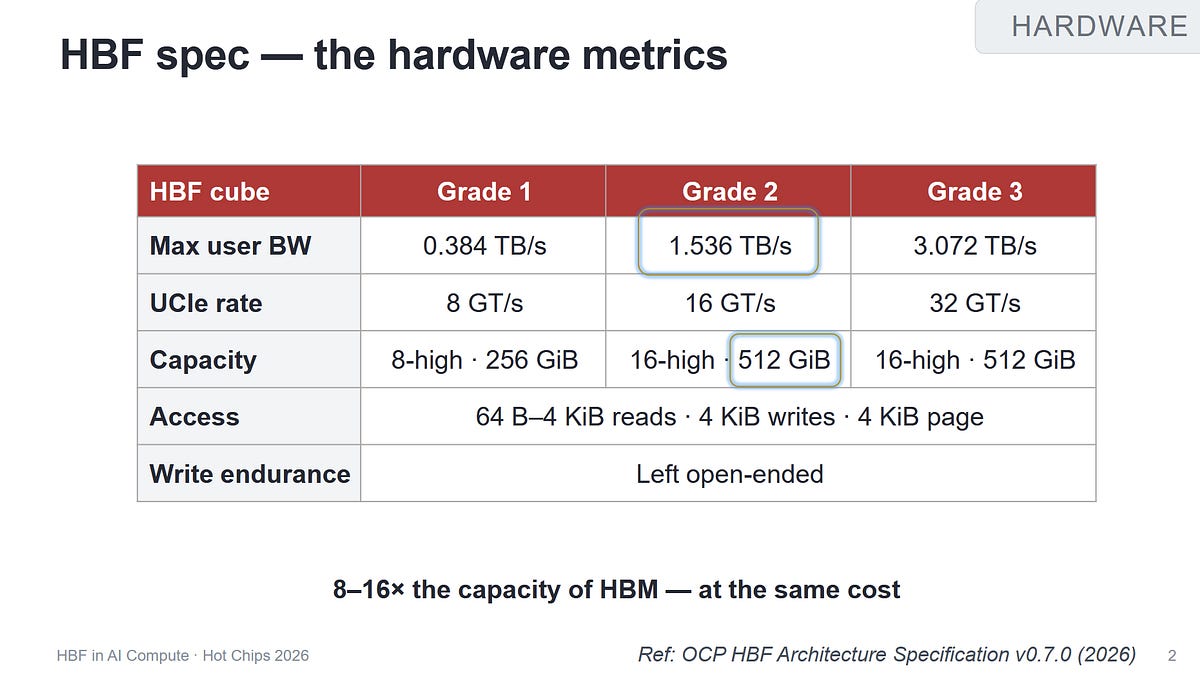
Why it matters — HBF could reduce DRAM costs for large ML models by offering higher capacity at lower cost, but adoption demands significant software changes. The trade-off between capacity and bandwidth may limit its applicability to specific workloads, making it a niche rather than universal solution.
Why it matters — The 8087 established the floating-point standard that most computers still use today, so understanding its microcode reveals how Intel prioritized mathematical correctness over hardware simplicity. The complexity hidden in a seemingly trivial instruction like FSCALE illustrates the engineering effort required to make floating-point arithmetic reliable across corner cases.
Why it matters — This reduces the manual effort needed to implement graphics drivers for virtualized environments. Engineers running Windows workloads in QEMU may see better performance without waiting for vendor-provided drivers. The approach could generalize to other emulated hardware where driver development is slow or stalled.
Why it matters — Most laptop speakers deliver poor audio quality due to physical constraints. EasyEffects offers a low-cost way to mitigate this on Linux systems without hardware changes. The proposal highlights a gap in default Linux audio tooling for end-user experience.
Why it matters — Engineers can now run a full Linux distribution on the latest Apple Silicon Macs without relying on virtualization. The support is gated behind an Expert mode install step, adding operational overhead for testing environments. Remaining limitations such as missing GPU acceleration and disabled HDMI ports affect workloads that depend on graphics or external displays.
Why it matters — Outages at GitHub disrupt workflows for millions of developers and CI/CD pipelines. The post signals how GitHub is prioritizing uptime and what trade-offs it is making. Engineers can use the report to assess whether GitHub’s reliability roadmap aligns with their own risk tolerance.
Why it matters — The cache-aware load-balancing support provides a new mechanism for CPU scheduling that considers cache topology. Initial HDMI 2.1 FRL support in the AMDGPU driver adds capability for higher display bandwidth on compatible hardware. Rust support for the IBM System/390 architecture lets developers write kernel components in Rust for mainframe systems.
Why it matters — The patch introduces a new boot-time parameter for x86 systems, giving engineers another way to influence kernel behavior at boot without rebuilding. It can be used to test or tune kernel behavior as needed.
Why it matters — Grml remains a critical tool for system administrators needing a portable, command-line-focused environment for troubleshooting. The changes reflect broader shifts in Linux infrastructure, such as the move away from 32-bit architectures and the adoption of newer filesystem standards. However, some workflows may break due to backward-incompatible updates.
Why it matters — For anyone building systems that treat domain names as trust signals, email reputation, URL filtering, identity verification, a baseline 10 to 20% abuse rate among new registrations means that trust can no longer be assumed by default. ICANN has reportedly discussed this for years without resolution, so no structural fix is coming from the governance layer.
Why it matters — The ANE's design reflects early ML hardware trade-offs that prioritized dense tensor reductions for CNNs, but its rigid dataflow assumptions limited adaptability to transformer workloads. This analysis provides concrete insights into why Apple eventually integrated NPU functionality into GPUs, a shift relevant for engineers designing or optimizing hardware for modern ML workloads.
Why it matters — Engineers handling encrypted file storage or cross-platform tools must account for filesystem restrictions. Base84 provides a consistent encoding scheme that avoids forbidden characters while maximizing bit density. This change simplifies interoperability without sacrificing efficiency
Why it matters — Engineers evaluating immutable Linux distributions now have an ARM64 option targeting UEFI-compatible devices, expanding deployment possibilities beyond x86_64. Reproducible builds improve supply-chain transparency for most system images, though NVIDIA images remain an exception. The new Continuity backup tool supports encrypted local drives and remote storage via SFTP, FTP, or NFS, addressing recovery workflows on atomic systems.
Why it matters — This change modernizes the Linux console experience, offering enhancements in performance and capabilities. Transitioning to a userspace terminal can improve graphical performance and user experience in handling text input and display. Improved support for features like richer colors and Unicode can facilitate better application development and usage.
Why it matters — The rewritten installer alters the deployment workflow for this single board computer distribution. The addition of UEFI ISO images expands boot options and aligns the platform closer to standard PC boot processes.
Why it matters — The $20 million funding will enable Mithrl to further develop its AI infrastructure for biopharma, potentially enhancing research and development processes. This integration may streamline workflows and data usage in pharmaceutical companies, leading to faster drug development cycles. As the biopharma sector increasingly relies on data-driven solutions, Mithrl's advancements could position it as a key player in the market.
Why it matters — A high volume of changes in a kernel release cycle signals significant development activity, which may introduce new features, optimizations, or regressions. Engineers maintaining or deploying Linux systems should prepare for broader testing and validation efforts to assess stability and performance impacts.
Why it matters — AGPLv3 violations in embedded systems highlight the challenges of enforcing copyleft licenses in hardware-adjacent software. For engineers, this case underscores the risks of non-compliance when integrating open-source components into proprietary products. The outcome may set precedents for how similar violations are handled in the future.
Why it matters — For engineers running virtual machines, this release signals a new baseline for bug fixes and features. Staying on an older QEMU version may mean missing out on these improvements, so planning an upgrade is prudent. However, without the article body, the specific changes remain unknown.
Why it matters — This gives engineers a verified path to run Python workloads on RISC-V hardware without relying on unofficial forks. The support rests on community testing and real-machine access provided by the RISE Project, highlighting the role of collaborative hardware-software efforts. It also opens the door to future performance work and deeper integration of RISC-V into the Python toolchain.
Why it matters — This proposal reflects a significant step towards structured communication regarding AI-related incidents between two major global powers. Establishing a dialogue on AI could lead to improved safety protocols and collaboration in the rapidly evolving tech landscape.
Why it matters — This lowers the barrier for engineers who want OpenBSD’s security model and minimalist tooling without leaving a major cloud provider. The workaround still requires manual setup and lacks native integration, so it remains a niche option rather than a mainstream path.
Why it matters — For teams operating AI infrastructure at scale, the bottleneck is shifting from raw compute to data movement and orchestration efficiency. Nvidia claims its Vera CPU delivers upwards of 3x improvement in storage operations by preventing flash bottlenecks, which means rival GPU performance may matter less than the surrounding system's ability to keep GPUs fed with data.
Why it matters — Engineers working with custom hardware often need to perform initial kernel bring-up, a process that requires understanding the kernel's minimal hardware dependencies. This guide provides a practical walkthrough of those requirements and the boot process, using an emulated RISC-V environment as a concrete example. It bridges the gap between abstract kernel requirements and actual implementation on a new SoC.
Why it matters — The account illustrates how infrastructure reliability directly affects on-call engineers' quality of life, not just uptime metrics. It also demonstrates a practical approach to convincing management to adopt an unfamiliar OS through small-scale trials.
Why it matters — The exemption removes a compliance burden for open-source projects and package managers that would have required age data collection. It also sets a precedent for how open-source software is treated under age-verification laws, contrasting with proprietary platforms still subject to the rules.
Why it matters — This development enhances the efficiency of JSON parsing, which is critical for many applications that rely on this data format. By leveraging SVE2, the performance gains can lead to faster application response times and better resource utilization on ARM architectures, particularly in cloud environments where these processors are more prevalent.
Why it matters — Engineers building health or audio-related apps for wearables will need to account for the new sensor frequency and transcription capabilities. The changes may also influence power management strategies due to the increased data collection and processing demands.
Why it matters — The release of Kubernetes 1.37 introduces several significant features that enhance the platform's stability and security, particularly for AI/ML workloads. The stable Metrics API and the Rootless Kubelet in beta mode are crucial for improving resource management and reducing security risks associated with containerized applications. These changes are particularly relevant for engineers working with Kubernetes to deploy and manage scalable applications efficiently.
Why it matters — French’s work underpinned enterprise Linux deployments that rely on SMB for file sharing. His absence leaves a critical subsystem without its primary steward. The kernel community must now identify and onboard a successor to sustain the codebase
Why it matters — For engineers buying workstation GPUs, this price hike reflects the ongoing memory cost crisis and AI-driven demand. The RTX PRO 6000 Blackwell's 96GB of GDDR7 VRAM makes it a target for AI workloads, and its price increase signals that high-end hardware is becoming significantly more expensive. Budgeting for such hardware now requires accounting for rapid price changes.
Why it matters — If completed, the acquisition would give Nvidia direct control over a key platform for open-source AI model distribution and collaboration. This could reshape the AI infrastructure landscape by integrating Hugging Face’s ecosystem with Nvidia’s hardware and software stack. Engineers building or deploying AI models may face shifts in tooling, licensing, or platform dependencies
Why it matters — The process demonstrates how a small team balances the need for secrecy with the requirement for fast action. It challenges common myths regarding security fixing often created by embargoes.
Why it matters — For engineering teams building media pipelines on Linux, this release brings AI assistant capabilities directly into the DaVinci Resolve environment. The integration could alter how editors interact with the software, though the specific operational costs and limitations are not detailed in the available material.
Why it matters — This release candidate is the first feature release since 24.1, indicating a significant update after a long gap. Engineers using XWayland should test this RC to prepare for the final release. The announcement by Olivier Fourdan of Red Hat signals active development.
Why it matters — The test signals Rivian’s intent to compete in the autonomy stack beyond driver-assist features. Public-road trials without a safety driver are rare and carry regulatory risk, so the outcome will shape Rivian’s timeline for commercial deployment. If successful, the approach could pressure rivals to accelerate their own full-autonomy programs.
Why it matters — The adoption of Barbič’s software in blockbuster films shows that advanced simulation tools can meet the visual-effects demands of high-profile productions. For engineers, this signals a proven pathway to integrate research-grade simulation into commercial VFX pipelines.
Why it matters — This project demonstrates a novel application of electromechanical television technology to achieve a highly portable, wide-screen display format. It provides a working example of how mechanical systems can produce ultra-wide resolutions that might be difficult to implement with traditional electronic displays at similar scales.
Why it matters — Bend is a new programming language designed to prevent AI errors through rigorous proof checking. It enables developers to ensure that AI-generated code adheres to specified laws, significantly reducing the risk of mistakes in applications. This approach could redefine how software is developed, particularly for AI-driven projects.
Why it matters — Liu helped establish the field of digital signal processing, which applies mathematical algorithms to analyze, modify, and transmit signals like sound and video. His death marks the loss of a foundational figure in the technology underlying modern media processing.
Why it matters — If autonomous vehicles can demonstrably reduce road deaths, adoption could accelerate despite current skepticism. However, the lack of large-scale deployment limits conclusive evidence, leaving engineers and policymakers to weigh potential benefits against unproven risks.
Why it matters — The experiment explores a potential pathway for low-carbon hydrogen generation using subsurface geology, which could complement existing electrolyzer infrastructure. Understanding its feasibility helps engineers assess where such geologic-based methods might be integrated into future energy systems. However, the provided material does not detail performance metrics, costs, or scalability limits.
Why it matters — The event demonstrates how a single point of failure in time synchronization can disrupt critical infrastructure beyond mobile voice and text. It highlights the fragility of TDD networks that rely on precise timing to prevent signal jamming.
Why it matters — Engineers building or operating AI-driven systems on Ubuntu can now deploy a high-efficiency, customizable model without manual runtime setup. This reduces friction for local or edge AI workloads but ties users to Canonical’s Snap ecosystem and NVIDIA hardware. The trade-off is convenience versus flexibility in runtime choices.
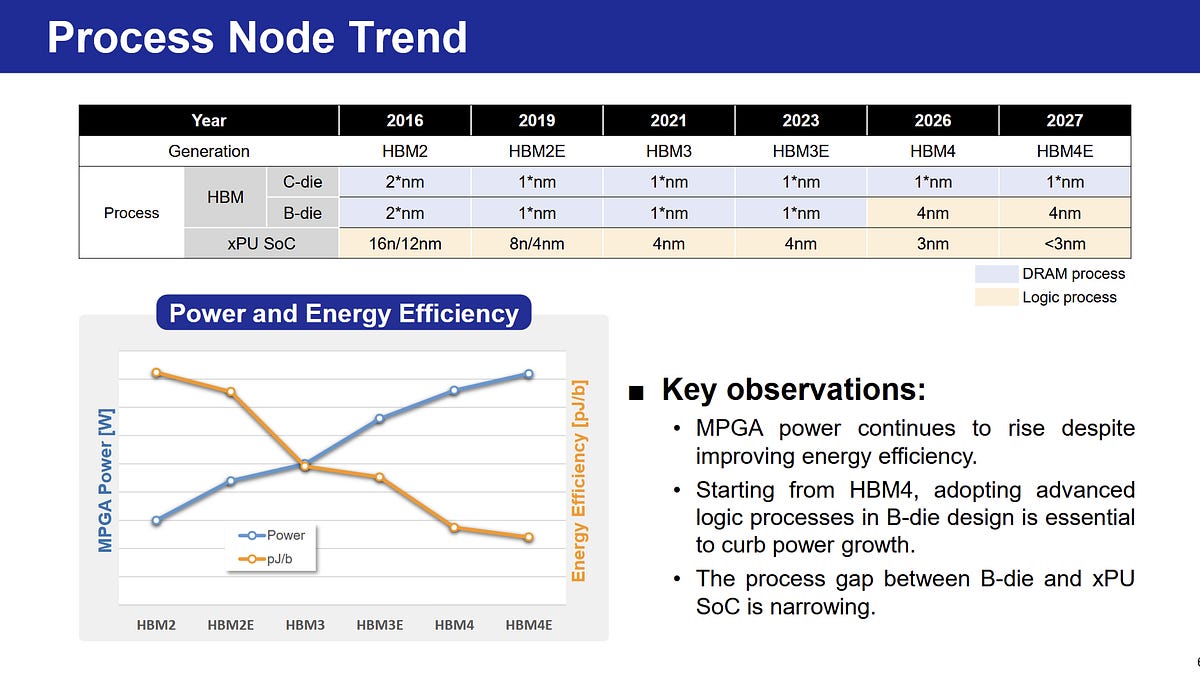
Why it matters — This change could simplify system design by offloading memory management to the HBM stack itself. However, it may require custom integration, breaking compatibility with standard memory controllers. The trade-off between flexibility and standardization will shape adoption.
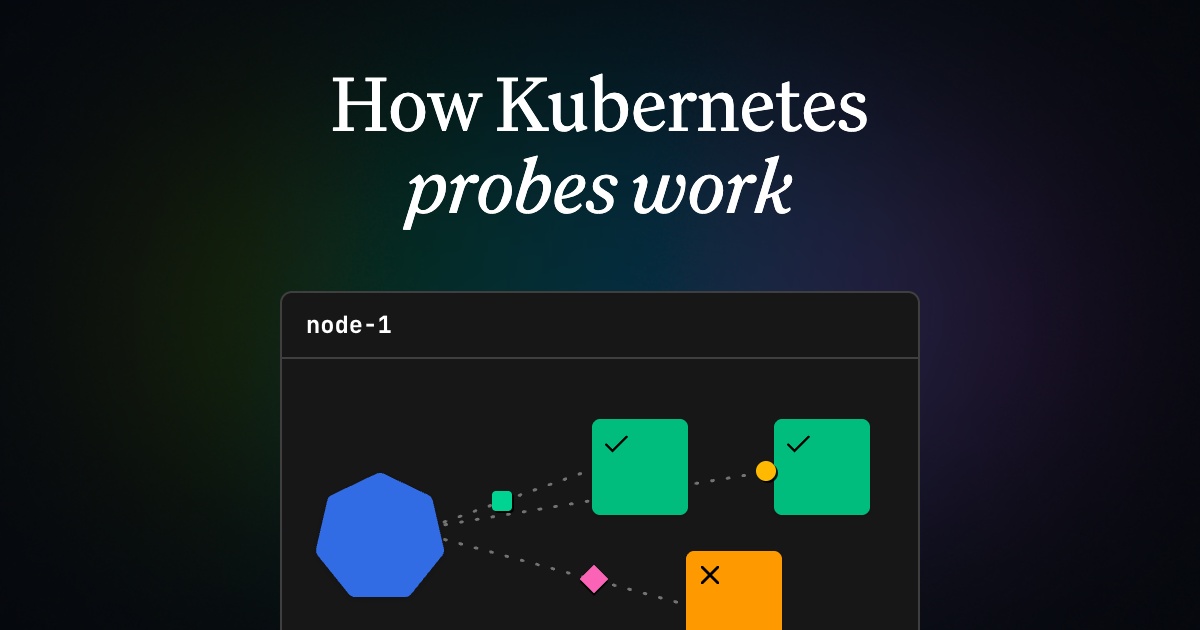
Why it matters — Without probes, Kubernetes marks containers Ready the moment they start, sending traffic to processes that are still initializing and causing request failures. Understanding probe behavior is essential for reliable rollouts and avoiding CrashLoopBackOff scenarios that can take minutes to recover from. The article also surfaces a bug found in Kubernetes itself through its simulation approach.
Why it matters — The round signals investor demand for infrastructure that abstracts chip-specific optimization, letting teams route AI workloads across heterogeneous hardware without managing each accelerator individually. The compressed timeline between rounds, $80M to $300M in six months, reflects how aggressively capital is flowing into AI hardware orchestration. Only one feed carried this event, so details beyond the funding terms and the company's core function are not available.
Why it matters — Engineers building AI systems will encounter a more diverse set of potential customers and suppliers as Nvidia expands its infrastructure financing and support. The forecast also signals sustained investment in AI chips, which influences long-term capacity planning and supply-chain considerations.
Why it matters — For engineers running eBPF-based security or observability tools, this optimization demonstrates how memoization can drastically reduce redundant path resolution work. The trade-off is increased memory usage for the cache, but the performance gain may justify it for high-throughput workloads. The approach is particularly relevant for systems where the same files or directories are accessed repeatedly, such as databases or logging pipelines.
Why it matters — Engineers risk losing intuition for system behavior as AI handles more incidents, potentially worsening outcomes for rare, high-severity failures. The shift mirrors automation paradoxes seen in aviation, where operators must still manage critical edge cases despite reduced routine practice. Without deliberate training, teams may struggle to diagnose complex issues when AI fails to resolve them.
Why it matters — Engineers should not treat these warnings as firmware defects; they reveal possible race conditions between a driver and firmware accessing the same IO ports. Recognizing the cause avoids unnecessary firmware debugging and directs attention to driver design or the use of an ACPI-provided driver. Ignoring the warning can lead to incorrect hardware readings or even hardware damage.
Why it matters — The reduced risk appears tied to continuous, real-time navigation rather than driving itself, suggesting that sustained spatial reasoning may protect the hippocampus. Engineers who spend their day manipulating layered maps could potentially gain similar cognitive benefits, but the evidence is limited to physical navigation. Understanding this link may influence how we design work that engages spatial cognition.
Why it matters — Engineers who design, integrate, or operate drones will lose access to popular foreign models that rely on LiDAR for obstacle avoidance, forcing a shift to domestic alternatives or redesigns. Existing owners can keep their units, but spare-part availability and future firmware updates may disappear, affecting maintenance and long-term reliability.
Why it matters — It allows developers to ship a single-file static binary while still using the host’s installed graphics driver, avoiding containers or AppImage. The solution works on both x86-64 and aarch64 systems and has been validated with AMD, Intel, NVIDIA and Apple M1 GPUs. Continuous integration tests load the shared objects of the 1,000 most-installed Debian packages on every commit to ensure broad compatibility.
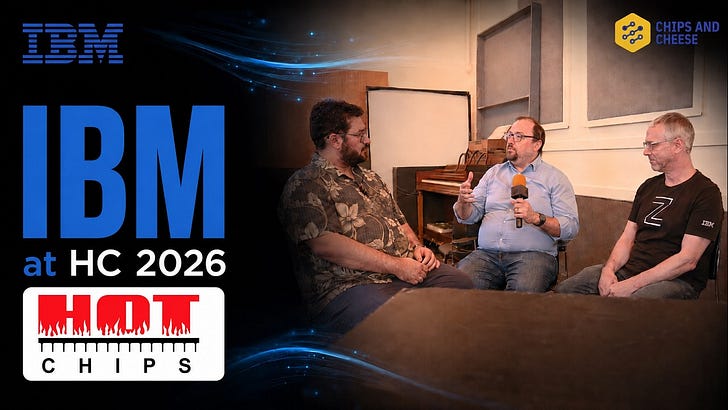
Why it matters — Engineers building or porting workloads to IBM’s z platform can now run ARM-compiled binaries natively without emulation. The design reuses most of the core’s large structures, so the silicon cost is small, but the memory-ordering model remains z’s strong ordering for both ISAs. This may simplify hybrid workloads that span traditional z and ARM-based cloud stacks.
Why it matters — The premise forces engineers to confront the infrastructure and ethical implications of scaling AI compute globally. It highlights gaps between current GPU supply and a future where AI is as accessible as smartphones, without assuming breakthroughs in model capability.
Why it matters — Linux packaging fragmentation forces developers to choose between broad compatibility and maintainability. The lack of a unified solution increases maintenance burden and limits adoption. This highlights systemic gaps in Linux distribution ecosystems for third-party software.
Why it matters — Clipboard access without explicit user interaction raises privacy and security concerns for engineers deploying or using the Linux Zoom client. X11 clipboard behavior is a long-standing architectural issue, but proactive monitoring by an application exacerbates the risk of unintended data exposure
Why it matters — Engineers building AI infrastructure may see increased demand for Nvidia GPUs as SpaceX locks in exclusive use of its chips for data centers and AI models. The large stake signals Nvidia's growing financial influence over SpaceX, potentially affecting chip allocation and supply chains for AI workloads. However, the stake's current value of about $17.2 billion reflects share price volatility, showing that the financial exposure can fluctuate quickly.
Why it matters — For engineers, pngine reduces the burden of sharing WebGPU wiring by representing it as data that can be validated ahead of time. It also allows packaging a pipeline as a single file, though the PNG requires a tiny player to execute.
2 feeds
8 min
⌕
Top stories right now
↑↓ navigate↵ open cluster⌘K close

Your choice, no tricks. We use optional Google analytics and advertising cookies to understand what helps and to fund the site.