1 feed
4 min
TOPIC
Language releases, type system changes, compiler work, and the design arguments behind them. What a new version gives you, and what it quietly asks you to rewrite.
LANGUAGES
Why it matters — Engineers can build full-stack web applications with reduced boilerplate and improved performance using Rust, achieving near-zero latency interactivity while retaining server-side control. This shifts development patterns toward hybrid server-client rendering models.
Why it matters — The release of loci-tools 0.2.45 introduces critical analysis capabilities for developers working with compiled binaries in C, C++, and Rust. These features allow engineers to optimize their applications for performance metrics such as timing and energy consumption, which are essential for resource-constrained environments. Understanding stack depth and memory usage also aids in enhancing security and reliability of the software.
Why it matters — This release reduces boilerplate for generic code and improves runtime efficiency, particularly for allocation-heavy workloads. The new JSON and UUID packages simplify common tasks while maintaining backward compatibility. Engineers can now detect goroutine leaks more reliably with built-in profiling tools.
Why it matters — The gaps in Dafny's standard library can significantly hinder developers who rely on these functionalities for building robust applications. Without essential file operations, networking, and data serialization support, developers may struggle to implement common features, pushing them to seek alternatives or workarounds. This could limit Dafny's adoption in software design and formal verification tasks.
Why it matters — The compiler offers dramatically faster startup and lower memory use, but incurs slower runtime performance and requires careful handling of dependencies and dynamic features.
Why it matters — At Cloudflare's scale, even minor improvements can lead to substantial resource savings, influencing operational efficiency. The reduction of over 100TB of RAM not only frees up resources but also highlights the importance of algorithm optimization in large-scale systems.
Why it matters — Leaked goroutines accumulate memory and increase GC work, degrading performance of long-running services. Existing tools such as race detector, goleak, and synctest only help in tests and cannot monitor production at scale. The new profiler gives operators a precise way to spot leaks in live deployments with little overhead.
Why it matters — This situation raises significant security concerns within the Rust community, as it could lead to the distribution of malware through trusted channels. Engineers and developers must be vigilant against such attacks to protect both their personal and professional environments. Ensuring robust security practices will be essential to mitigate the risks posed by these targeted threats.
Why it matters — Only one feed elseif tracks has carried this so far, so there is no independent corroboration yet. Read it as a single-source report.
Why it matters — For engineers, this is a security upgrade with no functional change: the Rust uutils are drop-in compatible with GNU coreutils, so scripts and workflows should behave identically. The migration addresses memory-safety bugs at compile time, which C cannot catch, and follows a security audit that found TOCTOU issues in the held-back commands. Canonical's ongoing funding of Rust projects also points to broader adoption, such as the planned NTP rewrite.
Why it matters — Only one feed elseif tracks has carried this so far, so there is no independent corroboration yet. Read it as a single-source report.
Why it matters — This gives engineers a standard way to represent diverging functions and impossible values in the type system. The provided material is thin, so the broader implications for codebases are not detailed.
Why it matters — This release introduces significant improvements in code clarity and cross-platform functionality. The adoption of new features such as the default Swift Build in Swift Package Manager will streamline project setups across operating systems. Enhanced libraries and performance upgrades also make Swift more competitive for systems-level programming and web applications.
Why it matters — Automated C-to-Rust translation could reduce the cost and risk of modernising legacy codebases, improving memory safety and maintainability. By combining machine learning with formal analysis, the project aims to produce idiomatic Rust without the extensive manual rewrites that current approaches require.
Why it matters — Engineers working on older or resource-constrained machines can keep a Rust language server running without exhausting memory, which improves overall system responsiveness. The persistent on-disk index eliminates the need for a full re-analysis after each editor launch, saving developer time during frequent restarts. However, the design trades off some real-time analysis speed and feature completeness, so teams must evaluate whether the memory savings outweigh the slower incremental updates.
Why it matters — The introduction of Verus represents a significant step in enhancing software security for Rust applications. By automating the verification process, developers can ensure that their code meets specified correctness criteria, reducing the risk of security vulnerabilities. This approach allows for more reliable and efficient software development, particularly in performance-critical areas.
Why it matters — Currently, Rust's C FFI crosses an unsafe boundary where memory safety cannot be enforced by either language. A Fil-C bridge would make C dependencies memory-safe at runtime, creating a performance incentive to rewrite hot paths in Rust where checks become static rather than paying the runtime tax on checked pointer operations and garbage collection.
Why it matters — Most Ruby Hashes in real applications are small, so the performance characteristics of this linear search path directly affect everyday code. Understanding the ar_table structure and its O(n) lookup behavior helps engineers reason about when Hash access is cheap and when growing past 8 entries triggers a transition to the st_table implementation.
Why it matters — This change signals Microsoft’s commitment to Rust as a core language for Windows-native development, reducing fragmentation in tooling and workflows. Engineers building or maintaining hybrid Rust/C++ systems on Windows will see improved interoperability and shared platform investments, but adoption requires alignment with MSVC’s ecosystem and compliance requirements.
Why it matters — This eliminates the need for separate helper functions that lived at package scope, reducing namespace clutter. It also allows method chaining to read left-to-right, improving readability of pipelines. Because generic methods are instantiated like other generics, they incur no runtime overhead beyond ordinary method calls.
Why it matters — The survey quantifies what the Rust community has suspected: debugger tooling is underused, and the async debugging experience is clumsy enough that only a quarter of respondents attempt it. For teams building Rust systems, this data confirms that print-based debugging remains the practical norm and that debugger investment is still early.
Why it matters — Engineers running Rust 1.98.0 should update to 1.98.1 to avoid potential segfaults or arbitrary behavior from miscompiled trait object vtables. The bug is in code generation, so it affects compiled binaries, not just the compiler itself. Updating via rustup is straightforward.
Why it matters — Algebraic float methods let the compiler reorder floating-point arithmetic for better performance, at the cost of non-deterministic results. The format_into method provides a faster path for integer formatting without dynamic dispatch. The ManuallyDrop fix removes a source of undefined behavior for code that moves dropped boxes.
Why it matters — The ABI freeze means binary wheels built against this candidate will work with all future Python 3.15 releases, so maintainers can publish 3.15-compatible wheels now with confidence. The release also confirms the feature set including explicit lazy imports, frozendict, UTF-8 default encoding, and an upgraded JIT compiler showing 8-9% performance improvement on x86-64 Linux.
Why it matters — This is the largest internal change to Rust’s compiler since its initial release, replacing core type-checking logic. While it fixes hundreds of existing issues, it may break some existing code due to stricter or corrected type inference. Testing on nightly is critical to identify regressions before stabilization
Why it matters — Engineers can process radio signals directly in Rust without external tools, enabling new signal analysis workflows.
Why it matters — Zig’s minimalism challenges assumptions about tooling and file organization carried over from Rust. The experience highlights trade-offs between IDE reliance and CLI workflows, as well as the scalability of flat project structures for small to medium projects. Engineers evaluating Zig may need to adjust expectations around tooling maturity and project layout conventions
Why it matters — This change gives engineers a standardized way to catch memory safety errors at runtime without relying on vendor-specific debug modes. The hardened mode trades undefined behavior for predictable termination, making debugging easier but requiring explicit opt-in. It does not eliminate all safety issues but provides a consistent baseline across compilers.
Why it matters — The migration demonstrates that AI agents can handle large-scale language ports, though they still struggle with Rust-specific regressions. The performance gains in startup time and memory density address critical bottlenecks for embedding Copilot in diverse Microsoft products. This case study provides concrete data on the cost and complexity of using LLMs for production-grade code translation.
Why it matters — This extends the scope of trusting-trust beyond compilers to ordinary build utilities, forcing engineers to re-examine every binary in the bootstrap chain. The attack survives rebuilds and backdoors nearly all binaries in the final environment, making detection and mitigation far harder than previously assumed.
Why it matters — AI-generated code accelerates development but introduces new failure modes. Without clear accountability and guardrails, teams risk shipping unreliable systems at scale. The proposed practices aim to balance speed with maintainability in an era of cheap, abundant code.
Why it matters — This approach aims to eliminate the traditional compromise between memory safety and execution efficiency in GPU programming by extending Rust's compile-time guarantees to device code. Engineers could write portable, safe GPU kernels without relying on vendor-locked Domain-Specific Languages or unsafe raw pointers. However, this is currently a research paper evaluated on RAJAPerf, not a production-ready compiler release.
Why it matters — In-place initialization is essential for large types and address-sensitive types that cannot be moved for correctness, but current approaches require unsafe code or lack expressiveness. The hierarchy framework could shape how the Rust language evolves to handle emplacement, affecting both performance and safety guarantees for systems programmers.
Why it matters — Gleam's ability to compile to two different backends makes it a prime candidate for differential fuzzing, where the outputs of both targets can be compared for inconsistencies. The author's shift from non-deterministic LLM-based fuzzing to a structured, generation-based approach in Rust highlights a practical method for finding compiler bugs.
Why it matters — The rewrite’s struggles highlight risks of over-reliance on AI for production codebases, particularly when changing core languages. For engineers, this serves as a cautionary example of how tooling shifts can disrupt stability and trust in a project’s roadmap
Why it matters — Memory layout choices directly impact interpreter performance, especially in dynamic languages where values are frequently allocated and accessed. This change demonstrates how low-level optimizations can yield measurable gains without altering language semantics. Engineers working on VMs or interpreters may find the trade-offs between memory efficiency and instruction overhead relevant.
Why it matters — This demonstrates the feasibility of custom firmware for consumer e-scooters, exposing both security risks and potential for aftermarket modifications. The work highlights gaps in hardware security and the practicality of using Rust for embedded firmware in real-world devices.
Why it matters — This combination lets Haskell developers maintain process state across recompilations, reducing the friction of the edit-compile-run cycle. However, it still cannot evaluate code in the REPL of a running program, so the Lisp experience remains only partially replicated.
Why it matters — Engineers often assume async/await behaves uniformly across languages, but subtle differences in runtime semantics can lead to unexpected program outputs. These variations complicate cross-language interoperability and require careful consideration when porting concurrent code. The findings highlight the need for explicit documentation of language-specific async behaviors.
Why it matters — When a tool like tr, cut, chmod, sort, env, test, or head rejects a malformed argument, the new output pinpoints exactly which character triggered the failure rather than leaving you to find it in a long expression. The original single-line stderr message is still printed, so scripts that parse stderr are unaffected.
Why it matters — The article outlines the complexities involved in creating a Rust Language Server Protocol (LSP) implementation, specifically focusing on Rust Glancer. Understanding these challenges can help engineers anticipate potential issues when developing similar projects. Insights gained from such experiences can guide better design decisions in future LSP implementations.
Why it matters — Seeing the vtable structure clarifies the runtime overhead of dyn Trait versus zero-cost static dispatch. It aids engineers deciding when to use dynamic polymorphism in Rust. The visualization also highlights Rust's zero-sized types and their impact on memory layout.
Why it matters — State machines are a common engineering pattern, and Rust’s type system may offer compile-time guarantees for correctness. If adopted, this could reduce runtime errors in state transitions but may increase initial design complexity. The material is too thin to assess real-world adoption or limitations
Why it matters — This misconfiguration exposed developer machines to immediate full compromise if any user-level process was exploited. Default security settings in distributions targeting developers must prioritize least privilege, especially as AI-driven attacks on infrastructure increase. The issue was resolved in a patch, but the opt-out nature of the risk highlights the importance of transparent security trade-offs
Why it matters — It illustrates the practical constraints of compiler bootstrapping when established open-source tools exceed available hardware limits. The author's journey from machine code to a custom C compiler shows the engineering workarounds needed for register allocation on limited systems.
Why it matters — This vulnerability exposes a systemic weakness in MacOS GPU preemption for untrusted shader code. Engineers building or deploying WebGPU applications must account for potential denial-of-service risks on affected systems until a fix is released.
Why it matters — This change in C++26 addresses a major issue where trivial infinite loops, previously considered undefined behaviour, could lead to unpredictable execution and security vulnerabilities in embedded systems. By redefining these loops as well-defined, developers can write safer code that behaves consistently across compilers. This improvement is crucial for systems where reliability and predictability are paramount.
Why it matters — The release of loci-tools 0.2.41 introduces a set of tools designed for analyzing compiled binaries in C, C++, and Rust. This update focuses on metrics such as timing, energy consumption, stack depth, memory usage, and security aspects. Such tools can significantly aid developers in optimizing their applications for performance and resource efficiency.
Why it matters — Engineers can automate iOS pipelines from within their development environment, eliminating the need for separate macOS CI setup and reducing the barrier to entry for KMP iOS projects.
Why it matters — The release of testing-conventions 0.0.123 introduces standardized practices for testing in multiple programming languages. This can improve code quality and consistency across projects. Developers adopting these conventions may reduce errors and enhance collaboration within teams.
Why it matters — This event highlights a creative way to explore updates in Python 3.15. Engaging with new features through a text adventure may enhance understanding and retention for developers.
Why it matters — Engineers running user-provided code for data transformations or plugins need secure isolation without the overhead of traditional containers. smolvm's approach offers a potential alternative with faster cold starts and hardware-enforced limits. The trade-off is dependency on KVM-capable infrastructure, which may not be universally available.
Why it matters — Stripping the OTC attribute breaks the protocol's automatic route leak prevention for downstream networks receiving those routes. Cloudflare is engaging with these Tier 1s to restore OTC propagation so early adopters can actually benefit from the protection.
Why it matters — This release improves security and performance through updates to vital components like OpenSSL and npm. Additionally, the new API support for SharedArrayBuffer enhances the capabilities for developers working with typed arrays.
Why it matters — This release indicates ongoing development in Rust-based alternatives to traditional Unix core utilities. It highlights collaboration with the Ubuntu community to resolve specific issues, enhancing overall usability and stability. Engineers using Rust Coreutils can benefit from these fixes in their development environments.
Why it matters — Updating Rust toolchains and adding multiple components will be faster due to parallel execution. The deprecation of implicit toolchain installation means scripts relying on this behavior will now emit warnings and need updating eventually.
Why it matters — This update enhances accessibility for Persian-speaking developers and users. It encourages community involvement in maintaining accurate translations, which is crucial for widespread adoption and usability.
Why it matters — The transition to Java 27 marks a significant update in the Java ecosystem, particularly with the G1 Garbage Collector being the default. This change can impact performance and memory management for applications built on Java. Developers should be aware of how this change affects their applications and consider testing for compatibility and performance improvements.
Why it matters — The updates to JavaScript in 2026 will enhance performance and usability for developers. New methods for iterators and sets, along with RegEx improvements, will allow for more efficient coding practices. These changes reflect an ongoing commitment to refining the language, which could positively impact software development processes.
Why it matters — The introduction of AVX10V1AUX ISA support in GCC will enhance the performance for applications utilizing AMD's AI Compute Extensions. This development reflects AMD's commitment to improving their software ecosystem alongside hardware advancements. It allows developers to better optimize their code for the latest AMD architectures.
Why it matters — Engineers can now embed browser automation directly into Bun applications, reducing dependencies on Puppeteer or Playwright. This lowers operational complexity but trades off maturity for tighter integration with Bun’s runtime. The approach may simplify small-scale scraping or testing workflows where full browser automation suites are overkill.
Why it matters — This shift signals a re-evaluation of cross-platform frameworks when native tooling becomes more maintainable through automation. For engineers, it highlights how AI-assisted workflows may reshape architectural decisions, though the trade-offs between code reuse and platform-specific optimisation remain.
Why it matters — This change lowers the language barrier for Russian-speaking engineers learning or debugging Python. It also signals the project’s reliance on volunteer contributions to sustain multilingual documentation. No tooling or workflow changes are required for users, but maintainers must now track updates across two language versions.
Why it matters — This election establishes the governing body for Python packaging, a critical infrastructure for dependency management and distribution. The staggered terms aim to balance continuity with fresh perspectives, directly impacting how packaging tools and standards evolve.
Why it matters — The failure ends a high-risk attempt to extend the life of a valuable scientific instrument, and it means Swift will burn up in the atmosphere, with its demise not expected before October. The mission's collapse also highlights the difficulty of on-orbit servicing, as Katalyst's Link spacecraft went into an uncontrollable spin shortly after launch and never recovered full pointing control. Despite the loss, Katalyst will continue operating Link near Swift to demonstrate capabilities for future rescue operations.
Why it matters — This development aims to significantly reduce the mean time to resolve production issues, which is a critical metric for operational efficiency. By automating the initial diagnostic process, Oppex AI allows developers to focus on resolution rather than initial data gathering, potentially improving overall incident management.
Why it matters — The outcome determines whether Apple can use evidence that federal agencies chose Apple products for their privacy features as part of its antitrust defense. If the special master upholds the original order, Apple gains access to documents across agencies including the CIA, FBI, NSA, and Department of Defense; if reversed, Apple loses a line of argument it considers central to justifying its practices.
Why it matters — Only one feed elseif tracks has carried this so far, so there is no independent corroboration yet. Read it as a single-source report.
Why it matters — For engineers, this demonstrates a practical integration of fine-tuning, memory, and user feedback in a production assistant. It shows how personalization can be achieved while maintaining trust, which is a common challenge in AI applications.
Why it matters — Engineers can now start learning Rust immediately inside RustRover without external setup, and the final challenge lets them design a real API using chosen crates, revealing gaps in their understanding of core concepts.
Why it matters — The synchronization process between the Rust GCC backend and the main Rust repository faced significant challenges, highlighting the complexities of managing dependencies and CI systems. Understanding these obstacles is crucial for engineers involved in compiler development or similar integration tasks. The experience serves as a case study on the pitfalls of version control management and CI integration.
Why it matters — This comparison highlights how different programming languages implement compile-time reflection, a feature useful for type inspection and manipulation. Understanding these differences can help engineers choose the right language for projects requiring reflection capabilities without runtime costs.
Why it matters — The Goose language offers significant performance advantages for systems programming, making it a compelling alternative to existing languages like C++ and Rust. With its memory-safe design and efficient memory usage, engineers can expect improved application performance with reduced overhead. This could lead to faster development cycles and lower maintenance costs for projects that require high-performance computing.
Why it matters — Oilpan, a garbage collector for C++, is moving to V8, making it more accessible for developers. This transition aims to improve memory management in applications that embed V8, potentially enhancing performance and reliability. The implementation details reveal how C++ objects can be managed efficiently without imposing significant overhead.
Why it matters — The native Rust compiler reduces build times, lowering CI costs and improving developer feedback loops, especially for teams using agent-assisted development. It also aligns linter and build toolchains, eliminating mismatches that previously caused missed optimizations. While still limited by certain JavaScript patterns, the Rust version receives ongoing fixes that the Babel-based compiler no longer gets.
Why it matters — The addition provides a standardized way to extract cryptographic objects from PKCS#12 structures without external libraries. It simplifies handling of PKCS#12 data in security-critical Node.js applications and may affect code that currently relies on third-party parsers.
Why it matters — JavaScript remains a dominant language, yet its increasing performance issues and competition from newer languages could impact its future usability. The shift towards faster alternatives highlights the evolving landscape of programming languages, which may influence project decisions and developer skills. Understanding these dynamics is crucial for engineers to adapt and optimize their work environments.
Why it matters — The repository provides concrete, runnable examples that demonstrate how to structure TypeScript and CSS code for cross-platform deployment. It clarifies the manifest requirements needed for the simulator, embedded boards, and IDE extensions to recognize and build the applications.
Why it matters — Binary-data manipulation tools are critical for low-level debugging, reverse engineering, and firmware analysis. The addition of floating-point arithmetic and reactive IO spaces reduces manual effort and improves performance for engineers working with structured binary formats. These changes may lower the barrier to writing precise, maintainable scripts for binary inspection and modification.
Why it matters — Loris Cro's insights emphasize the importance of understanding systems programming and the control it provides over software development. This perspective encourages developers to engage deeply with the core functionalities of their applications rather than relying heavily on higher-level abstractions. By adopting this mindset, engineers can create more efficient, innovative, and robust software solutions.
Why it matters — The update signifies a shift towards Rust in the Mir project, which may enhance safety and performance. Developers working with Mir will need to adapt to this new requirement, which could influence existing and new projects. Understanding this change is crucial for teams reliant on Mir for their Wayland compositor needs.
Why it matters — Type punning is essential for serialisation, network protocols, and low-level hardware access. The distinction between C and C++ in type punning is important for engineers to understand. The compiler may optimise away code that uses pointer casts for type punning.
Why it matters — Futhark's approach to type systems and aliasing presents significant design challenges. The complexity of managing aliasing can lead to performance issues and unintended errors in code. Understanding these implications is crucial for developers working with Futhark or similar languages.
Why it matters — Only one feed elseif tracks has carried this so far, so there is no independent corroboration yet. Read it as a single-source report.
Why it matters — This update provides developers with improved tools for implementing cryptographic functions and performance measurement in their applications. The addition of a generic MAC API and enhanced cipher discovery from OpenSSL providers can lead to more secure applications. Furthermore, the new performance hooks allow for better analysis and optimization of Node.js applications.
Why it matters — This release marks a routine but important update for Node.js users, particularly those relying on current builds. The deprecation of `Server.prototype._listen2` signals future breaking changes, while dependency updates address security and compatibility concerns. Engineers maintaining Node.js applications should review these changes to avoid future compatibility issues
Why it matters — The event underscored that Node.js and related projects rely on small teams of maintainers, whose work is often under-resourced. It also revealed systemic risks in supply chain security, where compromised maintainer identities can propagate malicious packages at scale. These issues directly impact engineers who depend on these tools for production systems.
Why it matters — The OpenSSL and NSS updates bring security fixes and an updated trust store. The STORE loader support simplifies loading private keys from various sources. Performance improvements in net.BlockList and histograms may benefit network-heavy applications.
Why it matters — A misreported version string can break scripts and CI pipelines that parse `node --version` output. The fix restores expected behavior without requiring changes to existing tooling.
Why it matters — This release expands Node.js capabilities for security-sensitive applications with SIV and GCM-SIV cipher modes, while improving observability and SQLite handling. Engineers can now adopt these features without semver-major changes, but must validate compatibility with existing cryptographic workflows and histogram analysis tools.
Why it matters — The settlement reverses an arrangement that reduced competition in rental listings, where Redfin wound down its own advertising in exchange for payment from Zillow. Redfin must now rebuild that business, reintroducing a competitor to the multifamily listings market. The case signals that syndication deals structured to remove a rival from a market will draw antitrust scrutiny regardless of how they are labeled.
Why it matters — AI coding agents treat vendor documentation as ground truth and execute referenced packages without sufficient verification. This creates a supply-chain attack surface where malicious actors can register unclaimed domains and distribute code that runs inside corporate environments.
Why it matters — Service account JWTs are bearer tokens: anyone who obtains a copy can impersonate the identity, and you necessarily hand copies to peers during authentication. Pod Certificates use asymmetric cryptography where the private key never leaves the workload, eliminating that impersonation risk. This gives workloads a production identity mechanism comparable in ease to service account JWTs but with stronger security properties.
Why it matters — Engineers see Rust used in core Windows components, indicating a shift toward Rust in system-level code.
Why it matters — The shift moves verification from post-capture editing chains to immediate sensor signing, reducing exposure to tampering before provenance is attached. It introduces quantum-safe signatures and private verification, but relies on Apple-controlled infrastructure and lacks external verifiers.
Why it matters — The ongoing issue of online censorship affects medical tattooists like Lauren Carter, who provide essential services for breast cancer survivors. Misidentification of medical tattoos as inappropriate content hampers artists' ability to reach clients, ultimately impacting survivors' options for recovery. This situation highlights the need for improved content moderation algorithms on social media platforms.
Why it matters — This decompilation allows developers to study the underlying code of Resident Evil 4 in C/C++, facilitating reverse engineering and modding. The byte-identical nature ensures that the behavior of the original game is preserved, providing a reliable framework for those looking to understand or modify the game's mechanics. It also opens up opportunities for preservation efforts regarding classic game titles.
Why it matters — The release of SDCC 4.6.0 introduces several new features and improvements that enhance C programming for microcontrollers. This could lead to better code efficiency and development speed for engineers working with supported devices. The updates also include support for various C standards, which can improve compatibility and functionality in embedded systems.
Why it matters — This demonstrates a potential shift in how large-scale code migrations could be executed, reducing manual effort and cost. If reproducible, it may lower the barrier for teams considering language transitions, though long-term maintainability remains unproven.
Why it matters — Engineers who embed code viewers in web apps face a trade-off: either ship megabytes of language grammars or accept lower accuracy. This experiment shows that a tiny WebGPU model can deliver 90 % of the accuracy of a full grammar stack at 1 % of the bundle size. The catch is that it is still an experiment, it may mislabel tokens in languages it never saw during training.
Why it matters — Wayland has been a persistent gap for Linux remote desktop tools, with competitors like AnyDesk still requiring Xorg and TeamViewer labeling Wayland support experimental. This preview gives engineers managing headless or multi-monitor Wayland machines a path to unattended access that previously required falling back to Xorg.
Why it matters — The switch from actions/setup-go to a custom solution enables significant performance gains in Golang CI workflows. This improvement can be critical for teams aiming to maintain rapid development cycles without sacrificing code quality. Efficient CI processes directly impact the speed of delivering features and updates to end-users.
Why it matters — Engineers adopting value classes cannot assume they always improve performance over ordinary classes. The JVM must sometimes convert between flattened and reference representations when methods with different preferences interact, and mutable fields containing large values force reference layouts to prevent torn reads during data races.
Why it matters — Robotics teams often struggle with fragmented data processing workflows, making it difficult to audit, reproduce, or scale datasets. HFlow addresses this by providing a unified framework for ingestion, transformation, quality control, and curation. For engineers, this reduces the overhead of managing complex data pipelines while maintaining transparency and traceability
Why it matters — Engineers building AI systems often focus on model accuracy while overlooking the governance and definition alignment of their input data. Moniepoint's example demonstrates that a single ambiguous metric like monthly active user can cascade into flawed churn predictions, credit scores, and personalization across every downstream model. The full chain of custody they built, tracking every transaction from origin through settlement, reconciliation, and reporting, provides a concrete pattern for making AI systems auditable.
Why it matters — Engineers running distributed systems can reduce mean-time-to-recovery by delegating routine incident triage and rollback decisions to a configurable, auditable agent. The trade-off is operational complexity: Aura requires explicit guardrails, model provider integration, and approval workflows to stay within security boundaries.
Why it matters — Engineers who script terminal workflows or integrate AI agents now have a cross-platform multiplexer that can be controlled programmatically. The tool’s concept-capture engine also lets teams route terminal output to adjacent viewers without scraping TUIs, reducing brittle text parsing.
Why it matters — It provides an embedded alternative to external KV services, reducing latency and operational overhead. Configurable durability lets developers trade performance for safety according to workload needs. Built-in compression and background compaction help manage storage efficiency without manual tuning.
Why it matters — For engineers managing multiple Linux servers, Serverbox provides a GUI that speaks plain SSH, so existing credentials and workflows carry over. Its agentless design means no extra software to maintain on servers, and local encryption of credentials plus host-key verification address common security concerns.
Why it matters — This decision highlights a tension between operational continuity and public perception in law enforcement technology deployments. Engineers working on civic tech or surveillance systems may need to account for policy shifts based on community trust rather than technical failure.
Why it matters — The material is too thin to assess what "Lake America" refers to or what specific incidents the argument rests on. Engineers who rely on U.S. tech vendors should note the sentiment but cannot act on it without the underlying article.
Why it matters — Engineers building or integrating agentic systems may need to account for explicit trust boundaries. Without further details, the scope and implementation of these controls remain unclear. This could signal a shift toward more predictable interactions in autonomous software agents
Why it matters — The bug is classified as P-critical because it turns correct Rust code into a segfault, breaking stable-to-stable compatibility. It affects projects that use boxed async trait objects on aarch64-apple-darwin, as demonstrated by the Rama proxy example failing in CI. Users must either downgrade to 1.97.1, use a nightly toolchain, or avoid the affected pattern until a fix is released.
Why it matters — Engineers building vector search or RAG systems get near-8× memory compression and faster queries without a separate training phase, parameter tuning, or index rebuilds. The pure-local, incremental-save design suits privacy-sensitive and latency-critical deployments where managed services are unacceptable.
Why it matters — For engineers building Linux web services, Vermell removes dependency management and runtime overhead, relying only on base Linux APIs. Its epoll-based event loop with worker threads aims to handle slow clients without blocking. The framework is not portable to macOS or Windows, so it suits Linux-only deployments.
Why it matters — Developers can now build modern asynchronous applications that interoperate with vintage AppleTalk hardware using only a raw socket or a TashTalk USB adapter. The stack eliminates the need for kernel-level drivers or Netatalk, simplifying deployment on contemporary operating systems. Multiple isolated stack instances can coexist on the same machine, supporting concurrent legacy services.
Why it matters — The I/O subsystem underpins file, network, and console operations in Zig programs, so a redesign can affect a wide range of existing code. Engineers will need to review and possibly refactor I/O-related code to align with the new API. Compatibility breaks could also impact third-party libraries that depend on the current I/O behavior.
Why it matters — This event outlines a fundamental approach to integrating AI tools with JavaScript. Understanding this loop can help engineers leverage AI in their applications effectively.
Why it matters — Rust’s memory safety and performance characteristics make it an increasingly viable choice for low-level systems like emulators. For engineers maintaining legacy hardware or retro computing projects, this could reduce bugs while preserving compatibility. The project’s existence also signals growing Rust adoption in domains traditionally dominated by C or C++
Why it matters — Treating browser User-Agents as evidence of human readers leads to inflated analytics, as demonstrated by a single mobile-classified client fetching 31 pages in one second. Implementing deterministic edge rules provides a more accurate account of traffic but cannot definitively establish human readership, as client identity and readership require different evidence.
Why it matters — Engineers can see measurable differences in interrupt latency, program size, and RAM usage between Embassy/Rust and FreeRTOS on the same STM32F446 hardware. The comparison also highlights development tradeoffs such as Embassy's need for static task allocation, a nightly compiler, and cooperative multitasking versus FreeRTOS's preemptive threading model.
Why it matters — For engineers building on Firefox or relying on its privacy features, the warning signals that the browser's survival depends on the antitrust remedy's outcome. If payments are banned, Mozilla says revenue would fall sharply, potentially reducing investment in the browser. The case also affects any independent browser that depends on search-default deals.
Why it matters — This lets performance-critical code be written in Rust while preserving a familiar Python interface, but the step that turns Rust values into Python objects can become the bottleneck. Recognizing where the conversion cost outweighs the parsing speed is crucial before porting existing Python libraries to Rust.
Why it matters — Finder's file organization model has remained fundamentally unchanged for decades, forcing users to remember where they saved files or what they named them. Kepter offers an alternative that removes this cognitive load, though it remains to be seen whether a single-developer tool can sustainably replace a core OS component.
Why it matters — Engineers integrating ArcadeDB into Python or Node applications no longer need to rely on generic REST clients or repurposed drivers from other databases. The new drivers are generated from ArcadeDB’s own OpenAPI and Protobuf contracts, ensuring full protocol coverage and reducing maintenance overhead. However, adoption requires choosing between HTTP and gRPC based on workload constraints, and the gRPC driver is currently unusable in browsers.
Why it matters — Coroutines in C++20 introduce a new control flow mechanism that can simplify asynchronous code, but their complexity has limited adoption. A practical intuition guide may lower the barrier for engineers to evaluate and integrate them into projects. Without clear mental models, teams risk misusing or avoiding the feature entirely
Why it matters — Engineers building high-throughput actor runtimes or message-passing systems may face similar hidden overheads from default hash maps. The trade-off between safety and performance in language runtimes is concrete and measurable here
Why it matters — This change reduces boilerplate and potential errors when returning rvalue references in C++. Engineers can now rely on the compiler to handle moves implicitly, aligning with modern C++ best practices for performance optimization.
Why it matters — Coding agents currently rely on text search to find usages, which cannot reliably disambiguate overloads, resolve interface implementations, or determine which project a caller belongs to. Graphify C# gives agents the same semantic navigation that IDEs like Rider provide, but in a headless, queryable JSON format that agents can consume directly.
Why it matters — Only one feed elseif tracks has carried this so far, so there is no independent corroboration yet. Read it as a single-source report.
Why it matters — This development showcases a practical application of C++ in retro computing. Custom assemblers can enhance understanding of low-level programming and system architecture. Such projects can also contribute to educational resources in software development.
Why it matters — Only one feed elseif tracks has carried this so far, so there is no independent corroboration yet. Read it as a single-source report.
Why it matters — For engineers who juggle multiple coding agents, Waku offers a single local interface that normalizes different agent protocols and checkpoints the working tree with each prompt. It avoids the overhead of Electron apps and keeps all data on the machine, but it is macOS-only and requires agents that expose the supported native interfaces.
Why it matters — This approach consolidates rendering logic on the server in a single language, eliminating the need for separate API contracts and dual codebases. It trades client-side rendering complexity for server-side resource usage and a persistent connection model, offering an alternative to the standard SPA stack.
Why it matters — The series targets working developers who want to understand low-level programming but lack experience in it, covering the full stack from boot sector to compiler. It is a single-author project carried by one feed, so its ongoing value depends entirely on continued publication of episodes.
Why it matters — For engineers evaluating message streaming infrastructure, Iggy's graduation signals a stable, community-governed alternative to established systems like Kafka. The project's focus on low latency and efficiency, combined with Apache's governance model, reduces the risk of a single vendor or individual controlling the codebase.
Why it matters — This incident highlights the risk of supply-chain attacks in dependency ecosystems, where a single compromised crate can execute malicious code during build processes. Engineers relying on transitive dependencies may unknowingly trigger payloads even without direct interaction. The attack exploited typosquatting and account compromise to spread widely before detection.
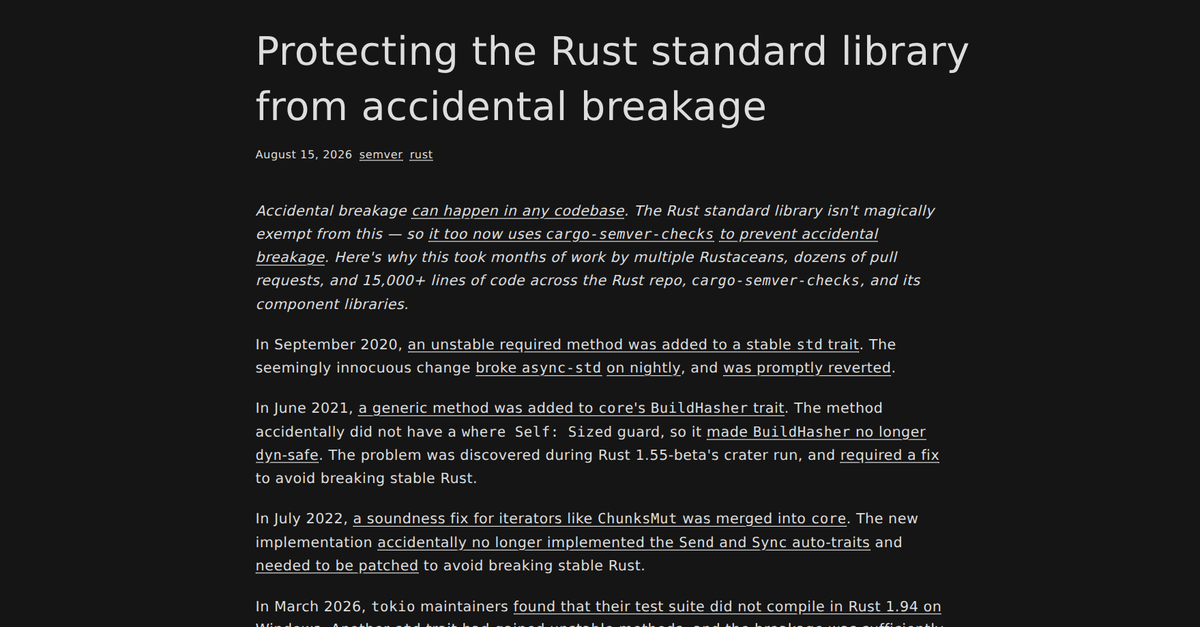
Why it matters — Accidental breakage in Rust’s standard library has historically disrupted downstream crates, requiring emergency fixes. Automated SemVer checks shift the burden from human reviewers to tooling, reducing the risk of stable releases introducing regressions. This change makes Rust’s stability guarantees more reliable for production use.
Why it matters — The reliance on C code in Rust packages highlights interoperability challenges and performance considerations in programming languages. Understanding this dependency can inform design choices and potential optimizations for developers. It also raises questions about safety and maintainability in mixed-language projects.
Why it matters — Debugging Swift code that uses computed properties or other expressions requiring JIT compilation will become faster and more reliable. Most developers will see the benefit automatically, but custom build systems may need adjustments to take full advantage of the change
Why it matters — AI coding agents often produce outdated Go code because newer features fall outside their training data. These guidelines give agents a version-aware reference, so generated code compiles with the project's go.mod directive and avoids wasting tokens on unsupported features. The tool uses a list/explain progressive disclosure to keep context focused.
Why it matters — Junie /demo simplifies the testing process by allowing engineers to delegate routine UI checks. This frees up time for developers to focus on more complex issues while still providing comprehensive reports for review. The ability to generate demo videos and HTML reports enhances communication within teams about code changes.
Why it matters — The AIDEs Framework aims to help developers understand the broader trends in AI tools. It may help teams avoid change fatigue by providing a clearer picture of the AI landscape.
Why it matters — This update makes local coding agents smarter and faster, enabling developers to use more capable models on their own machines without sacrificing performance. The new model has been tested on multiple public benchmarks and has shown promising results.
Why it matters — The introduction of typed authentication enhances security by ensuring type safety during implementation, which is crucial for complex systems. HTTP/3 support allows developers to leverage the latest transport protocols, potentially improving performance and latency in web applications. These updates reflect ongoing trends in server technology and application security, which are vital for modern web development.
Why it matters — Engineers building Kotlin Multiplatform apps can now discover and compare libraries more efficiently with filters for platforms and curated categories. The new MCP server lets AI coding agents pull current library metadata directly, reducing reliance on stale training data. This integration could speed up dependency selection and keep AI-assisted development aligned with the latest package versions.
Why it matters — CI/CD workflows in TeamCity can now use pipelines as a first-class citizen instead of relying solely on classic build configurations. The BYOK option for AI Assistant lets teams enforce their own security and cost policies while still automating debugging and build inspection.
Why it matters — These updates enhance the stability and functionality of the MPS language workbench, which is essential for developing domain-specific languages. By addressing existing issues, developers can expect a more reliable development experience. The improvements to the Projectional Agent Toolkit make agent-assisted development more efficient and user-friendly.
Why it matters — Engineers building domain-specific languages in MPS can now write less brittle editor tests, navigate large models more easily, and maintain launcher configurations with fewer manual updates. These changes reduce debugging time and lower the risk of stale platform settings.
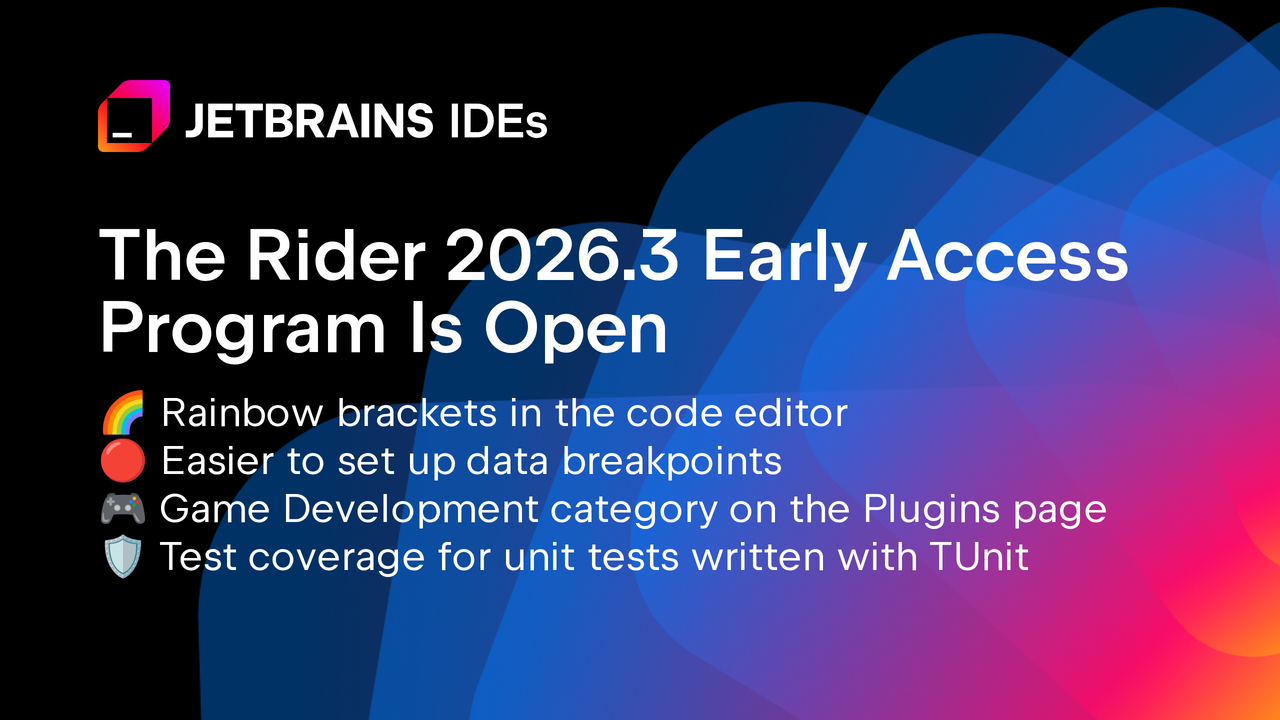
Why it matters — The update enhances productivity for .NET developers by streamlining the setup and management of AI agents. Additionally, the inclusion of TUnit support for test coverage allows developers to better assess their unit tests, which is crucial for maintaining code quality.
Why it matters — The refactoring skill cuts median AI task time from 157.9s to 26.6s and cost from USD 0.52 to USD 0.19 by letting agents invoke Rider's refactoring engine instead of shelling out to git, sed, and dotnet build repeatedly. ReSharper's default move to out-of-process mode decouples its memory footprint from the IDE process, which has been a long-standing source of Visual Studio instability for .NET developers.
Why it matters — These features target long-standing Java concurrency pain points: expensive blocking platform threads, mutable ThreadLocal variables prone to memory leaks, and unstructured concurrency that produces thread leaks and unpredictable cancellation. IDE support means developers can write, debug, and profile these patterns with tooling assistance rather than navigating them unaided.
Why it matters — For engineers deploying detectors on data outside the COCO distribution (industrial inspection, medical imaging, retail), the tutorial offers a concrete recipe plus realistic latency numbers rather than optimistic paper benchmarks. The author is candid that latency diverges from published figures because no TensorRT compilation was performed, which sets expectations about what out-of-the-box performance actually looks like. Accuracy numbers held within noise of reported figures, lending credibility to the off-distribution fine-tuning work that follows.
Why it matters — The MCP server lets an AI agent verify its own UI edits by triggering reloads, taking screenshots, inspecting the semantic tree, and reading logs from the running app, which closes the loop on automated UI changes. The web font fallback removes the need to manually bundle fonts for scripts like Japanese, Arabic, and Devanagari. The v2 desktop window API makes requested-versus-actual window state explicit and adds content-intrinsic sizing, multi-screen placement, and min/max constraints.
Why it matters — Go’s explicit error-as-value model remains distinct from exception-based languages. Engineers maintaining or adopting Go codebases need to know how the 2026 changes affect error creation, propagation, and inspection. The revised guide provides concrete patterns for these tasks.
Why it matters — This shift signals a fundamental change in software development workflows, where AI agents are no longer just assistants but primary code producers. Engineers must now evaluate how much control to cede to agents, balancing productivity gains against potential risks in code quality, maintainability, and skill atrophy. The data also highlights adoption disparities that may reshape tooling and hiring strategies.
Why it matters — For engineers building public sector software, non-compliance can lead to data breaches costing millions and penalties. Automated code quality tools like SAST and secret detection help meet compliance obligations and provide audit evidence. The cheat sheet offers a practical guide to avoid these risks.
Why it matters — Roslyn’s compiler-as-a-service model lets engineers build custom tooling, refactoring aids, or static analyzers directly in C#. The APIs are already part of the .NET SDK, so no additional dependencies are required. If the material is limited to a fun fact, the practical impact is unclear.
Why it matters — Language migration patterns reveal what engineers actually value when choosing tools. Kotlin’s voluntary adoption suggests its design successfully addresses pain points in alternatives like Java. This insight helps teams anticipate which languages may gain traction based on developer sentiment rather than just ecosystem demands
Why it matters — For teams on Atlassian Data Center, the discontinuation forces a migration decision. The webinars offer a concrete path to YouTrack, including a demo and customer stories, plus regional sessions in Japanese and Russian. Engineers and admins can evaluate deployment options and pricing.
Why it matters — This release addresses critical stability issues that could interrupt development workflows, particularly for users working with WSL2 and Maven projects. The updated features enhance overall productivity by resolving common pain points in the IDE.
Why it matters — Engineers running Java workloads in constrained environments will see lower memory usage and higher throughput without code changes. The shift to G1 GC as the default may require tuning for small containers previously optimized for Serial GC. Upgrading from older LTS versions remains a multi-step process rather than a single jump
Why it matters — This update removes several friction points for developers working with OpenAPI specifications and Markdown files in large directories. It also corrects a false positive in Spring Modulith, preventing unnecessary debugging of accessibility violations.
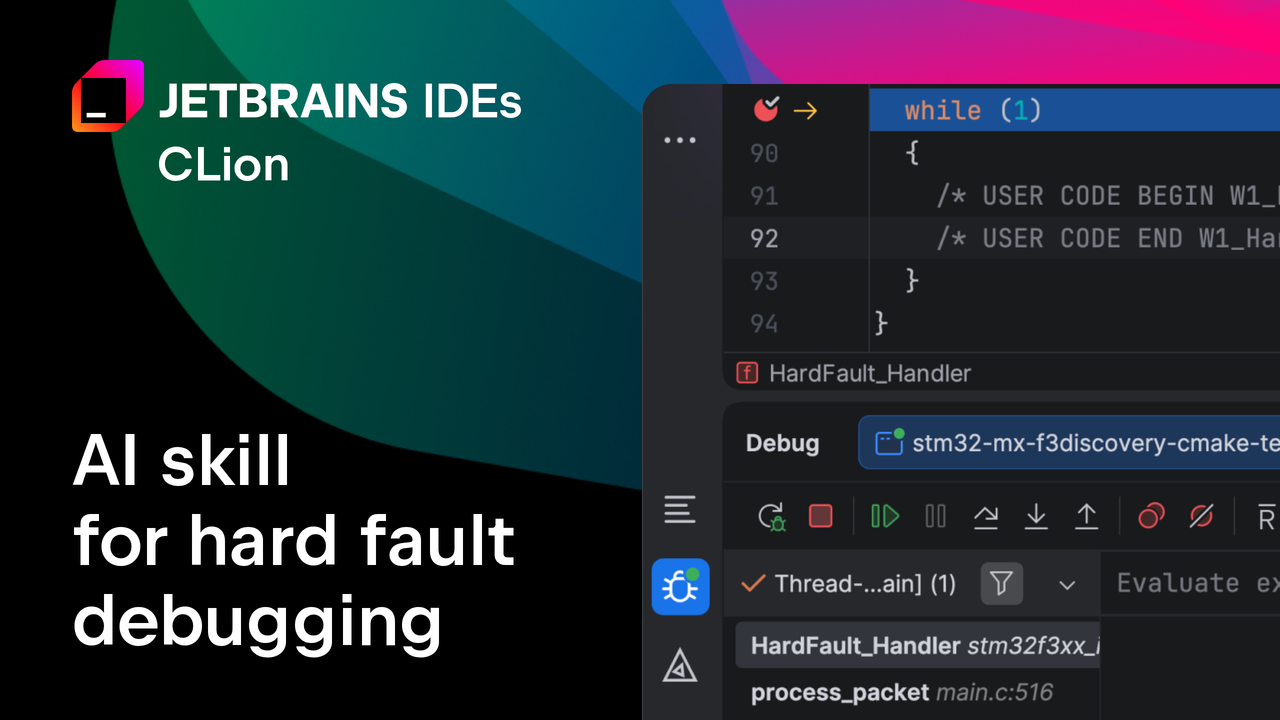
Why it matters — For C and C++ developers, especially those on embedded systems, the planned HardFault debugging skill could automate the tedious process of inspecting CPU state after a crash. JSON debug profiles promise easier configuration and portability from VS Code, while LLDB 21 support on Windows expands debugging options. However, the roadmap is preliminary, so features may shift.
Why it matters — These changes reduce friction for .NET and game developers who debug complex code or navigate large plugin lists. The new features are opt-in, so existing workflows remain unchanged until explicitly enabled.
Why it matters — Engineers relying on Jira or Confluence need a migration path before Atlassian's Data Center support ends in 2029. YouTrack offers an import wizard, continuous import, and a 25% discount for migrating teams. The guide also addresses AI data concerns, with full opt-out only on Enterprise plans.
Why it matters — Per-iteration cost has been the lever engineers pulled back on agent usage; Junie Local removes it for owners of recent high-end Apple silicon, which is a narrow but real segment. The hardware floor (M5 + 64 GB) is the gating constraint, and the team is explicit that broader hardware support is the next thing to push on. For anyone already inside a JetBrains IDE and under a no-cloud NDA, the privacy posture collapses from "we assessed the provider" to "no provider in the loop".
Why it matters — Engineers no longer need to manually inspect CFSR/HFSR registers or cross-reference disassembly to diagnose a crash. The automated approach works with any debug probe that CLion supports, from Lauterbach to ST-LINK. This cuts debugging time and lowers the expertise required for hard-fault analysis.
Why it matters — Engineers building Spring Boot applications must handle configuration across environments without embedding secrets or environment-specific values in code. These practices reduce deployment errors and security risks by enforcing validation and immutability. The guidance directly impacts how configuration is structured, injected, and secured in production systems
Why it matters — Engineers who manage JetBrains IDEs via the Toolbox App can now navigate lists without a mouse and update IDEs on macOS without disabling system protections. The changes reduce friction in daily workflows and prevent unnecessary manual workarounds for false-positive permission errors
Why it matters — The survey indicates that although Django’s core is stable and predictable, the surrounding ecosystem is shifting quickly with AI, tooling, and typing changes. Engineers must assess new tools like uv and Ruff and decide how to integrate AI assistance while maintaining code review oversight. Understanding these trends helps teams plan upgrades, allocate tooling budgets, and target training efforts effectively.
Why it matters — Engineers choosing an AI coding tool now see a clear market shift: Claude Code has become the default for many, while Copilot's lead has eroded. The rapid growth of Codex and open-source OpenCode suggests the landscape is still volatile, so tooling decisions may need frequent revisiting.
Why it matters — The shift toward AI-assisted learning changes how beginners engage with programming education. While AI reduces small obstacles, it also raises the bar for what courses must cover to remain relevant. Engineers mentoring juniors or designing onboarding materials may need to adjust their approach to include AI tooling and broader context earlier.
Why it matters — Rust developers building LLM applications face fragmented provider APIs and complex agent architectures. Rig abstracts these differences, reducing switching costs between providers and simplifying tool integration. This could accelerate Rust adoption in AI workflows where consistency and control matter more than ecosystem maturity.
Why it matters — Async/await is a core feature in many languages, and its design impacts code readability, error handling, and performance. Understanding the trade-offs of different designs helps language designers and library authors make informed decisions. Engineers can use the exploration to evaluate which async model best fits their project's constraints.
Why it matters — This is a deliberate, selective migration from C-based tools with decades of accumulated bugs to memory-safe Rust implementations at the OS layer that engineers depend on daily. The two approaches, bug-for-bug compatibility versus deliberate behavioral redesign, mean different risk profiles for different tools, and teams running Ubuntu at scale need to understand where behavior will and will not change.
Why it matters — This release reduces friction for Kotlin Multiplatform developers by simplifying library distribution and expanding Wasm support. The changes also address Maven Central’s upcoming quotas, which may affect existing publishing workflows. Engineers building cross-platform or web-targeted Kotlin applications will see immediate tooling improvements.
Why it matters — Swift’s expansion into web frontend development could reduce ecosystem fragmentation for engineers already using it for backend services. The shift to WebAssembly and embedded tooling may lower deployment barriers but introduces new constraints in binary size and browser compatibility.
Why it matters — These changes reduce boilerplate and improve type safety in Go codebases. The new goroutine leak profile provides a direct way to diagnose concurrency issues that were previously hard to trace. IDE integration lowers the cost of adopting the new features and modernizing existing code.
Why it matters — Making domain errors explicit in the function signature aligns with Salmon’s engineering culture of real ownership and high standards, preventing hidden failures from reaching production. It allows callers to handle every expected outcome without digging into implementation details.
Why it matters — Only one feed elseif tracks has carried this so far, so there is no independent corroboration yet. Read it as a single-source report.
Why it matters — Only one feed carried this item, and no article body was provided, so the technical argument can only be assessed from the headline and the truncated snippet. The snippet signals an argument that interaction nets could underpin a functional language runtime, which is a concrete enough claim to matter to anyone designing or evaluating FP compilers. Engineers interested in this space will need to read the source to judge whether the case for flat, relational data holds up.
Why it matters — Embedded Swift now supports more dynamic language features, reducing friction when porting existing Swift code to constrained environments. However, these features may increase binary size or runtime overhead where used, requiring careful trade-offs in performance-sensitive code. The improvements make Swift a more viable option for embedded systems without sacrificing language expressiveness.
Why it matters — Choosing JavaScript as a compilation target offers advantages in debugging and functional programming features. Its ubiquity across platforms allows for easier deployment and interoperability. This can streamline the development process for language designers and enhance the usability of new programming languages.
Why it matters — This expansion reflects Alibaba's strategic response to geopolitical tensions while aiming to enhance its cloud infrastructure in Europe. The new regions could provide localized services and improve performance for customers in those areas, potentially increasing competition in the cloud market.
Why it matters — This project showcases the application of C++ in modifying video games. It highlights the creativity and technical skills involved in game development. Additionally, it reflects the community's interest in enhancing classic games through programming.
Why it matters — Understanding why organizations move away from a language helps engineering leaders evaluate its risks for their own stacks. The thread highlights practical adoption and retention challenges for Haskell in commercial environments.
Why it matters — NEO Emacs aims to modernize Emacs by leveraging GPU capabilities, enhancing performance and compatibility. The transition from C to Rust improves memory safety and allows for a more hackable interface for developers. This shift could influence future editor designs by prioritizing modern programming practices and hardware utilization.
Why it matters — BonoboMock provides a flexible mocking solution for C++ unit testing, allowing for a broader range of function types to be mocked without the need for virtual interfaces. This can simplify testing in complex C++ applications and improve code reliability. The library's compatibility with GoogleTest also means it can be easily integrated into existing testing frameworks.
Why it matters — This shows that a modern web app can be built without a client-side JavaScript framework, relying on HTML forms, links, and URLs for interactions, which simplifies the architecture and reduces performance overhead. The cost is that every interaction requires a server round trip, and some features like push notifications still need JavaScript.
Why it matters — It shows that the safety versus convenience tradeoff often cited for type systems is not as clear-cut as many assume. Engineers can therefore evaluate language choices based on actual tooling and cultural practices rather than on a presumed type-system advantage.
Why it matters — Engineers can write high-level DSL abstractions in Rust without incurring runtime overhead, preserving Rust’s performance guarantees. The technique shows that even sophisticated functional patterns can be compiled away, enabling zero-cost abstractions in systems code.
Why it matters — Tilia aims to resolve longstanding formatting challenges in Haskell, particularly with comment handling and operator fixities. This could significantly improve developer experience by providing a more reliable and accurate formatting tool. The integration with GHC and Cabal also suggests a more seamless process for users dealing with Haskell dependencies.
Why it matters — Tail-call optimization is critical for interpreters and functional languages to avoid stack overflow. Rust's explicit tail calls let developers write recursive dispatch loops without growing the stack, but the feature is unstable and requires unsafe code. This article shows a practical implementation and benchmarks different dispatch styles.
Why it matters — For engineers building Windows software that needs protection against reverse engineering, Obfusk8 offers a header-only integration path. However, the heavy obfuscation techniques, such as VM execution and bogus control flow, will increase binary size and runtime overhead, and may complicate debugging and maintenance.
Why it matters — For Rust developers, this means that while you can use ! in any type annotation, you cannot rely on implicit coercion when ! appears inside a larger type, such as a function pointer. This makes some code more verbose, requiring explicit coercion at the point where the ! value is used. Understanding the distinction between empty and bottom types helps avoid surprises when writing generic or higher-order functions.
Why it matters — When developers use LLMs to speed through complex problems they do not fully understand, they risk generating flawed code without realizing it. Shifting the prompt from solving a problem to writing an RFC forces the model to explain the problem and alternatives, making gaps in understanding visible. This approach reduces the cycle of generating and discarding bad code by prioritizing comprehension over immediate output.
Why it matters — Only one feed elseif tracks has carried this so far, so there is no independent corroboration yet. Read it as a single-source report.
Why it matters — The post challenges 20th-century compiler orthodoxy with concrete tool recommendations. Engineers designing new languages can reduce up-front effort by deferring optimisation and reusing existing runtimes. The advice is thin on production-scale caveats but offers a low-risk path to minimum viable implementations
Why it matters — Long compile times slow down iteration and frustrate developers, as seen with Rust’s common complaint. Fast compilation allows whole-program builds in less than 200ms, reducing the need for complex separate compilation schemes.
Why it matters — For engineers using git, Mergiraf provides syntax-aware merging that understands code structure. The latest fixes improve reliability by naming the file that times out and by not failing the entire merge when binary files are encountered.
Why it matters — The gradual type system lets developers add types incrementally while preserving Janet's dynamic feel, aided by bidirectional inference that reduces annotation burden. Static analysis catches type mismatches early, and runtime type checking guards against violations at module boundaries. Recent additions such as default values for record fields and typecase simplify common patterns and reduce boilerplate in Janet programs.
Why it matters — A dedicated challenge gives Rust programmers a structured way to test and improve their coding skills. It also provides a focal point for community interaction and skill sharing within the Rust ecosystem.
Why it matters — Clippy is a core tool in the Rust workflow; its performance directly affects compile times for every Rust project. This change removes a hidden bottleneck that was triggered on every expression, statement, and item in the codebase. The fix also demonstrates how pre-expansion lints can sometimes outperform post-expansion ones without sacrificing correctness.
Why it matters — Engineers writing value-semantic C++ classes with heap-allocated members can now avoid manual Rule of Five implementations. The new type enforces const-correctness and deep-copy semantics automatically, reducing boilerplate and potential bugs in composite types.
Why it matters — Engineers working on 6502-based retro projects now have a tool that preserves familiar ca65 syntax while automating tedious patching and bank placement tasks. The shift from manual ROM editing to programmatic assembly could reduce errors and speed up iteration for homebrew games and ROM hacks.
Why it matters — Engineers using `std::optional` often assume they pay only for what they use, but eager argument evaluation breaks that promise. A lightweight `Lazy` wrapper restores the expected behavior without library changes. The trade-off is a small runtime cost and the need to handle memoization manually.
Why it matters — It addresses common Go pain points such as garbage-collection overhead and limited error handling by providing manual memory management and enum-based errors. Adopting Odin requires engineers to manage memory themselves and to copy or rewrite libraries, trading convenience for potential performance gains.
Why it matters — Rust GUI development remains fragmented, with no dominant framework. This survey highlights practical trade-offs in usability, tooling support, and platform compatibility. Engineers choosing a library must weigh feature completeness against integration costs.
Why it matters — The reported trend of migrating away from Tauri back to Electron suggests potential friction in adopting Tauri for desktop applications. Engineers evaluating desktop frameworks should consider these reported reversals when choosing a technology stack.
Why it matters — This container resolves the traditional trade-off between pointer stability and cache performance that forces developers to choose between std::list and std::vector. It is particularly useful for systems managing numerous entities with cross-references, such as game engines or connection pools, where pointer invalidation causes bugs or complexity.
Why it matters — Engineers working with document digitization or image processing may find Perspec useful for batch-correcting photos of receipts or documents without compression artifacts. The tool prioritizes workflow efficiency and output quality over mobile convenience, addressing common frustrations with existing scanner apps. Its release highlights Haskell’s viability for desktop applications with computer vision tasks.
Why it matters — It presents type systems that are not widely known but may appeal to readers. This exposure can help engineers consider alternatives when designing or selecting languages.
Why it matters — Space leaks can cause unbounded memory growth and break program correctness under lazy evaluation. The article shows how defensive coding and runtime profiling catch these leaks early. Adopting the presented patterns reduces runtime overhead and improves reliability.
Why it matters — This pattern solves lifecycle mismatches where a framework like RSpec provides setup and teardown hooks but no around hook. It offers a lightweight, blocking alternative to threads for smuggling resources out of blocks.
Why it matters — The material provided is limited to a single headline on a discussion aggregator, with no article body, no named compiler, no named build system, and no technical detail. There is not enough source material to characterise the implementation, the motivation, or the trade-offs, so the note below can only describe the event at the highest level.
Why it matters — It shows how Haskell’s type-safe diagram primitives can be used to generate repeatable geometric patterns, which is useful for programmatic graphics pipelines. Engineers can leverage the OverloadedRecordDot syntax and Trail' types to keep code concise while ensuring closed shapes at compile time. The example also demonstrates exporting the result with the diagrams-rasterific backend, a common path for producing raster images from Haskell code.
Why it matters — Haskell's design decisions have influenced many modern languages, but the discussion content itself is inaccessible from the available material. Only the topic framing is known, not the specific claims about the language's future.
Why it matters — The syntax of type declarations can significantly affect code readability and maintainability. Understanding different approaches can help engineers select or design languages that best suit their needs.
Why it matters — This demonstrates the limits of JavaScript minification and the trade-offs between code size and readability. For engineers, it highlights how far language features can be pushed for compactness, though such techniques are rarely practical in production systems.
Why it matters — This bypasses common web application firewall (WAF) rules and input sanitization by exploiting browser leniency in parsing HTML tag names. Engineers must account for edge cases in tag name handling to prevent cross-site scripting (XSS) vulnerabilities.
Why it matters — Function overloading could reduce friction when interoperating with C++ and other languages, but the current experiment is incomplete and unstable. Engineers working on FFI tooling or compiler internals can test it now, but production use is not yet viable.
Why it matters — For engineers building with jank or native Clojure, these error reporting improvements make debugging C++ interop issues tractable where they were previously opaque. The native package repo provides a standard distribution channel for jank libraries.
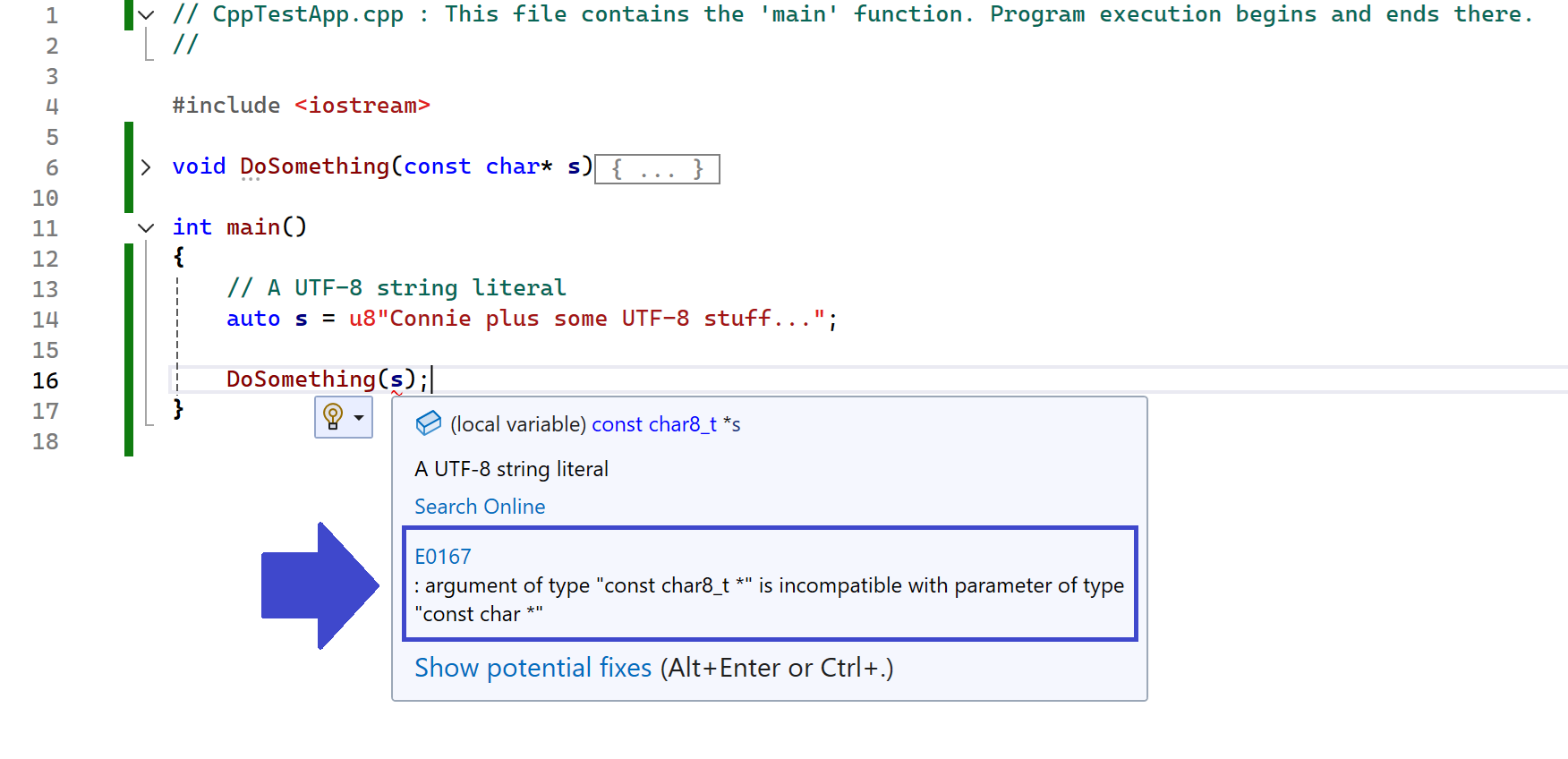
Why it matters — The change in C++20 regarding u8 string literals to char8_t causes existing code to fail to compile. This impacts developers maintaining older codebases who upgrade to C++20, as they must either refactor code or avoid the u8 prefix. Understanding this change is critical for ensuring compatibility and functionality in future projects.
Why it matters — This demonstrates how even basic automation can exploit gaps in legacy government web systems. For engineers, it highlights the risks of relying on client-side security measures like ASP.NET’s EVENTVALIDATION without server-side rate limiting. The approach could be replicated for other public lookup tools with weak protections
Why it matters — Rustdoc was processing every trait impl across every dependency and discarding most of them afterward, making doc generation scale with the total impl count in the dependency graph rather than the relevant subset. Reordering the filter means documentation builds for crates with large dependency footprints should feel noticeably faster.
Why it matters — Software FMA fallbacks run on the 15% of machines in Firefox's hardware survey that lack hardware FMA, primarily Intel parts without AVX2. The bug only manifests on those systems, making it invisible during normal development on modern hardware. Correct FMA is a fundamental building block for numerically stable trigonometric functions and other floating-point algorithms.
Why it matters — For engineers working with QOI images, this decoder offers a significant speed improvement without requiring SIMD or other optimizations. The benchmark shows it is faster than even SIMD-based decoders, making it a strong candidate for performance-critical applications. However, it is currently limited to QOI format, so its utility depends on the use case.
Why it matters — For teams building web-based IDEs, interactive documentation, or sandboxed agent execution, Rust support means tools like Yarn 6 that are now written in Rust can run entirely client-side. The current limitation is that users must compile Rust programs offline before uploading binaries, though in-browser compilation is planned.
Why it matters — Chamelio's funding indicates growing investment in AI solutions tailored for the legal industry. Automating routine workflows can increase efficiency and reduce costs for legal firms, potentially transforming how legal services are delivered. This development may set a precedent for further innovations in legal tech.
Why it matters — The shift reflects growing skepticism toward AI detection tools that previously promised academic integrity assurance. Institutions are abandoning reliance on these systems after repeated false positives eroded trust between students and instructors. This abandonment directly impacts how writing is assessed and assigned in higher education.
Why it matters — Processing C2PA validation locally removes the bandwidth and latency costs of sending media files to external servers, while keeping file contents private. The library's small memory footprint allows validation of multi-gigabyte video files in resource-constrained environments like client applications or edge software.
Why it matters — This launch signals a push toward extreme portability in high-performance laptops, targeting engineers and developers who prioritize mobility without sacrificing processing power. The use of Intel Wildcat Lake processors may indicate performance trade-offs or thermal constraints worth evaluating for workload-specific deployments.
Why it matters — Only one feed elseif tracks has carried this so far, so there is no independent corroboration yet. Read it as a single-source report.
Why it matters — This data indicates a significant lack of confidence in both major political parties to effectively manage AI technologies. Additionally, the opposition to new data centers suggests concerns over infrastructure and data privacy, which are critical for future technology deployments.
Why it matters — This settlement signals regulatory scrutiny of exclusionary agreements in digital marketplaces. For engineers building or integrating real estate platforms, it underscores the legal risks of anti-competitive practices. The outcome may influence how competitors structure partnerships or acquisitions in the future.
Why it matters — This judicial reluctance leaves engineers and product teams operating under the same regulatory uncertainty that has shaped Big Tech’s dominance. Without structural remedies, technical and business decisions remain exposed to future antitrust challenges that may lack clear enforcement teeth.
Why it matters — The launch of Meta's Muse presents a new AI tool that could enhance productivity for users. However, the ongoing concerns regarding data privacy in relation to Meta's practices may hinder widespread adoption. Engineers and developers need to weigh the benefits of using Muse against potential data risks.
Why it matters — This stance signals a tension between industry self-regulation and government oversight in AI development. Engineers building or deploying AI systems may face shifting compliance expectations as frameworks emerge, potentially requiring adjustments to development timelines or risk management practices. The absence of a unified regulatory standard could lead to fragmented approaches across organizations.
Why it matters — This rewrite enhances memory safety by leveraging Rust's borrow checker, reducing the likelihood of memory-related bugs. The rapid transition, completed in four months with automation, demonstrates the potential of AI-assisted development in large-scale projects. It also serves as a case study for efficient codebase migration using advanced tooling and parallel processing.
Why it matters — The piece frames trust in technology as a response to the complexity that innovation generates, but the available material is too thin to assess specific recommendations or concrete implications for engineering practice.
Why it matters — The update could restore a lower-cost, perpetual-style virtualization option for SMBs that have been priced out by Broadcom’s subscription-heavy VCF bundles. Engineers will need to evaluate licensing, feature set, and migration path from vSphere 8 to the new release, and consider whether the promised pricing stability will hold.
Why it matters — Teams running large Astro sites with thousands of pages or heavy MDX usage will see the biggest build-time reductions, while smaller projects may see little or no improvement. The stricter compiler and Markdown pipeline shift break legacy .astro files and unified-based Markdown setups, though the old Markdown pipeline remains available as a fallback.
Why it matters — For engineers embedding code blocks in sites or apps, this offers a lighter alternative to libraries like Prism.js by pushing highlighting logic into CSS rather than JavaScript. The approach reduces dependencies while still supporting themes, line numbers, and multiple languages through an à la carte module system.
Why it matters — The ruling ends Michigan's attempt to use antitrust law to challenge fossil fuel industry practices, reinforcing that such claims require direct injury and cannot be based on speculative conspiracy theories. It also clarifies the narrow scope of antitrust remedies for energy market harms.
Why it matters — This shift reflects a significant reassessment of development strategies at Shopify, driven by advancements in AI and the need for better performance. By moving to native languages, Shopify aims to improve app stability and speed, which are critical for user experience. This decision may influence other companies reevaluating their cross-platform development approaches.
Why it matters — Engineers can now use named-feature() to query specific browser capabilities in @supports, and flex-wrap: balance to evenly distribute wrapped flex items. These features are currently Chrome-only, so progressive enhancement is needed for cross-browser support.
Why it matters — The update to Python 3.14 allows developers to take advantage of the latest language features and performance improvements. However, the removal of Python 3.3 support in future releases may impact users relying on older plugins. The introduction of file icon themes enhances user customization, improving the overall user experience.
Why it matters — GPU computing has long relied on C++-based frameworks that lack memory safety guarantees, posing risks for security and stability. If Rust can deliver comparable performance while enforcing safety, it could reduce vulnerabilities in GPU-accelerated applications. The trade-offs between safety, performance, and developer familiarity remain unquantified in this early research
Why it matters — This change prepares the Linux kernel for broader compiler compatibility, reducing dependency on a single toolchain. For engineers, it signals potential flexibility in build environments but may introduce new integration challenges.
Why it matters — The release of Mojo 1.1 signifies a shift towards community involvement in the development of the compiler. This could lead to faster improvements and a broader adoption of the language. Opening the project to contributions from the community may also enhance its features and support.
Why it matters — For engineers using Astro, build times for Markdown-heavy sites can drop by over a minute, but existing remark or rehype plugins will not run without migration. The shift reflects a broader trend of offloading JavaScript tooling to native code for performance gains, though compatibility trade-offs remain.
Why it matters — The release of ADK for Kotlin 1.0 allows developers to utilize Kotlin's features for AI agent development without relying on Python. This enhances the development experience for Kotlin users and promotes the use of Kotlin in mobile and server-side applications, making it easier to integrate AI functionalities.
Why it matters — This warning highlights ongoing security threats faced by maintainers of critical programming languages. Compromising key developers could lead to vulnerabilities in the Rust ecosystem, affecting a wide range of applications. Awareness and proactive measures are essential to safeguard the integrity of the Rust community.
Why it matters — The proposed architecture addresses critical failures in synchronous API calls that occur under high load, which is essential for applications like identity verification. By implementing a four-layer architecture, engineers can achieve better scalability and efficiency, especially in environments with high concurrency demands. This approach not only reduces cloud costs but also enhances system reliability and performance.
Top stories right now














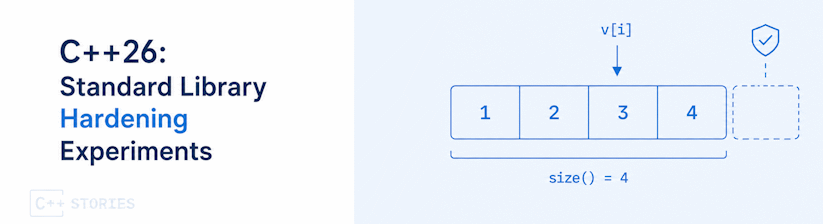






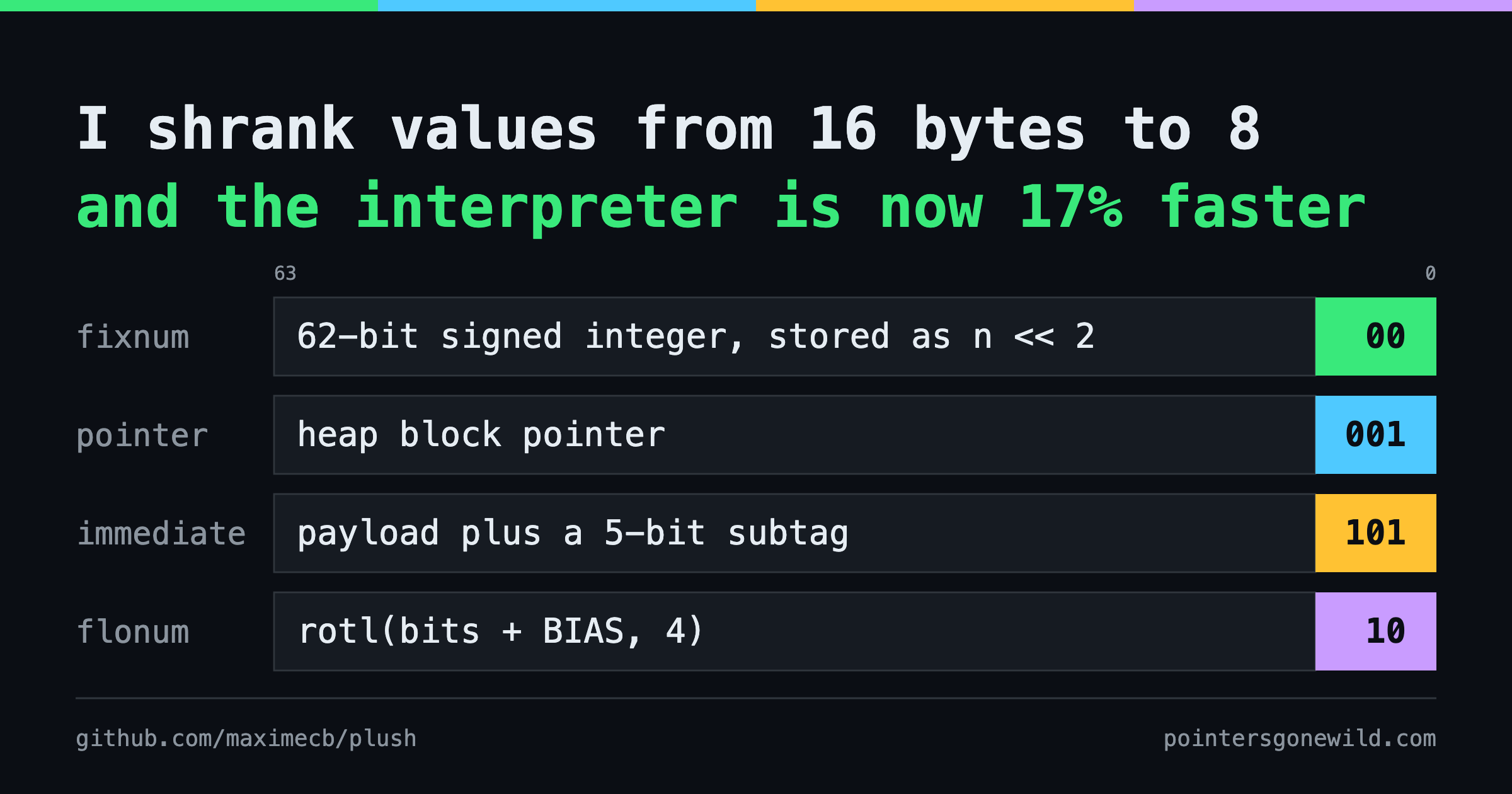


























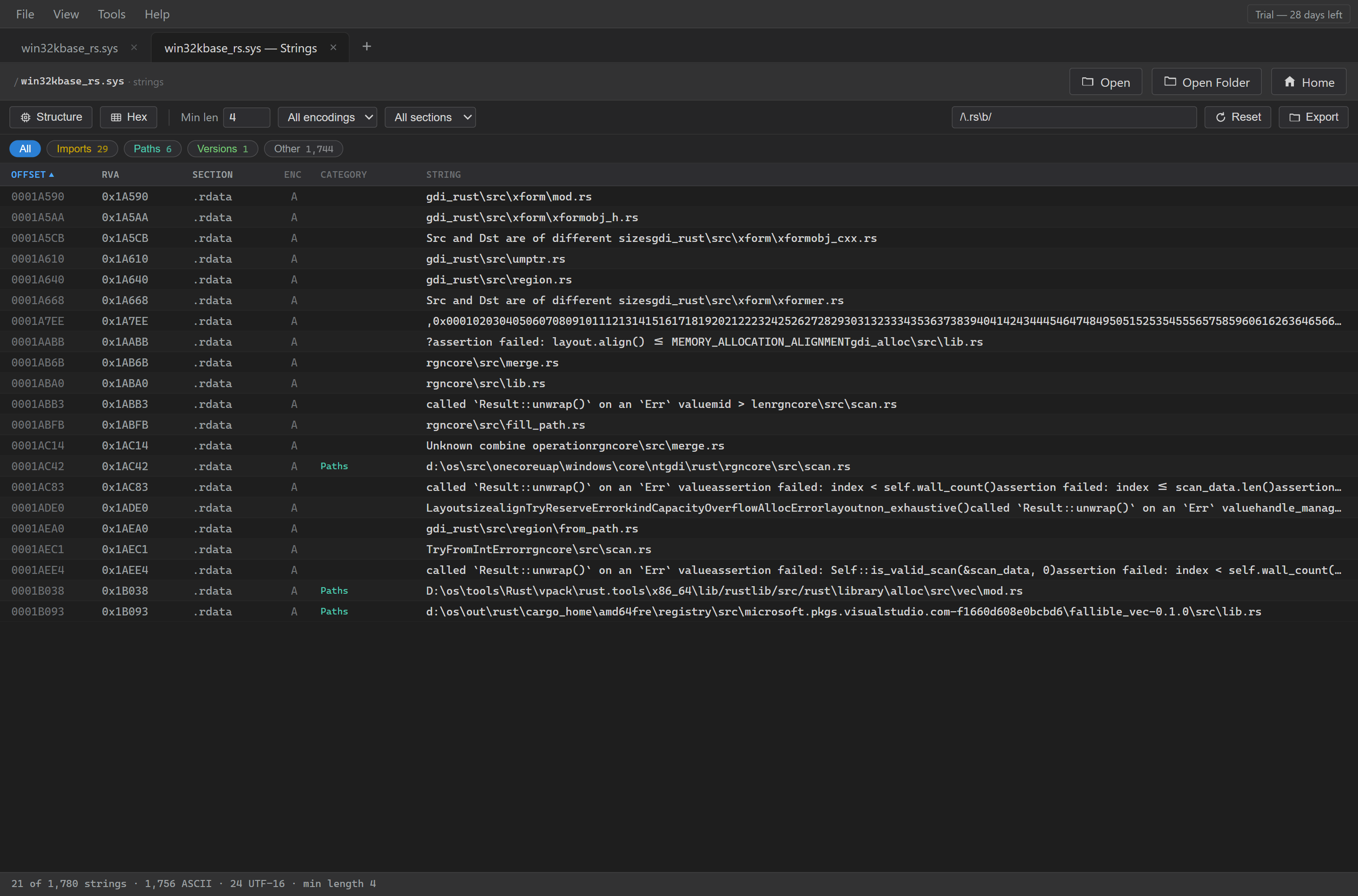


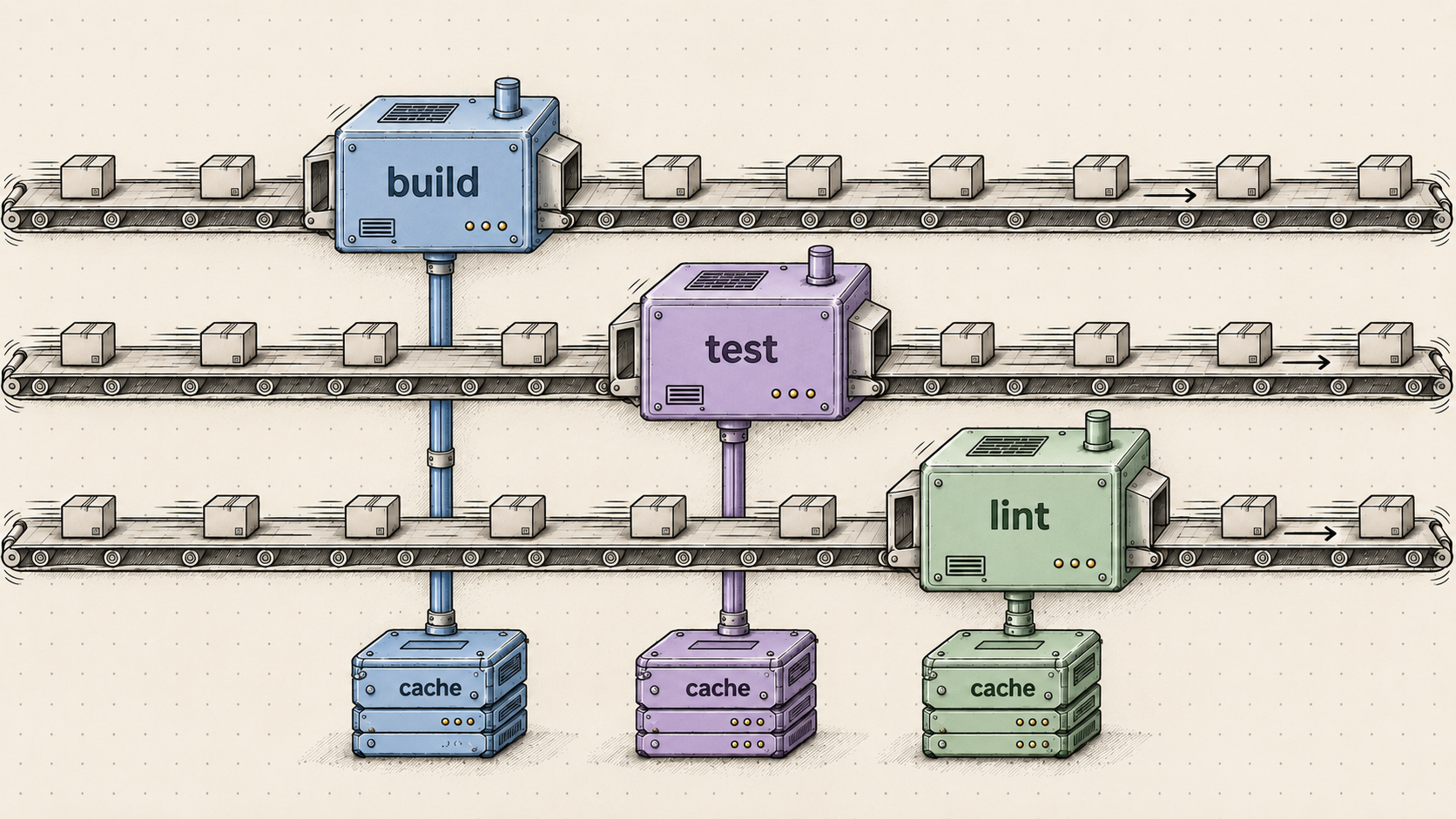






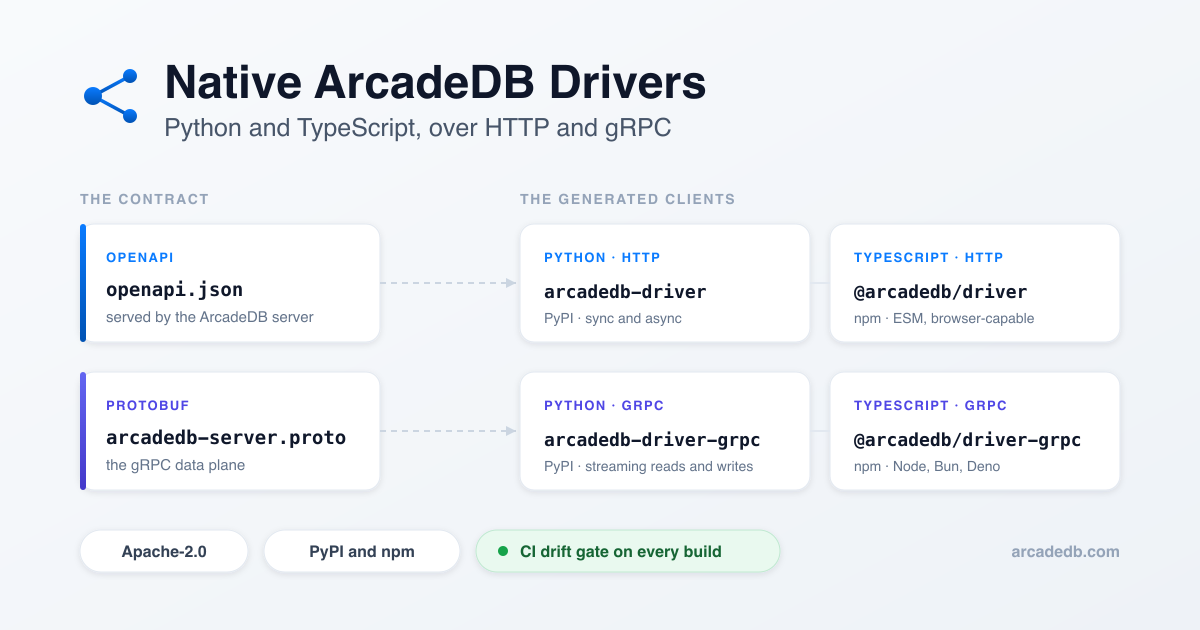





:quality(85)/https://andros.dev/media/thumbnails/kier-in-sight-archives-Sbxf5Dbyerk-unsplash.jpg)