1 feed
4 min
TOPIC
Storage engines, query planners, and the pipelines that move data between them. Benchmarks with methodology, migrations with real numbers, and the failure modes worth designing around before you meet them.
DATABASES
Why it matters — ELF is a de-facto database that reinvents indexing, string interning and schema management. Replacing it with SQLite could eliminate redundant parsers and enable declarative analysis of binaries. The prototype demonstrates feasibility but adoption would require toolchain and kernel changes
Why it matters — This intervention highlights the tensions between traditional banking systems and emerging cryptocurrencies. Lagarde's actions reflect concerns over regulatory control and the impact of cryptocurrency on central bank digital currencies.
Why it matters — SQLite is widely trusted for its stability, but this bug reveals that even mature, single-writer deployments can encounter rare but severe corruption. For engineers running SQLite at scale, the incident underscores the need for robust integrity checks and recovery pipelines. The fix also demonstrates how persistent forensic analysis can resolve elusive, low-level issues.
Why it matters — This enhancement allows developers to create web applications that maintain state across sessions without complex data handling. The integration of OPFS provides a more efficient and straightforward solution for managing persistent data in the browser.
Why it matters — The growth in communication volume has made it nearly impossible for developers to follow all discussions in detail. This increases the reliance on clear thread subjects for filtering relevant technical work.
Why it matters — For engineers building distributed applications, this change could reduce complexity by allowing multi-partition transactions without sacrificing Cassandra’s scalability. However, adoption may require schema redesign and performance tuning, as Accord’s strict serializability imposes coordination overhead.
Why it matters — The solution removes the manual steps agents currently face when trying new APIs, allowing them to explore services autonomously. By pairing verifiable handles with programmable spending limits, it reduces friction while keeping financial risk under human control. This creates the foundation for a two-sided agentic market where providers can sell resources headlessly and agents can consume them without constant oversight.
Why it matters — The server mode lets DuckDB run as a networked service, enabling multi-tenant and long-running deployments that were previously limited to in-process use. VARIANT becoming first-class simplifies handling of evolving semi-structured data without manual schema definition, which is valuable for real-time log ingestion. The async I/O, new parser and storage format introduce performance and compatibility changes that developers will need to evaluate when upgrading.
Why it matters — TIN enhances Postgres with a robust full-text search capability that meets various application needs. This extension allows for complex queries and real-time updates, which can significantly improve application performance and user experience.
Why it matters — Engineers can instantly experiment with new PostgreSQL 19 features without setting up a local database, shortening the evaluation cycle. This hands-on approach helps teams decide whether to adopt the functionality in their projects.
Why it matters — Let’s Encrypt has transitioned to using ClickHouse for their data warehouse, significantly improving their ability to analyze certificate issuance data. This change addresses previous inefficiencies in data processing and provides a scalable solution for future growth. The move highlights the importance of selecting the right database technology to meet both current and future analytical needs.
Why it matters — This integration allows teams using ClickHouse to orchestrate data workflows within Apache Airflow more seamlessly. By using standard SQL operators, it reduces the complexity of connecting the two systems and helps maintain compatibility with future ClickHouse updates.
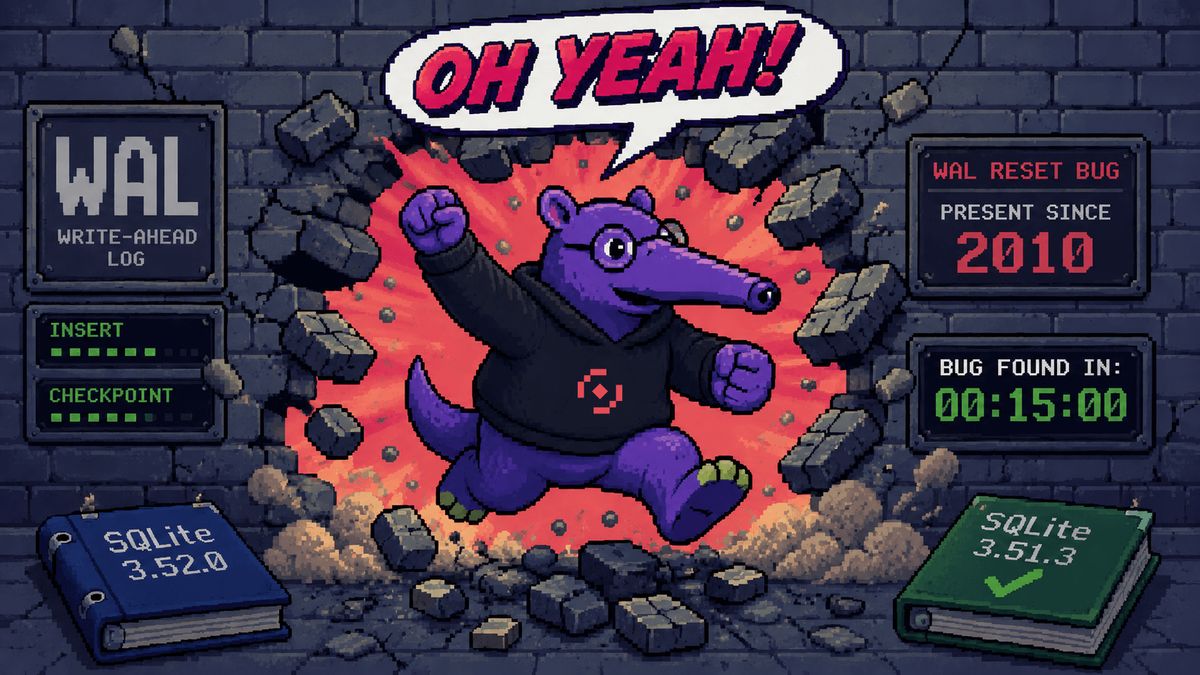
Why it matters — This is a data integrity bug in SQLite's WAL mechanism that has existed for sixteen years, meaning any SQLite database using WAL mode could have silently lost committed writes or become corrupted. The fact that it reproduces within seconds using only the public API makes it a practical concern for anyone relying on SQLite for durable storage.
Why it matters — The parser is a foundational component of any database system, dictating how SQL queries are validated and structured. A more maintainable and extensible parser reduces friction for future DuckDB enhancements, particularly as its SQL dialect diverges further from PostgreSQL. This change is transparent to users but critical for developers working on DuckDB internals or custom extensions.
Why it matters — Nix has no builtins.sqlite, and its JSON parsing is eager, meaning a 5.3 MB index file is fully parsed and materialized on the Nix heap for every lookup. For projects like nixpkgs-multiverse that index 305,492 package versions, this makes JSON impractical as the index grows. The post outlines escape hatches that trade safety or ergonomics for query efficiency.
Why it matters — PGDay Lowlands and Percona Live are significant gatherings for PostgreSQL enthusiasts and professionals. They provide an opportunity for engineers to learn about the latest developments and best practices in PostgreSQL and related technologies, such as ClickHouse integrations.
Why it matters — This funding round signals strong investor confidence in AI-driven coding tools, potentially accelerating competition in the developer tooling space. For engineers, it may lead to more aggressive feature development and pricing pressure in AI-assisted coding platforms.
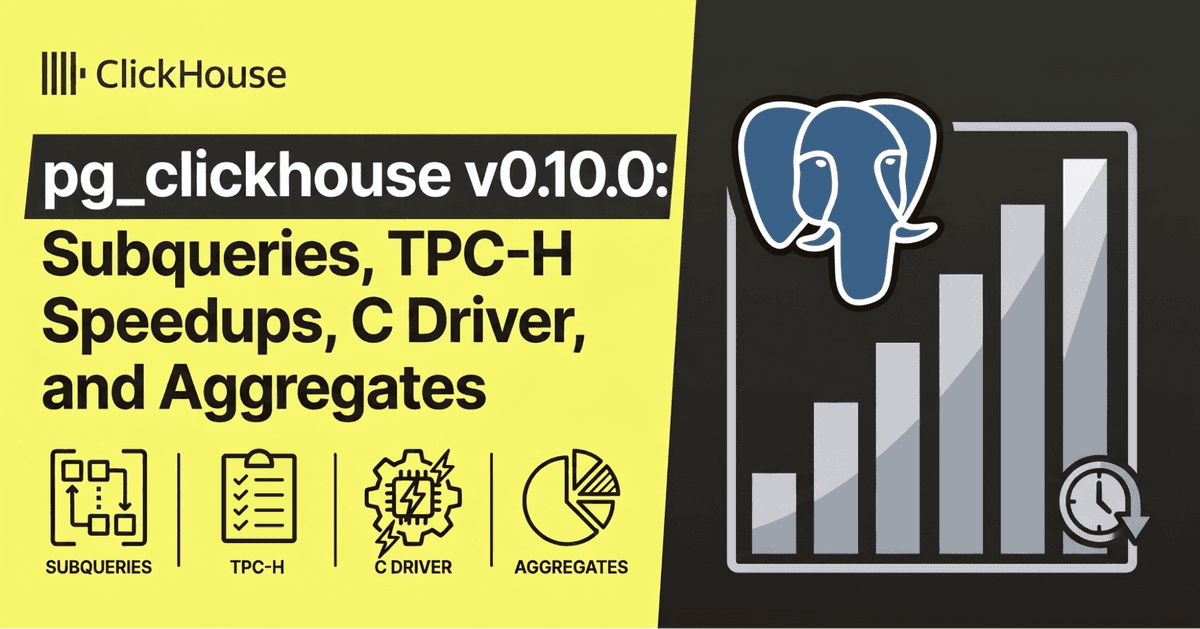
Why it matters — Engineers using PostgreSQL-to-ClickHouse federation can now run more analytical queries entirely inside ClickHouse, cutting latency by orders of magnitude for workloads that previously required row-by-row evaluation. The updated C driver reduces maintenance overhead and fixes concurrency bugs that could cause intermittent failures under load. Knowing the remaining unsupported TPC-H shapes helps teams plan further query rewrites or await future pg_clickhouse enhancements.
Why it matters — DuckDB’s adoption has grown rapidly due to its lightweight, high-performance analytical capabilities, often used for embedded analytics and data processing. AWS’s acquisition provides DuckLabs with resources to scale development and infrastructure while maintaining open-source governance. Engineers using DuckDB can expect continued support and potential deeper integration with AWS services, but long-term independence of the project may shift under AWS ownership.
Why it matters — For engineers who model relational data, the tutorial offers a different abstraction: every wide table is decomposed into two-column relations that compose like functions, with foreign-key resolution handled implicitly. The cost is visible in the prototype, more relations to keep track of, tuple-nested results from `&`, and no query planner or persistence layer. The article is a principles tutorial rather than a production release, so any claim that Prela is "better" than SQL rests on the one line-count comparison it shows.
Why it matters — Postgres's native connection handling limitations make external pooling essential for production workloads. The ubiquity of PgBouncer among providers suggests it should be treated as a core requirement rather than an optional add-on, reducing operational overhead for engineers.
Why it matters — The provided material contains only a thread title and an indication that comments were posted, with no substantive content to evaluate. Engineers cannot assess any concrete claims about database programming changes from this material alone.
Why it matters — This approach collapses binary tooling and application state into SQL, eliminating the need for separate filesystems like /var or /tmp. For engineers, it introduces a novel way to manage program state and configuration, but may complicate debugging and security auditing due to mutable executables. The trade-off between simplicity and operational risks will determine adoption
Why it matters — This demonstrates how automated, deterministic testing can rapidly uncover rare concurrency bugs that evade traditional testing. For engineers maintaining critical systems, it highlights the potential to reduce months of debugging to minutes of automated analysis. The event also underscores the difficulty of reproducing timing-sensitive database bugs in production environments
Why it matters — Engineers must recognize that locking is not the only source of contention; version chain traversal can turn read-only work into a scalability bottleneck. Understanding the difference between queuing thread pools and fail-fast transaction pools helps prevent a slowdown from cascading into widespread errors. Proper concurrency limits and backpressure mechanisms are essential to keep the database stable under load.
Why it matters — Independent Databases feeds picked this up separately, which is the signal elseif ranks on. Open the cluster below to compare how each feed framed it.
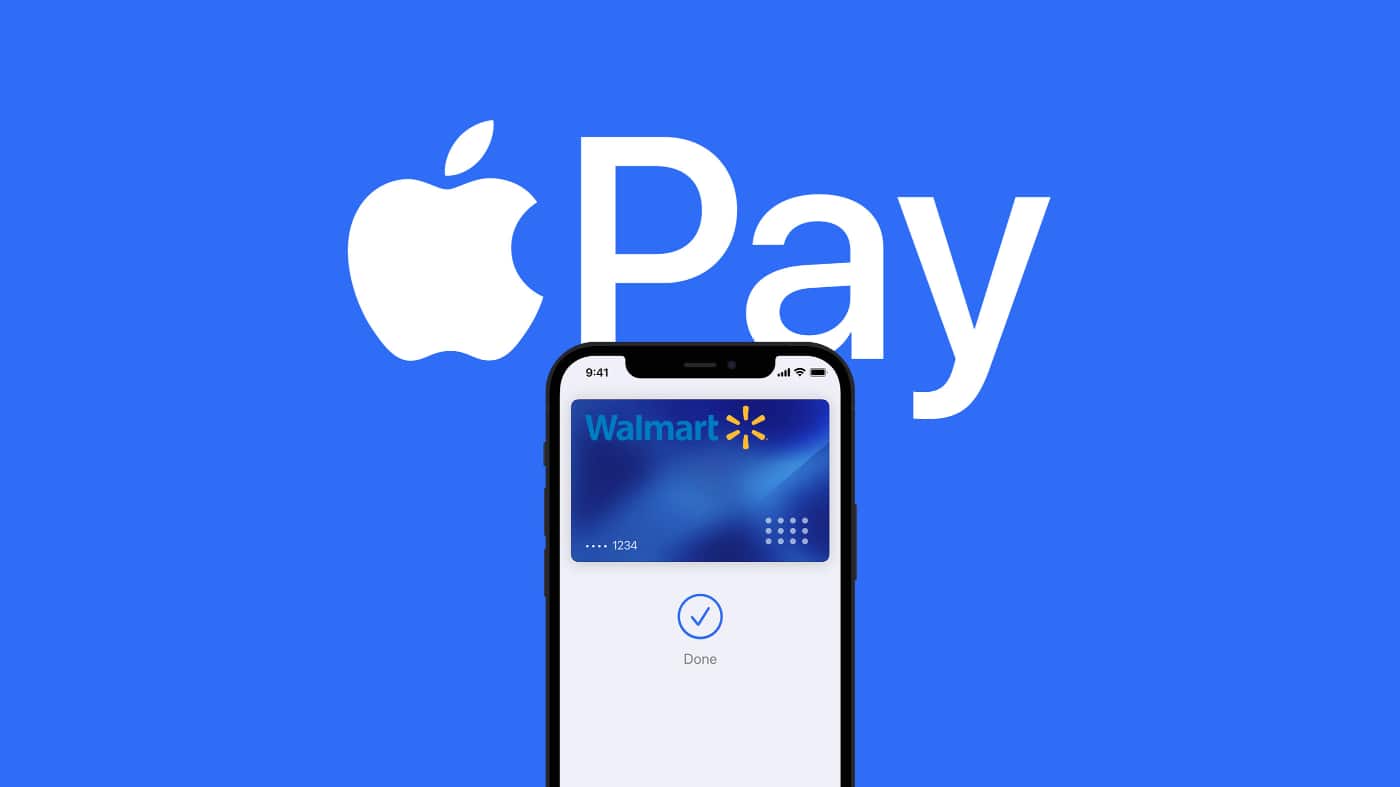
Why it matters — Engineers will need to enable Tap to Pay functionality on Walmart’s payment systems while keeping existing Walmart Pay and Scan-and-Go options operational. The phased rollout means payment software must support both new and legacy methods during the transition, increasing testing and maintenance effort. Engineers should also plan for the later deployment at fuel stations, which will not see Tap to Pay until the middle of 2027.
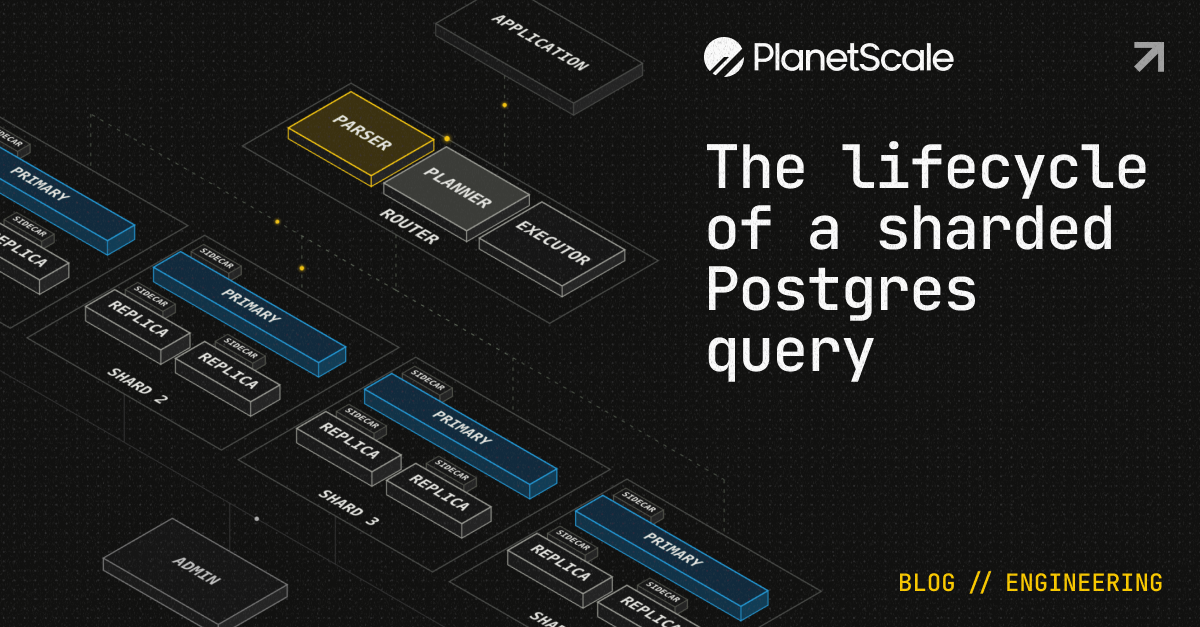
Why it matters — Engineers scaling Postgres must understand how sharding transforms a simple query into a distributed operation. The router’s complexity is hidden from applications, but its failure modes and performance costs are not. This lifecycle reveals where latency, consistency, and availability trade-offs emerge in production.
Why it matters — This issue is difficult to diagnose because the database itself is healthy, but reused connections retain stale state from previous clients. Running DISCARD ALL on pooled connections clears the poisoned state, but the application code leaking the session settings must be fixed to prevent recurrence.
Why it matters — The discussion on server-data encryption is critical for ensuring data security in database management. Updates on PostgreSQL patches indicate ongoing improvements and potential vulnerabilities that engineers need to address. Additionally, faster kernel builds can enhance performance and efficiency in software development processes.
Why it matters — This release addresses critical security vulnerabilities, enhancing the overall security posture of the tool. Engineers using pgAdmin will benefit from improved functionality and reduced risk of security incidents.
Why it matters — A PayPal sale would reshape the payments landscape, potentially affecting developers who build on its APIs. The reported negotiations suggest PayPal's board sees value in a deal, but the price gap indicates uncertainty. Engineers should watch for changes in ownership and strategic direction.
Why it matters — Zoph’s move signals Google’s continued investment in AI research leadership amid talent competition. His background in machine learning infrastructure may influence Google’s long-term technical direction. The shift also reflects the fluidity of executive talent in the AI sector.
Why it matters — This acquisition signals Stripe’s push into AI infrastructure, treating model inference as a payments problem. For engineers, it suggests tighter integration between AI workloads and billing systems, potentially reducing friction in multi-model deployments. The valuation jump from $1.3B to $7B in months underscores the perceived strategic value of AI routing layers.
Why it matters — Government-hosted software must comply with the same IP rules as private projects. A takedown after a single complaint shows how quickly even public-sector code can be pulled when rights holders object. Engineers should audit any third-party assets before deployment to avoid similar exposure
Why it matters — The technique reduces the disk footprint of versioned documents from megabytes to a few kilobytes, which can lower hosting costs and improve backup times. It also offers a relational-database-native way to keep revision history without adding a separate service, but it introduces recompression work and limits random access to individual revisions.
Why it matters — This change reduces the effort needed to locate relevant updates and opportunities for a particular technology. Engineers can quickly access project-focused content without sifting through general listings.
Why it matters — Engineers running PostgreSQL on Loongson hardware can now install prebuilt packages from apt.postgresql.org instead of building from source. The GIS stack packages (postgis, pgrouting, mobilitydb, pgsql-ogr-fdw) are not yet available, pending the next postgis release.
Why it matters — This driver gives Java engineers working with PostgreSQL a native API that exposes the database's full feature set directly, rather than filtering everything through JDBC's cross-database abstraction. The virtual-thread architecture on Java 21 eliminates the traditional tradeoff between async APIs and thread-per-connection models, making the driver both performant and straightforward to reason about.
Why it matters — If quality issues persist into the release, teams relying on PostgreSQL's predictable annual cadence may face a choice between adopting a potentially unstable major version or delaying upgrades. The concerns also highlight tension between the project's release schedule and its feature-readiness.
Why it matters — For engineers who want to move logic into PostgreSQL without learning plpgsql, plx offers a familiar syntax while keeping plpgsql's performance and trusted-language safety. Because the generated plpgsql is stored in pg_proc.prosrc, it is inspectable and pg_dumpable, and no separate language runtime is loaded into the backend. The translation cost is paid once at creation time, not per call.
Why it matters — Engineers gain visibility into new WAL I/O metrics and lock contention without installing external agents, as the extension runs inside the database. The optional AI provider lets teams automate severity assessments while keeping the core tool dependency-free.
Why it matters — Engineers handling PII in PostgreSQL databases now have faster, more flexible pseudonymization tools, but must migrate to new functions and address critical security fixes. The upgrade also enforces stricter privilege controls, requiring role adjustments for superuser-dependent masking workflows.
Why it matters — Engineers running PostgreSQL 17 or 18 can now encrypt data at rest with AES-256-GCM while keeping keys outside the database. The change is transparent to applications but requires a one-time export of TOAST data when upgrading from 1.7.0 or earlier.
Why it matters — Migrating from Oracle or MySQL to PostgreSQL is complex and risky. PostgreSQL Migrator 1.0 offers a free, open-source path with offline catalog inspection and automated conversion, potentially reducing migration effort. Its support for a wide range of source versions and PostgreSQL targets makes it a practical option for many teams.
Why it matters — Multiple CVEs rated CVSS 8.8 enable arbitrary code execution through heap buffer overflows in regexp, to_char, plperl, pg_stat_statements, pg_dump, and type confusion paths. Operators on any supported PostgreSQL version should upgrade immediately, and those on PostgreSQL 14 must plan a migration before its November 12, 2026 end-of-life.
Why it matters — It removes the need to install an IDE on each developer machine by providing a centralized, browser-accessible tool. Deployment alongside the database ensures low-latency connections and uses pooled connections with explicit transaction control. Role-based access control and optional query assistant are tied to the database schema, limiting actions to what the connected role can see.
Why it matters — Engineers can now modify table schemas without losing important definition details that would otherwise require manual recreation. The update also adds introspection properties for check constraints, simplifying programmatic inspection of SQLite databases.
Why it matters — A missing dependency in sqlite-utils 4.2 caused the tool to crash when installed directly via uvx without dev dependencies. This patch ensures the CLI remains functional in minimal environments, reducing friction for users who rely on isolated installations. The fix also introduces a smoke test to catch similar issues early.
Why it matters — Engineers using github-to-sqlite to archive GitHub data locally may have encountered failures after upgrading sqlite-utils. This update restores compatibility without requiring changes to existing workflows. If you rely on this tool, upgrading is a low-risk fix for a specific dependency conflict.
Why it matters — The Kids Act aims to enhance online safety for children by implementing strict age verification measures on social networks. This could significantly impact how social media platforms design their user registration processes and privacy policies. Compliance will require substantial updates to existing systems, affecting operational costs and user engagement strategies.
Why it matters — His departure shows that security escalations can lead to researcher exits at AI labs. It also indicates that the intensity of internal responses to security concerns may be unexpected to those involved.
Why it matters — This update shifts pgAssistant's focus from merely analyzing PostgreSQL to facilitating ongoing improvements. By implementing a structured loop, it aids teams in measuring and prioritizing enhancements, ultimately leading to better database performance.
Why it matters — This brings the sqlite-utils command-line workflow, insert, upsert, create, update, and table introspection, to databases beyond SQLite. It is an early alpha built as a prototype with coding agents, so production use carries that caveat.
Why it matters — This significant funding will accelerate Crusoe's development of factory-built data centers, which could optimize data center efficiency and scalability. The large investment indicates strong confidence in the potential of this approach to reshape the data center landscape.
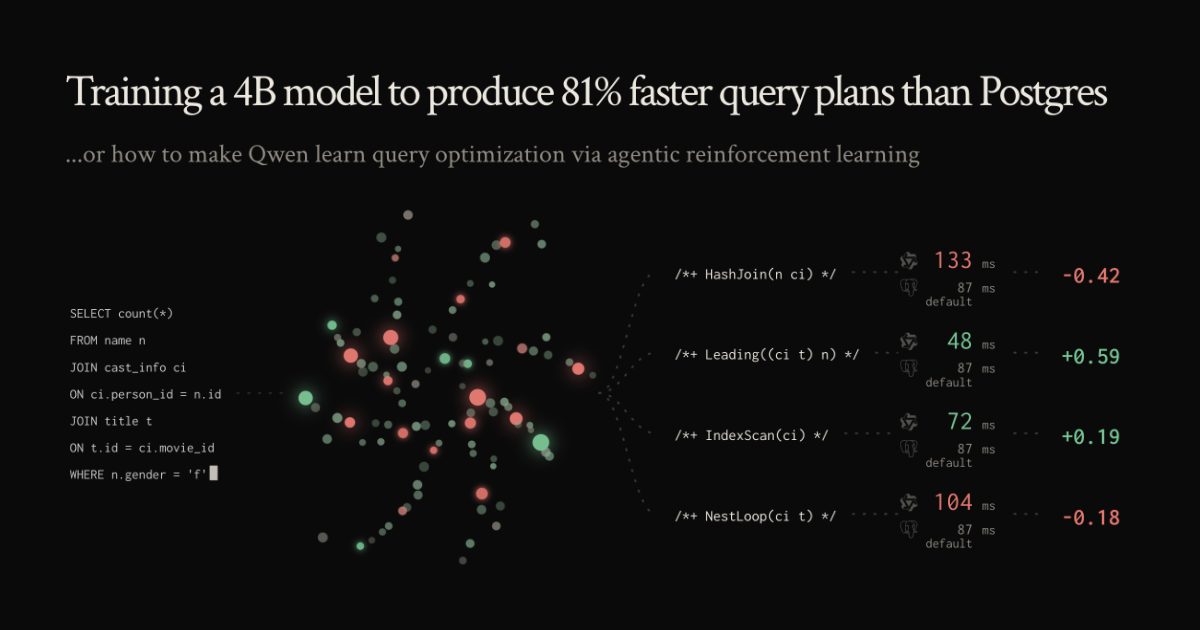
Why it matters — This development suggests significant improvements in database query optimization. Faster query plans can enhance application performance, especially in data-intensive environments. The use of advanced models like this may redefine how databases are optimized in the future.
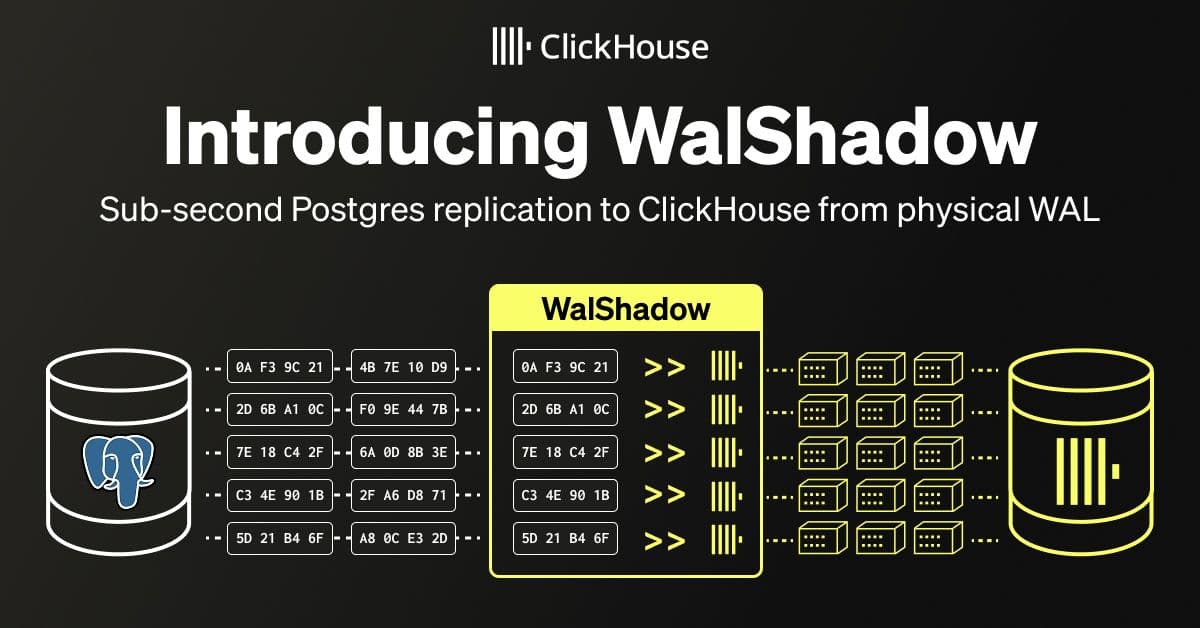
Why it matters — WalShadow introduces a new approach to data replication that minimizes latency and resource consumption. By leveraging the physical Write-Ahead Log (WAL), it supports complex schema changes while maintaining high performance. This can significantly improve the efficiency of analytics workflows for organizations using both Postgres and ClickHouse.
Why it matters — Engineers replicating from Oracle CDB/PDB deployments can now use all three Oracle replication paths without workarounds. Snapshot connections to MySQL, PostgreSQL, and Oracle sources can finally be encrypted, closing a gap that previously left initial data extraction unsecured. Runtime log-level adjustment and stability fixes under sustained load reduce operational friction for teams running continuous replication.
Why it matters — Engineers running Datasette can now automate database updates without downtime or manual file transfers. The API enables CI/CD pipelines to push fresh database builds directly into production. This reduces friction for teams that rebuild SQLite databases frequently but want zero-interruption swaps.
Why it matters — The integration of ClickHouse with dbt allows for real-time analytics and effective data modeling. This is particularly valuable for teams needing sub-second query performance and immediate data availability. The collaboration enhances the capabilities of both tools for data engineers and analysts.
Why it matters — These updates expand Wallet's role from a passive card and pass repository into an active tool for creating passes and managing spending. The new pass creation feature, which relies on next-gen Apple Intelligence for scanning, signals a deeper integration of AI into everyday utility apps.
Why it matters — Engineers can now align their calendars with talks that match their PostgreSQL projects, ensuring they don’t miss relevant deep-dives or community updates. The event also provides a venue to hear about the latest PostgreSQL 19 beta progress and to network with other practitioners. Registering early helps secure attendance and plan travel logistics.
Why it matters — Engineers using Datasette for database interfaces with token-based authentication must update this plugin to avoid breaking changes when upgrading to `sqlite-utils 4`. The update ensures continued functionality but may require testing in existing deployments. No new features are introduced, so adoption is purely about maintaining compatibility.
Why it matters — The vulnerability let anyone who could query a public table run arbitrary SQL and read data from private tables, bypassing the permissions system. Fixing it prevents accidental data leakage in deployments that mix visibility levels, a scenario some administrators may have. Upgrading or applying the back-ported fix is the only way to close the gap.
Why it matters — Engineers can store and query relationship-heavy data locally without setting up a separate server, reducing operational overhead. The combined graph, vector, and text capabilities allow applications like Graph RAG or agent memory to be built on a single engine, simplifying architecture.
Why it matters — For engineers monitoring a few dozen services, Gjallar avoids the operational overhead of a second distributed system. Its pure-Go Oracle driver removes the need to install Oracle client libraries on minimal boxes. The lock-free pipeline and hot reload make it easy to operate.
Why it matters — Engineers can instantly undo accidental data changes or schema edits without restoring from backups or restarting services. The tool works entirely on the local file system, requiring only PHP and a built-in web server, which reduces setup overhead for debugging workflows.
Why it matters — Consolidating infrastructure into a single database reduces the operational overhead of syncing data and maintaining multiple systems. However, pushing specialized workloads like high-volume time series or full-text search onto a relational database may hit scaling limits that dedicated systems handle better.
Why it matters — Applying these updates reduces the risk of exploitation of known security flaws in database components. Delaying updates leaves systems vulnerable to attacks that could compromise data integrity or service availability.
Why it matters — The stalling of this AI regulatory plan could impact future governance and safety measures in AI development. It reflects the ongoing influence of tech leaders in shaping policies that affect the industry. Engineers should be aware of how regulatory environments can change, potentially affecting project timelines and compliance requirements.
Why it matters — Only one feed elseif tracks has carried this so far, so there is no independent corroboration yet. Read it as a single-source report.
Why it matters — For engineers running read replicas, WAIT FOR removes the need for application-side polling or synchronous replication to guarantee a read sees a recent write. It lets a read wait only as long as needed for the replica to catch up, and it exposes wait events for monitoring. However, it does not understand timelines, so after a promotion a success may refer to WAL from a different timeline.
Why it matters — WalShadow eliminates the need for logical replication slots, Kafka, and intermediate serialization formats, reducing operational overhead and source-database resource consumption compared to traditional CDC pipelines. For teams running Postgres alongside ClickHouse for analytics, it offers a replication path with latency and throughput closer to a physical standby than logical-decoding-based tools. The tradeoff is that it requires access to physical WAL, which most managed Postgres providers do not expose, limiting standalone use to self-managed Postgres or ClickHouse Managed Postgres.
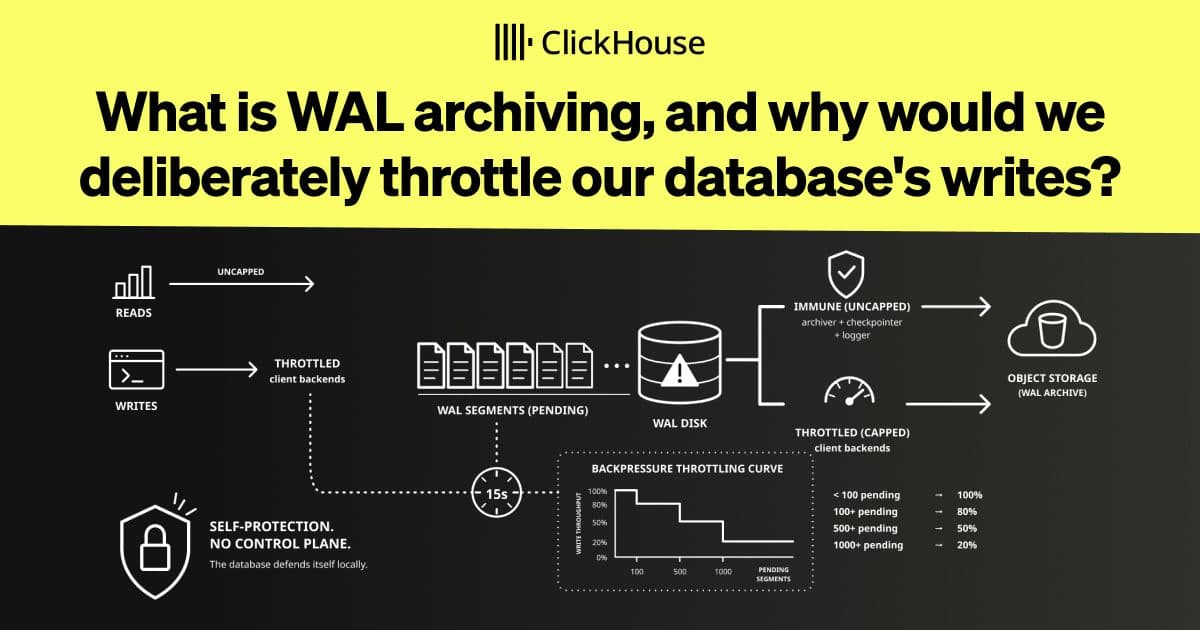
Why it matters — When the archiver cannot keep up, unfinished WAL segments accumulate and can fill the disk, causing the Postgres instance to panic and go down. By throttling only the write path, the service lets the archiver catch up while keeping reads and recovery processes running.
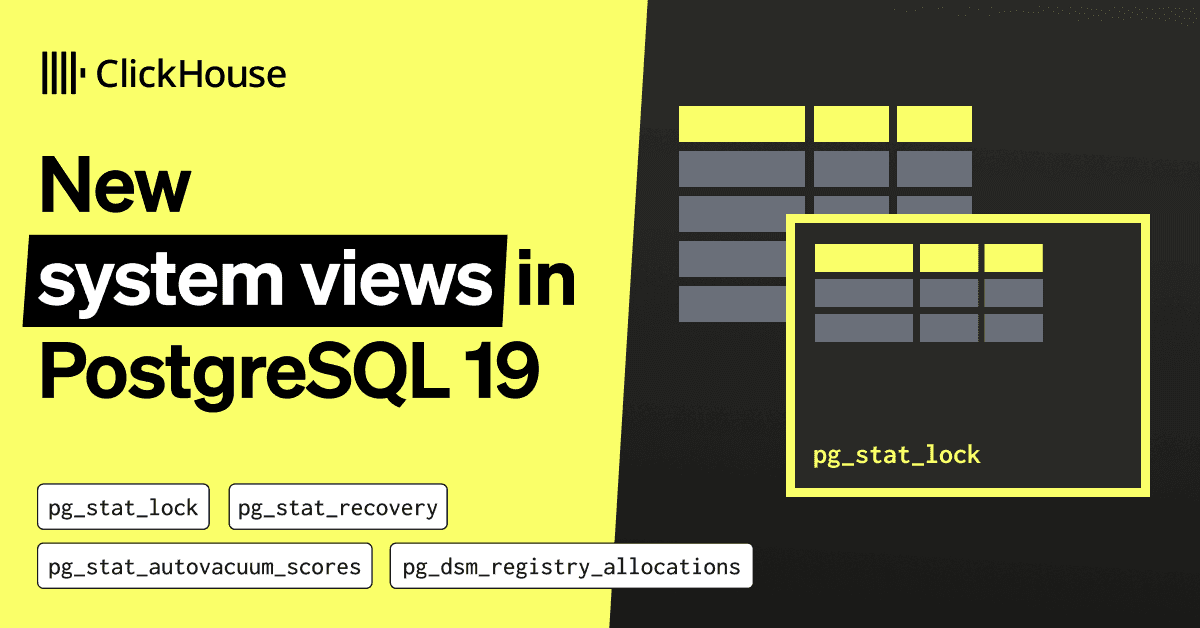
Why it matters — Engineers can now query cumulative lock statistics and other runtime state directly from SQL instead of parsing logs or stitching together snapshots. The new views give a single source of truth for observability, reducing the operational overhead of custom monitoring scripts. Because the release is still in beta, column names may still change before the final GA release.
Why it matters — These changes reduce manual configuration overhead for detecting performance issues and improve visibility into WAL generation and autovacuum operations. Operators can now isolate log noise without sacrificing diagnostic detail, while WAL byte-level metrics simplify capacity planning for write-heavy workloads.
Why it matters — Capsule allows for the creation of portable applications without the need for cloud services, providing privacy and ease of sharing. This model simplifies app distribution and ownership, making it accessible to users without technical expertise. Engineers can leverage this to create self-contained apps that run across different platforms without configuration.
Why it matters — Only one feed is carrying this story, so corroboration is limited. For engineers working on retail payment integrations, the key detail is that Walmart is adding broad contactless support rather than Apple Pay alone, and that it will coexist with the existing QR-based Walmart Pay system rather than replacing it.
Why it matters — The event provides a rare opportunity for engineers working with PostgreSQL in scientific, enterprise, or AI-driven environments to share practical insights and network. Given CERN’s involvement, the conference may highlight use cases at the intersection of high-performance computing and databases. The call for sponsors and papers is open, allowing teams to contribute or showcase their work.
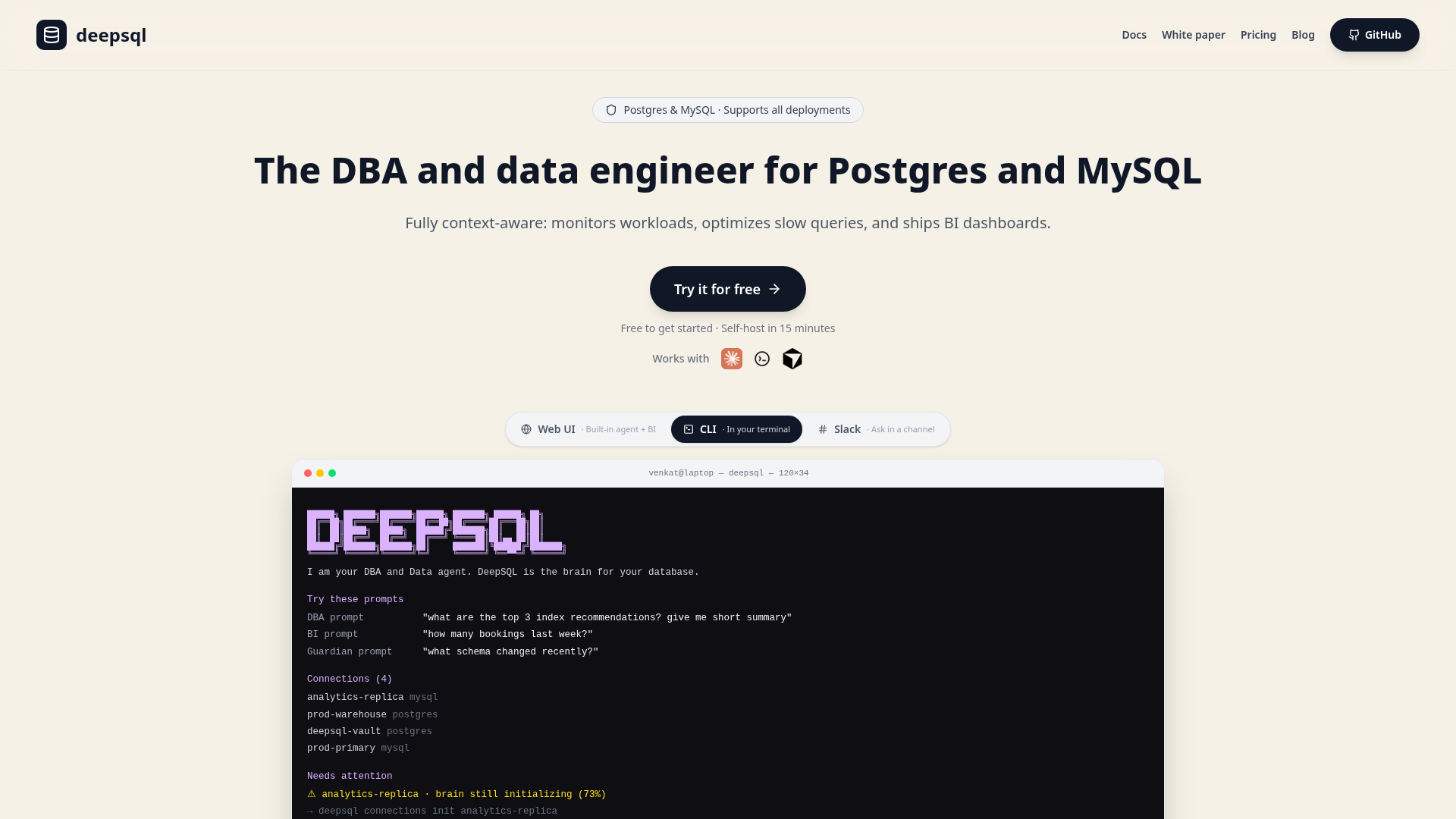
Why it matters — For engineers managing PostgreSQL fleets, Dasha reduces operational overhead by eliminating the need for host-side agents while still delivering comprehensive performance insights. Its ability to reason across primary and replica instances addresses a common blind spot in distributed database monitoring.
Why it matters — The discovery of CVE-2026-32746 highlights significant security risks associated with the use of Telnet, a protocol still in use despite its vulnerabilities. Many systems are still reliant on Telnet for legacy applications, making it crucial for engineers to assess their environments for potential exposure. The vulnerability could allow remote code execution, posing severe risks to systems running outdated network protocols.
Why it matters — Logpoints allow developers to log data dynamically, enhancing the debugging process by facilitating quick adjustments during runtime. This capability can significantly reduce the time and effort required to identify and resolve issues in applications. As debugging often consumes a substantial amount of development time, improvements in this area can lead to more efficient workflows.
Why it matters — PostgreSQL workload analysis tools must adapt to upstream datatype changes. This release ensures continued monitoring and optimization support for early adopters of PostgreSQL 19. Without this fix, performance metrics collection would fail on the latest beta versions.
Why it matters — Presenting at the conference lets engineers share practical Postgres experiences and get direct feedback from peers. Attending also provides a chance to learn about new features, extensions, and deployment practices discussed in the scheduled sessions.
Why it matters — Engineers can now provision read replicas, perform minor and major version upgrades, and manage backups and restores without leaving the Autobase Console UI. This consolidates cluster lifecycle tasks that previously required separate tools or manual scripts. The addition of Ansible playbooks lets teams automate backup and recovery workflows within existing infrastructure automation.
Why it matters — Operators can now trigger common cluster tasks from the console instead of the command line, reducing manual steps. The expanded configuration UI and local-disk option simplify environment setup and may lower storage costs. New playbooks let existing automation pipelines cover more lifecycle events without custom scripting.
Why it matters — The potential removal of timer mechanics could significantly alter gameplay dynamics and player experience. The director's openness to modifying or removing this feature reflects a commitment to narrative coherence and player satisfaction. This decision may influence how players approach the game and their engagement with its story elements.
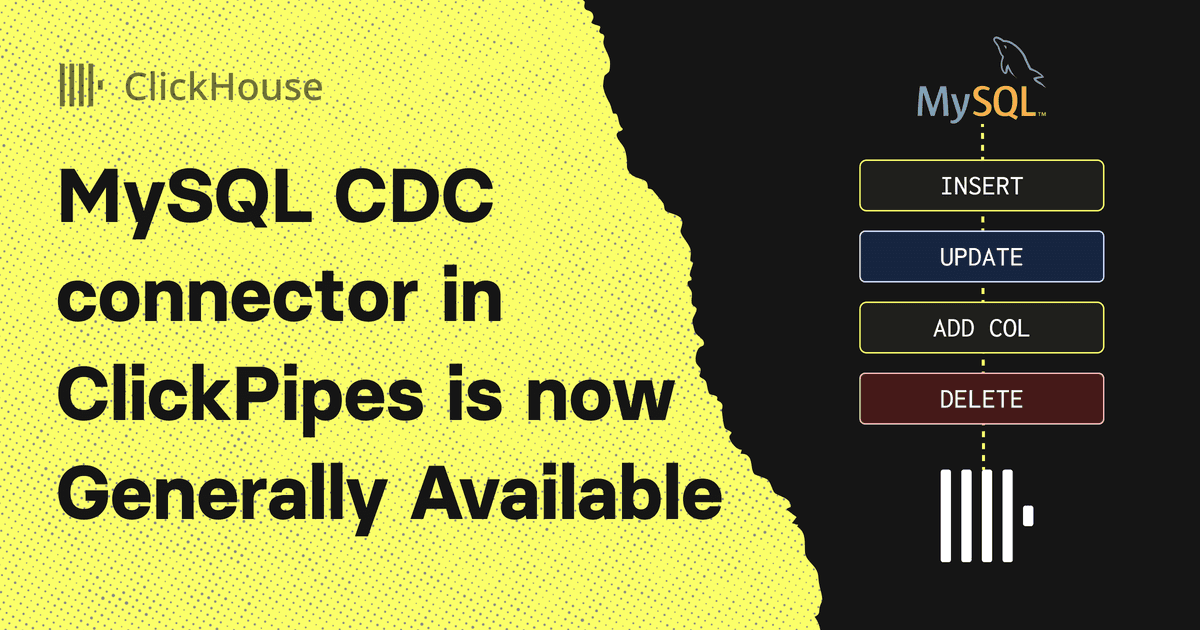
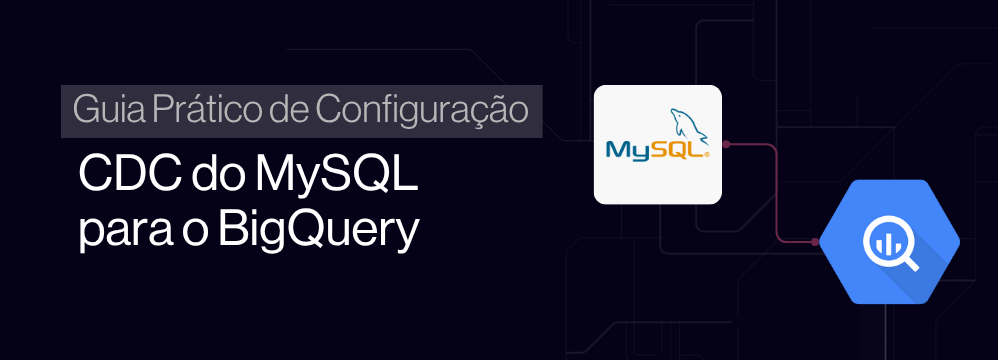
Why it matters — Engineers can now rely on a production-stable CDC path from MySQL to ClickHouse Cloud without building custom ETL. The GA release enforces GTID-based replication and 72-hour binlog retention at pipe creation, reducing the risk of irrecoverable replication failures that force full resyncs.
Why it matters — Engineers building robotics foundation models now see a viable path to handle both transactional and analytical workloads on a single stack without sharding or separate clusters. The shift reduces operational overhead but requires retooling pipelines to fit ClickHouse’s columnar storage model. If the pattern spreads, it could lower the barrier for startups entering high-cardinality robotics data domains.
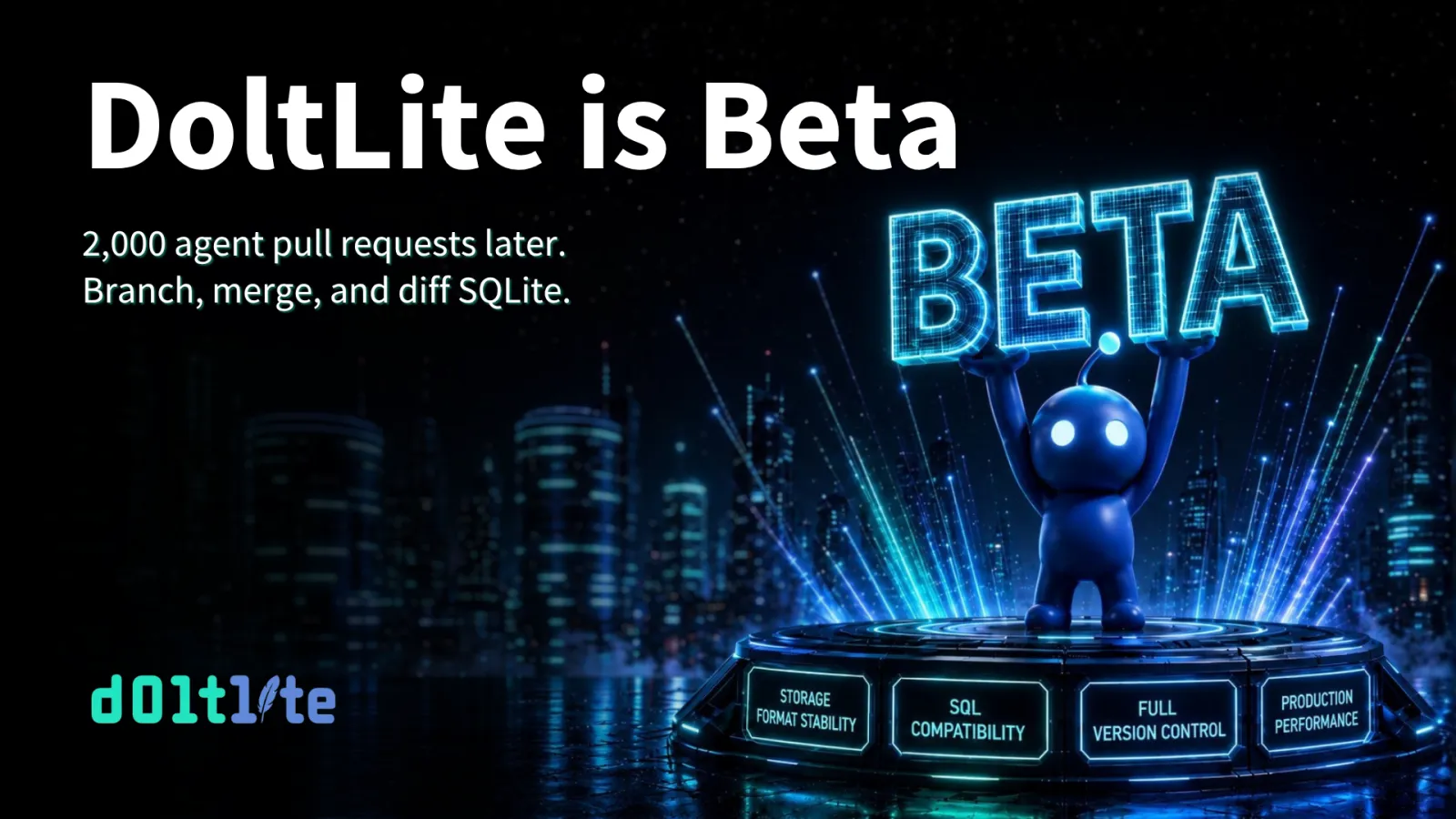
Why it matters — The storage format is now stable with a promised migration path for future breaking changes, removing the primary adoption barrier that required users to dump and reimport databases across 12 prior format bumps. Performance is near parity on reads for file-backed databases, though small autocommit writes carry a 3.1X overhead. The project was built with approximately 2,000 agent-generated pull requests, making it a notable case study in large-scale automated development.
Why it matters — As context windows scale, attention dilution degrades reasoning and multiplies cost on every conversational turn, while clearing context causes total amnesia across model switches. Engrim consolidates large amounts of session work into a small curated memory pack that reloads intact on session restart, claiming a 99%+ cut in reloaded context cost. This is a single Show HN post with no independent corroboration, so the claims rest solely on the author's self-reported case study.
Why it matters — Periodic syncs silently miss deletes and intermediate row states, so downstream BigQuery tables can be incomplete without anyone noticing. Binlog CDC guarantees a complete change history, but only if MySQL is configured with ROW-based logging and FULL row images, and if binlog retention covers downtime.
Why it matters — Engineers upgrading MySQL replicas need to know that adding an AUTO_INCREMENT column via ALTER TABLE can assign different IDs on source and replica, depending on storage engine and row processing order. Under MIXED binlog format, some updates replicate as statements and others as row changes, so a single table can end up with incorrect foreign key values. This bug is easy to miss and can corrupt data in production.
Why it matters — This demonstrates that MySQL can handle high-throughput reservation workloads previously thought to require Redis, eliminating the consistency gaps that come from splitting state across two data stores. For engineers operating dual-system architectures where atomicity is critical, this is a concrete pattern for consolidation.
Why it matters — For engineers using DuckDB, the parser change is transparent: existing SQL queries continue to work because the DuckSQL dialect is unchanged. The new PEG-based parser makes it easier for DuckDB to add new syntax features and could allow runtime extension of the grammar, which was difficult with the old Bison-based parser.
Why it matters — Because the system’s topology is stored as files, changes can be made with standard tools like diff and git and applied at runtime without rebuilding or restarting. This removes the need for custom agent loops or SDKs, letting agents reshape their own harness while the colony runs. Operators gain auditable, reproducible agent systems that can be inspected and versioned like ordinary source code.
Why it matters — AI agents currently lose context between sessions, forcing users to re-establish preferences and project state each time. MCP Memory provides a standardized, queryable persistence layer that lets agents recall and build on prior work. The dual-layer approach keeps memory both machine-queryable via SQLite and human-browseable on disk.
Why it matters — This removes the operational burden of deploying Litestream alongside SQLite apps, letting developers use SQLite normally while the platform manages replication and recovery. The same configuration works across Docker, Podman, and Kubernetes, making SQLite viable for production workloads that need durability without a separate database server.
Why it matters — If you rely on regex searches over large text columns in PostgreSQL, pg_trgm remains the practical default for simple patterns. pg_tre may offer value for more complex regex matching, but it comes with a 21 GB index on a 33 GB table and a 7-hour build time, so adoption requires careful evaluation of whether your queries actually need what it provides.
Why it matters — For engineers running Postgres alongside monitoring and backup agents, this shows a concrete pattern for isolating auxiliary processes so they cannot exhaust memory or CPU and take down the database. The approach combines runtime-level Go heap targets with kernel-enforced cgroup ceilings and scoped OOM victim selection.
Why it matters — This integration allows for improved security in managing infrastructure secrets by eliminating passwords and utilizing mTLS for authentication. The combination of OpenBao and CloudNativePG offers a robust, open-source solution that enables resilience and scalability without vendor lock-in. This can significantly enhance operational efficiency for organizations leveraging Kubernetes for their infrastructure.
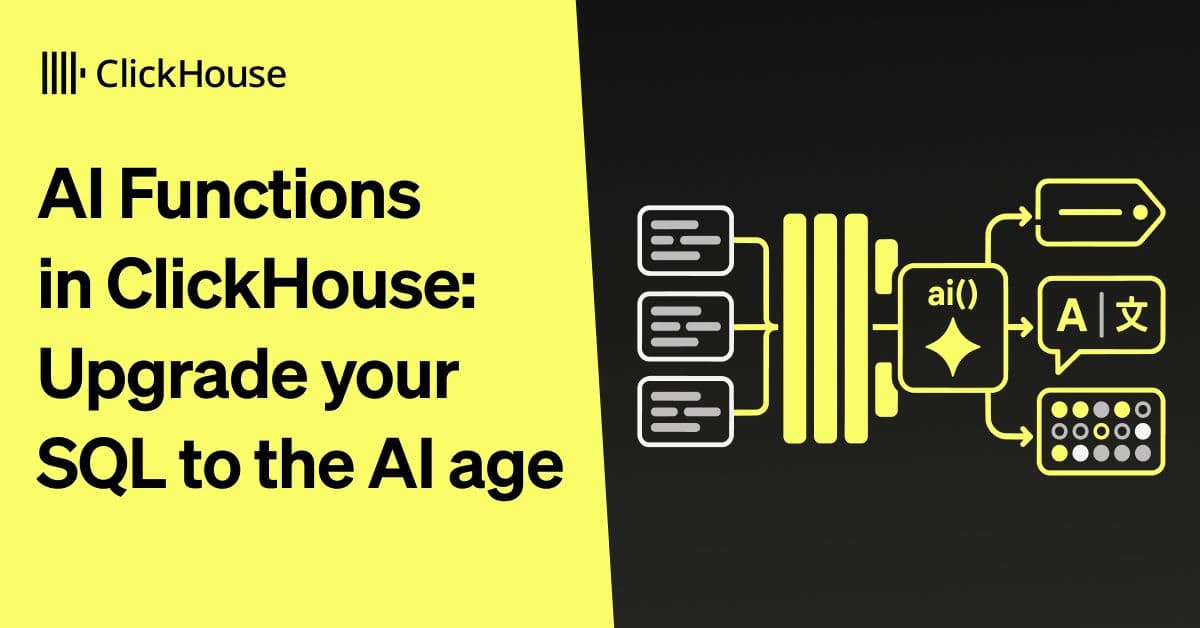
Why it matters — Running LLM calls inside the database removes the need to extract data to a separate inference service, reducing latency and operational complexity. It also lets you combine AI results with native ClickHouse filters, joins and vector search in a single query.
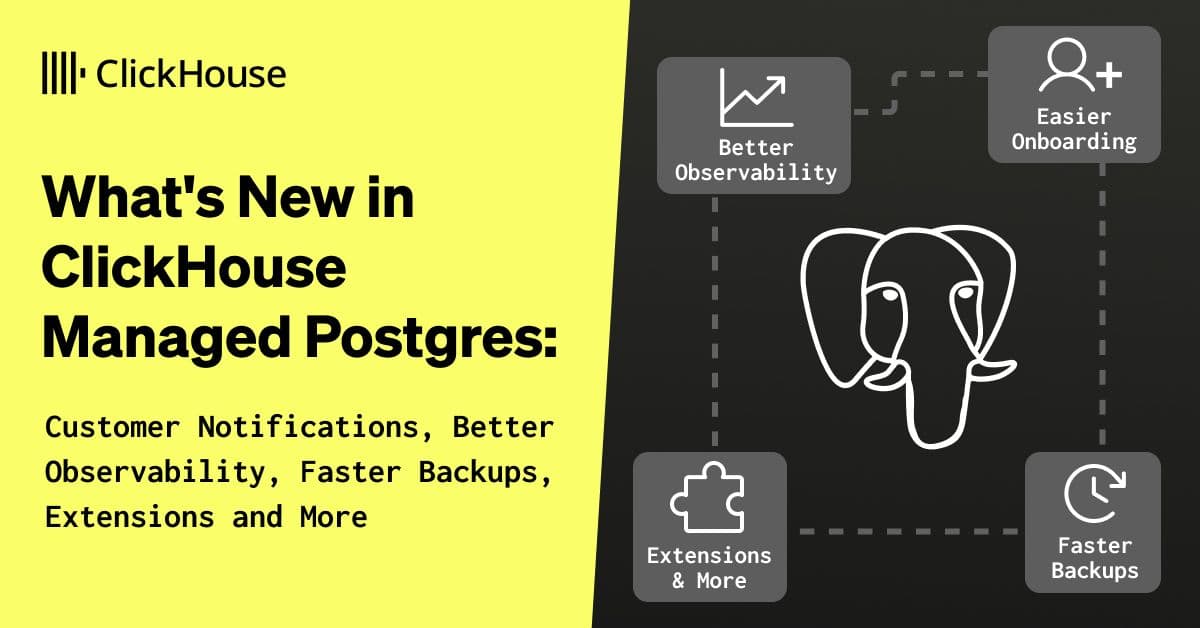
Why it matters — Engineers gain early warning of storage pressure and can integrate Postgres health into existing monitoring pipelines without switching consoles. The backup and observability upgrades reduce operational overhead and make performance tuning more data-driven, though larger instances may see temporary CPU spikes during backup windows.
Why it matters — This shows a pattern of using managed Postgres as a compatibility layer to bridge ClickHouse to the Postgres ecosystem, avoiding the need to maintain separate pipelines. It also demonstrates how to integrate ClickHouse with tools that don't natively support it, reducing operational overhead.
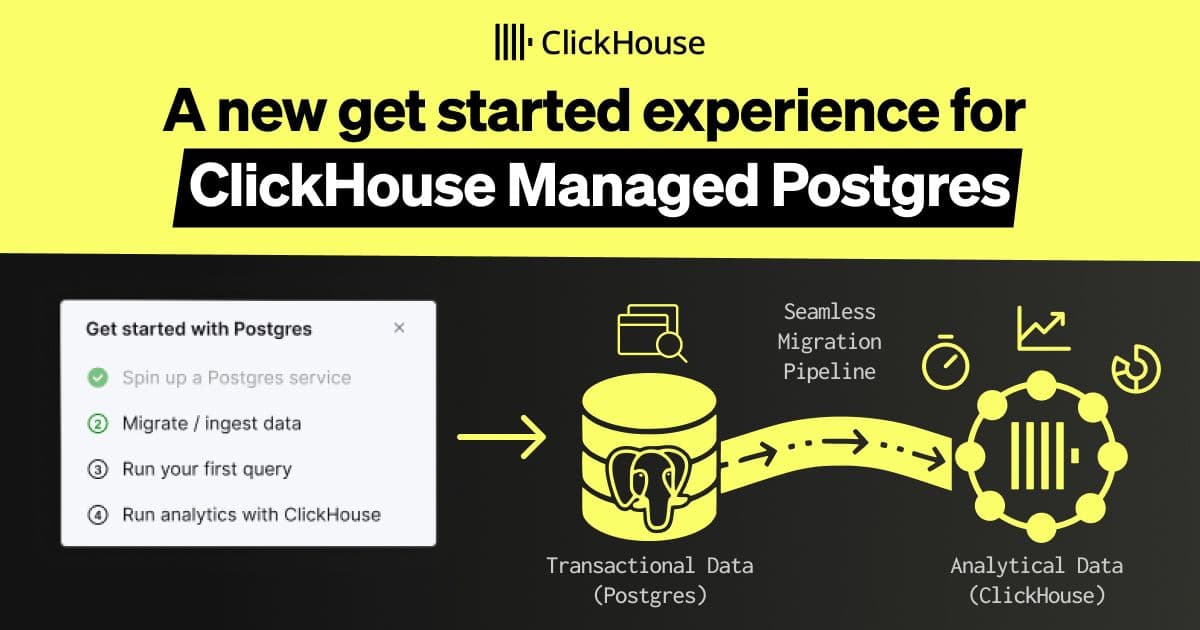
Why it matters — For engineers evaluating ClickHouse Managed Postgres, the flow determines how quickly they can validate the unified Postgres-plus-ClickHouse pitch on their own data rather than on empty dashboards. The article excerpt cuts off before step four is fully described, and only one feed carried the announcement, so the substance here is what ClickHouse chose to publish about its own onboarding rather than independent reporting on it.
Why it matters — Engineers can run both transactional Postgres and analytical ClickHouse workloads entirely within GCP, eliminating cross-cloud latency and egress costs. The NVMe local SSD storage and in-region CDC promise microsecond-level disk latency and replication latency measured in seconds, which can improve performance for heavy update and analytics pipelines.
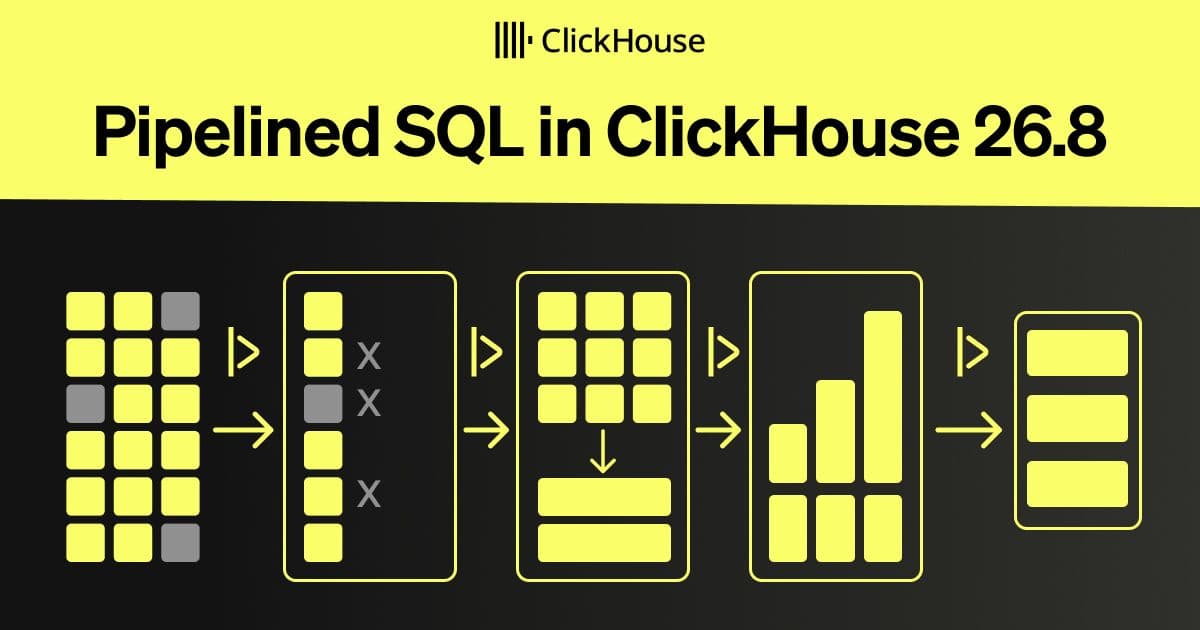
Why it matters — This syntax makes complex queries easier to build and inspect incrementally, replacing nested subqueries or CTEs with a top-down flow. Since ClickHouse optimizes the translated query as a whole, there is no performance penalty from the intermediate stages. It is currently limited to ClickHouse and requires version 26.8 or later.
Why it matters — For engineers running Postgres in production, this migration pattern shows that managed Postgres offerings can differ significantly in performance and cost as workloads grow. The reported improvements came from the platform change alone, without query or schema rewrites, and ClickPipes enabled cutover in hours. Teams already using ClickHouse for analytics can also eliminate network transfer fees by consolidating on one platform.
Why it matters — SQLite is a ubiquitous database engine, and guidance directly from its creator clarifies its architecture. However, without access to the full content of the slides, specific technical takeaways cannot be corroborated or detailed.
Why it matters — This development enables teams to consolidate their logging and metrics storage into ClickHouse, reducing the complexity of managing multiple systems. By supporting PromQL, ClickHouse allows existing Prometheus users to easily transition without altering their current querying practices, potentially increasing efficiency and reducing operational overhead.
Why it matters — Engineers building high-performance sorted collections in Java can now use a zero-dependency library that optimizes cache locality and provides direct control over tree structure. The bulk-load APIs and strict JDK compatibility reduce integration friction while offering measurable performance gains for range scans.
Why it matters — The emergence of Noetive with significant funding indicates growing investment in AI solutions tailored for physical industries. This could enhance operational efficiency and decision-making in sectors like construction, logistics, and manufacturing. The development of industrial AI models could lead to innovations that streamline processes and reduce costs.
Why it matters — Engineers designing family-oriented payment services must now account for built-in spending limits, real-time transaction alerts, and remote account lock/unlock capabilities. The move mirrors Apple Cash Family and prepaid-card startups, indicating a competitive pressure to provide comparable parental-control APIs. Adopting similar controls may require additional backend services for limit enforcement and audit logging.
Why it matters — If confirmed, this finding would revise solar evolution models and explain discrepancies in helioseismic data and lithium depletion. It also offers a method to detect past planetary engulfment in other stars, changing how we interpret stellar chemistry.
Why it matters — Engineers can apply the same optimization logic across different database systems, reducing the need for vendor-specific tuning. This portability may lower development effort when migrating or supporting multiple platforms. However, actual benefits depend on the workload and the extent to which the framework covers relevant SQL features.
Why it matters — Only one feed elseif tracks has carried this so far, so there is no independent corroboration yet. Read it as a single-source report.
Why it matters — For engineers building mobile apps, this highlights the gap between vocal frustration with platform restrictions and the financial support that sustains those restrictions. The piece contends that complaints without corresponding shifts in purchasing are irrelevant to the platform holder.
Why it matters — Teams rarely test backup restores despite knowing they should, and hand-rolled scripts tend to fail quietly without anyone noticing. Restoredrill makes skipping the drill loud and produces machine-generated, timestamped reports that auditors accept, closing a common compliance gap with evidence that is harder to fake than a policy doc.
Why it matters — Developers who run AI-assisted coding tools accumulate many JSONL transcripts that are hard to differentiate. Wallfacer centralises those files in a read-only SQLite store, letting users locate, rename, tag, and resume sessions from a terminal UI or scriptable CLI. Because it never mutates the original agent files, it can be adopted with minimal risk, but it only works for the four supported agents and on macOS/Linux environments.
Why it matters — The headline does not mention databases or any engineering-related context. Therefore, its relevance to engineers cannot be determined from the provided material.
Why it matters — Only one feed elseif tracks has carried this so far, so there is no independent corroboration yet. Read it as a single-source report.
Why it matters — The pause of bridge nodes halts all new transactions on the Liquid sidechain, affecting users who rely on LBTC for transfers and trading. Exchanges have already halted LBTC deposits and withdrawals, which could disrupt liquidity and trading pairs that depend on the asset. Federation members are working to resolve the incident, but until then the network remains inactive, highlighting reliance on multi-sig governance for sidechain security.
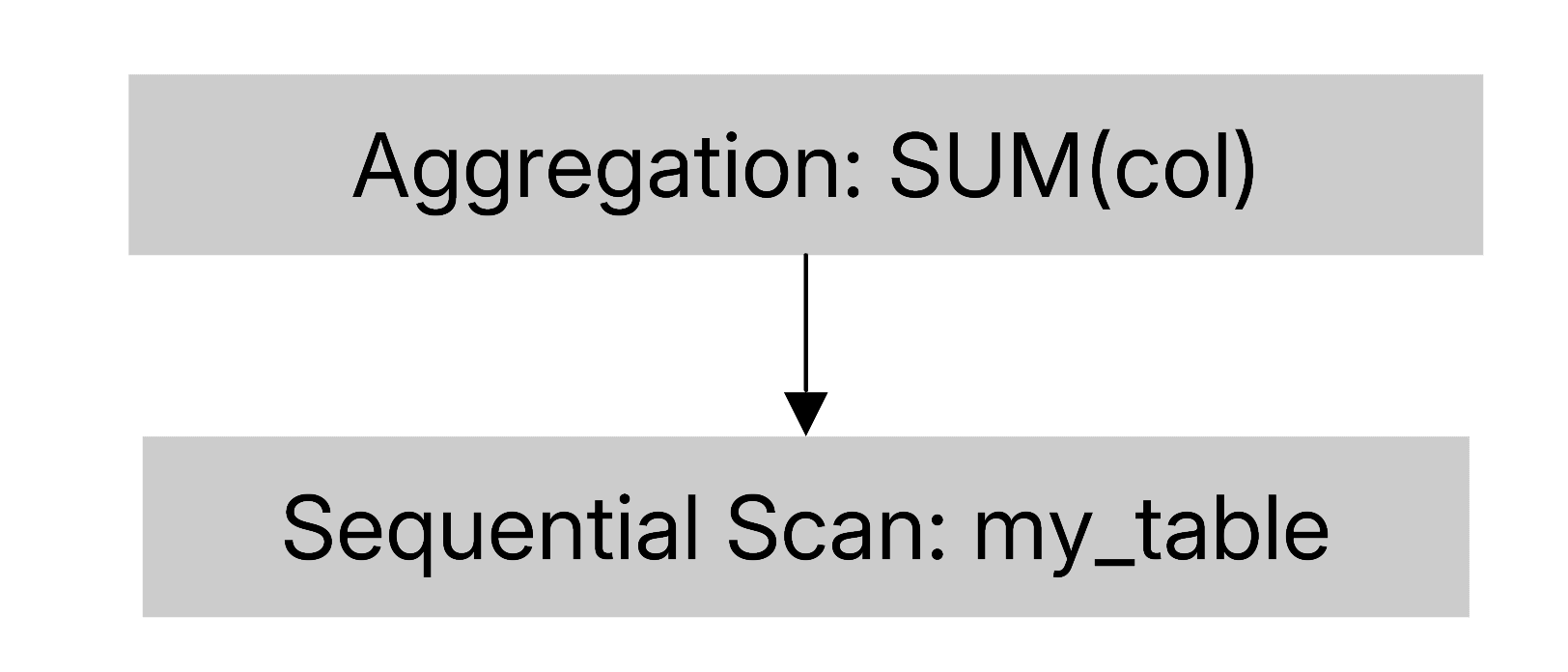
Why it matters — The redesign cuts CPU cycles and memory traffic, turning a 20-second sum of 500 M rows into sub-second runtimes. Engineers building analytics pipelines can achieve Clickhouse-level speed without switching databases, but must adopt a new execution layer that currently only covers a subset of Postgres plan nodes.
Why it matters — This gap affects engineers building clinical decision-support systems or patient-monitoring tools. Without standardized withdrawal protocols, automated systems may misclassify withdrawal symptoms as relapse, leading to incorrect treatment recommendations. The absence of long-term efficacy data also complicates risk-benefit modeling in health-tech applications.
Why it matters — The material available is limited to a single headline with no article body, so substantive claims about performance, architecture, or adoption cannot be verified. What can be confirmed is that a new analytics database written in pure C with a Lisp-like interface has attracted community attention on Hacker News.
Why it matters — If Bing Wallpaper is serving full-screen ads as desktop backgrounds, it represents a significant UX degradation for a tool users have trusted for years as a wallpaper utility. The user initially suspected adware or malware, which signals how far this insertion deviates from expected behavior. This is a single uncorroborated forum report, so the scope and frequency of the behavior is unknown.
Why it matters — Pgbot gives engineers a lightweight, read-only way to surface Postgres performance issues without dashboards, and its MCP integration means AI agents like Claude or Cursor can query database health directly. The read-only-by-construction design ensures agents can inspect but never mutate production databases.
Why it matters — For engineers working with SNMP device monitoring, a centralized browser for vendor and standard MIBs removes the need to locally manage and parse MIB files. The upload feature lets teams inspect proprietary or custom MIBs through a tree-view interface without installing dedicated tooling.
Why it matters — Engineers often rely on static architecture diagrams that fail to convey dynamic interactions. Flostep addresses this by making system flows interactive, which could improve design reviews, onboarding, and documentation. The tool’s integration with AI assistants via MCP may also reduce manual diagram maintenance.
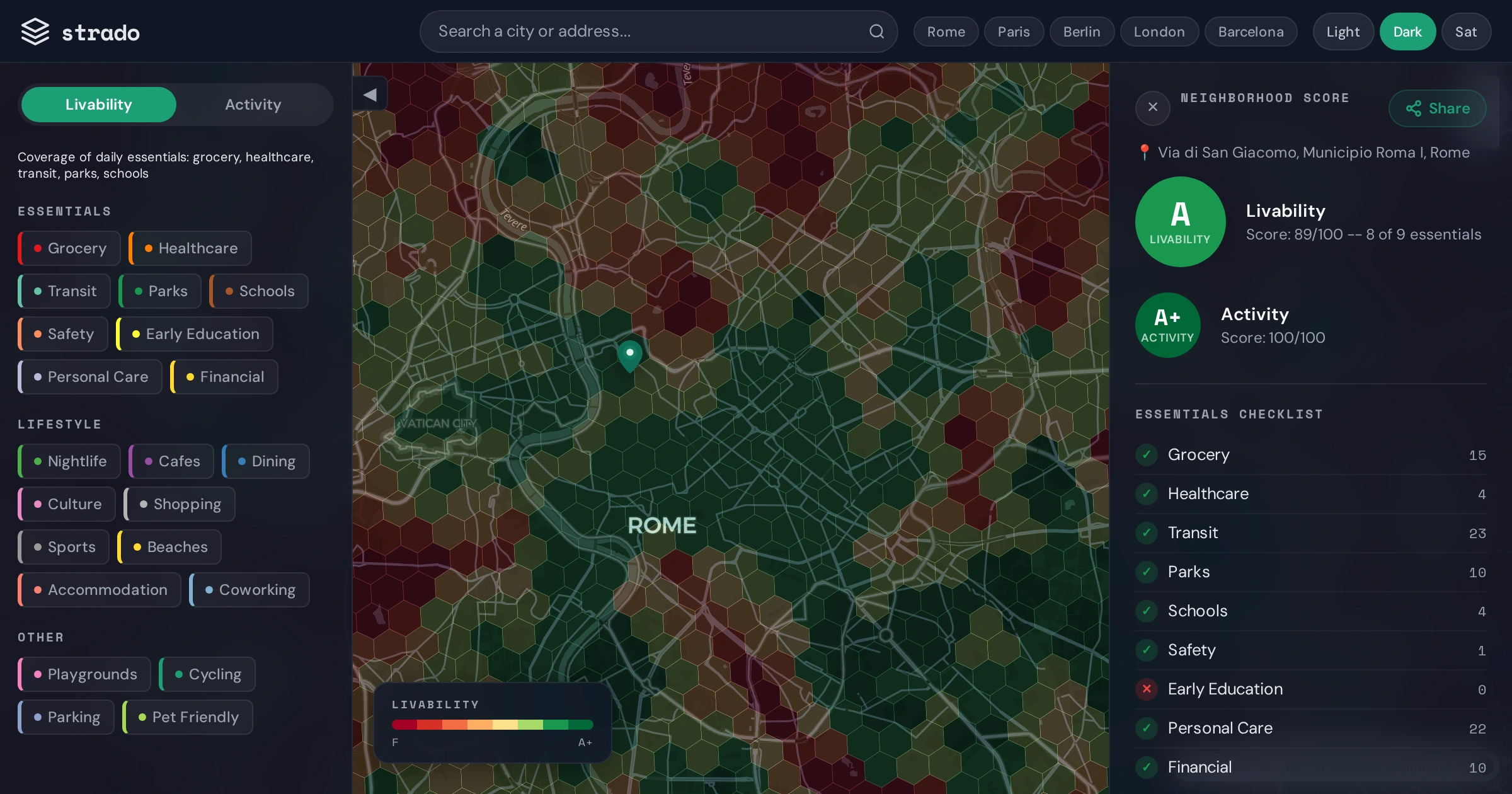
Why it matters — Engineers building location-aware applications or urban planning tools now have a pre-computed, street-level dataset that removes the need to process raw OpenStreetMap data themselves. The dataset is limited to walkability metrics and does not include real-time or proprietary data layers.
Why it matters — Only one feed elseif tracks has carried this so far, so there is no independent corroboration yet. Read it as a single-source report.
Why it matters — If merged, this would embed marketing text directly into operational interfaces that engineers rely on for clarity, potentially adding noise to log parsing and client output. The PR is designed to be cherry-pickable to older releases, meaning it could appear in production environments broadly. The proposal also signals a precedent for using server logs and client prompts as promotional channels.
Why it matters — This shifts vector search from a server-side database to a static-file architecture, eliminating query-server infrastructure and keeping user data in the browser. Engineers must pre-build and publish the index, and the browser must handle embedding and ranking, which may limit dataset size and update frequency.
Why it matters — This project demonstrates how accessible custom lighting solutions have become for engineers without domain expertise. The use of standardized components like aluminum extrusions and open-source software (WLED) lowers the barrier to integrating programmable lighting into home environments. It also highlights the practical challenges of power distribution and mechanical design when scaling DIY electronics projects
Why it matters — This is a design sketch, not a shipped system, and the engineering interest is in the gating function rather than the language model call: deciding when a silent observer is allowed to interrupt is treated as the hard problem. Adoption depends less on prompt design and more on whether a team will tolerate software that calls out its own reasoning, particularly when senior people are the ones being challenged. It also surfaces a retrieval and compliance problem that any real implementation would have to solve before the agent could read everything it is asked to read.
Why it matters — Engineers can now test and compare dozens of database systems side by side without manual setup, making it easier to evaluate options for specific workloads. The refactored common interface ensures fair comparisons by enforcing cold-start measurements and preventing caching tricks. This lowers the barrier to benchmarking and helps engineers make informed decisions about database selection.
Why it matters — This case tests the boundaries of reasonable childhood independence laws and could influence how engineers design community safety systems or parental monitoring tools. If legal precedent expands liability for unsupervised children, it may reshape risk assessment frameworks in software used for child welfare or neighborhood security.
Why it matters — This demonstrates a practical pipeline for statically analyzing and patching legacy binaries without altering the originals, using abstract interpretation to find unreachable victory conditions. For engineers working on old systems, it offers a pattern for automated bug detection and safe patching.
Why it matters — Engineers who use Kagi for research will no longer need to manually skip paywalled results. The automatic setting changes the default search behavior, potentially saving time. However, the effectiveness depends on Kagi's ability to correctly identify paywalled content.
Why it matters — Engineers can deploy agent memory without provisioning a separate search cluster or managing persistent servers, reducing operational overhead. The typed schema moves consistency decisions from the LLM to the store, improving determinism and reducing token usage for memory resolution.
Why it matters — Engineers no longer need to stitch together fragile logical-decoding pipelines or manage separate replication services, which reduces operational overhead and cost. The built-in extension coordinates schema changes and snapshots, delivering a more reliable, low-lag data flow from transactional Postgres to analytical Snowflake. Adoption is limited to Snowflake-hosted Postgres instances that can run the preview extension.
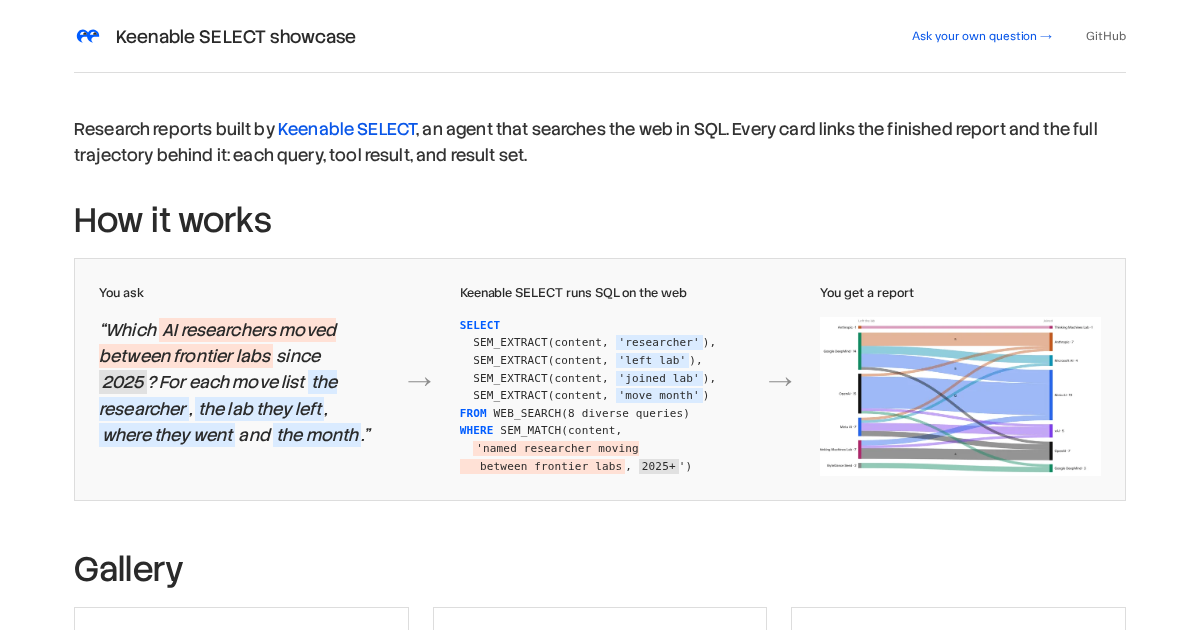
Why it matters — This shifts the cost of web research from post-processing unstructured data to filtering and extracting within the query itself. For engineers, it replaces ad-hoc scraping scripts with a declarative interface, but its accuracy depends on the underlying LLM’s semantic operators. If the operators misinterpret content, the query results may be silently incorrect.
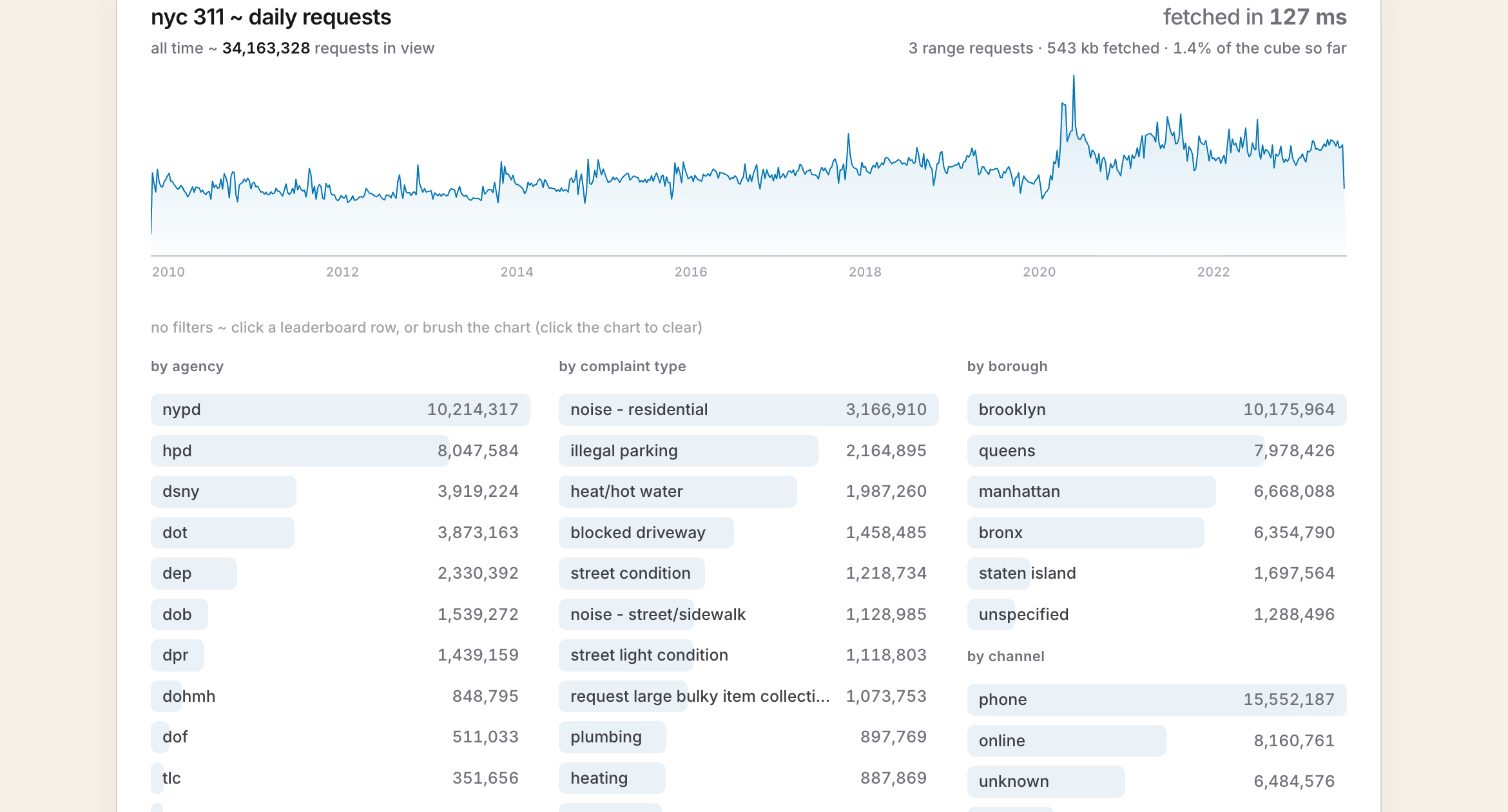
Why it matters — It shows that analytical dashboards can be served directly from immutable object storage using only client-side Parquet reads, reducing infrastructure overhead. This approach lowers cost and operational complexity for teams that already store data in services like Cloudflare R2.
Why it matters — For engineers building or maintaining large-scale database systems, this shift in financial scrutiny could signal prolonged runway for capital-intensive projects. However, it may also obscure underlying risks if debt-driven growth masks inefficiencies in infrastructure or operations. The tolerance for debt could change abruptly if macroeconomic conditions shift.
Why it matters — The pattern gives you the freedom of plain text with structured metadata, enabling filtering and sorting without locking into a proprietary CMS. It works well for up to roughly ten thousand files, beyond which a traditional database is needed. Adoption cost is low, just a tool to index frontmatter into SQLite or use existing apps like Obsidian.
Why it matters — Engineers running databases in regulated or air-gapped environments often face delays in applying critical updates. Turbopuffer’s approach demonstrates how to reconcile rapid iteration with operational constraints, but it requires strict adherence to Kubernetes-native patterns. The trade-off is worth evaluating for teams balancing velocity and compliance.
Why it matters — Engineers maintaining Git servers can eliminate complex replication setups and database dependencies by adopting this architecture. The approach scales horizontally with no coordination overhead while preserving full Git protocol compatibility and repository history provenance
Why it matters — Cloudflare Durable Objects provide a powerful concurrency model but impose vendor lock-in and unpredictable per-operation pricing, with one developer billed $34,000 in eight days. Solid Objects gives engineers the same actor semantics as an embeddable library, replacing the six-piece stack of row locks, Redis locks, delayed jobs, sweepers, retry code, and broadcasts with a single object that commits state, reminders, effects, and broadcasts in one transaction.
Top stories right now